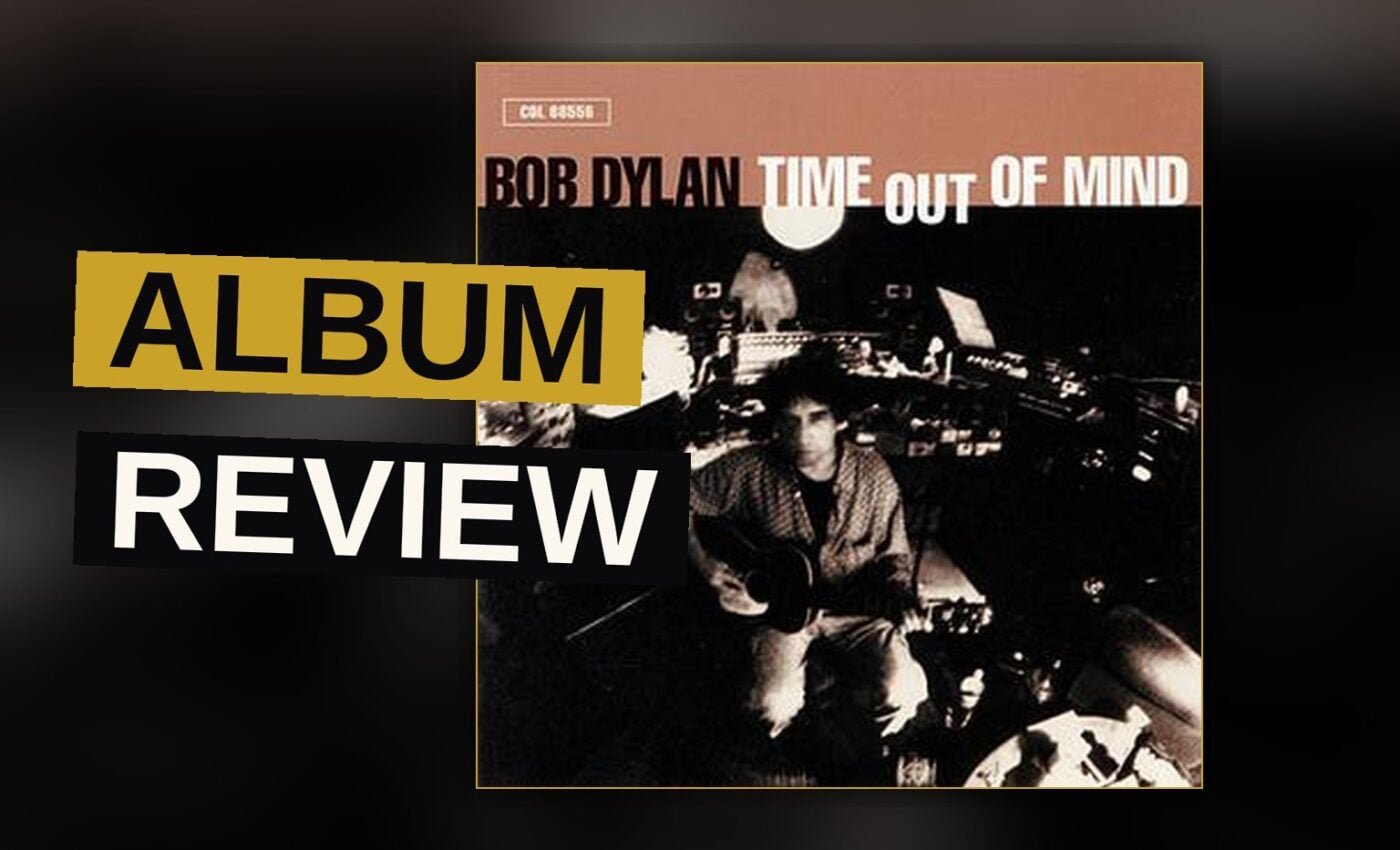
Bob Dylan’s Time Out of Mind is a slow, swampy reckoning with mortality, loss, and the weight of every wrong turn taken. It arrived in 1997 as a comeback album, wrapped in thick, atmospheric production that makes the whole record feel like it was recorded in a room with the windows shut. This is not a collection of bright moments. It is a single, gray statement about getting old and watching the world move past you.
The album opens with the hollow thump of “Love Sick,” a confession of exhaustion rather than a plea. Dylan’s voice is cracked, and he leans into it, singing about desire that has curdled into dread. From there, “Dirt Road Blues” shuffles along with a loose, almost throwaway structure. It is the album’s weakest moment, a short burst of rambling that marks time between the opening statement and the record’s true center.
Standing in the Doorway
“Standing in the Doorway” is where Time Out of Mind locks in. At over seven minutes, it is a slow burn of regret, with Dylan painting himself as a man frozen at a threshold, unable to leave and unable to return. The pedal steel and organ drift underneath him, and his vocal delivery is weary but precise. It is one of the finest tracks on the record.
“Million Miles” follows as a bluesy shuffle that keeps the mood intact but pulls back on the grandeur. It is solid, workmanlike, the kind of thing Dylan could write in his sleep, but it lacks the emotional stakes of the songs around it.
“Tryin’ to Get to Heaven” is the album’s first great peak. The title is a lie — the narrator is not trying to get anywhere except away from his own history. The song is built on a simple, rolling melody, and Dylan’s phrasing stretches words to fill the spaces between the notes. It is about waiting for a bus that never comes, and it is quietly devastating.
“’til I Fell in Love With You” is a more conventional blues number, a tale of romantic ruin that hits its marks without breaking new ground. It is good, but it is the sort of good Dylan had done a hundred times before.
Not Dark Yet
“Not Dark Yet” is the heart of the record. It is a song about the moment between twilight and full night, when the light is gone but the dark has not fully arrived. The narrator is not suicidal; he is simply worn out. The production is restrained here, letting the words carry the weight, and it is the most direct statement of the album’s central theme. This is a man who has lived long enough to see his own limits.
“Cold Irons Bound” snaps the record back to a harder edge. It is the most aggressive track on the album, a driving, almost paranoid blues about being trapped and hunted. The organ stabs and guitar lines are sharp, and it provides a necessary jolt of energy after the stillness of “Not Dark Yet.”
“Make You Feel My Love” is the closest thing here to a conventional love song. It is a simple promise of devotion that works precisely because it is unadorned, and it has gone on to have a long life beyond this record.
Can’t Wait
“Can’t Wait” is a simmering, tense track that feels like a storm about to break. It never quite does, and that is the point. The narrator is stuck in a state of anticipation that will never resolve. It is a strong track, though it is overshadowed by what comes next.
“Highlands” is the album’s final statement, a 16-minute epic that is either a masterpiece or an indulgence, depending on your tolerance for Dylan’s rambling. It is a spoken-sung narrative about a man who cannot find peace anywhere, who wanders into a restaurant and talks to a waitress about a poet she has never heard of. It is funny, bitter, and strange, and it is the perfect ending to a record that refuses to offer comfort.
The track is not a summary of the album so much as an extension of its mood. The narrator is not looking for a way out; he is just looking for something to do until the end comes. The length is a test, and for those who pass it, the payoff is real.
The Sound
The production is the album’s other defining feature. The sound is murky, almost foggy, with instruments bleeding into each other and Dylan’s voice sitting deep in the mix rather than on top of it. The album feels like it was recorded in a room with the air thick with dust and memory. There are no bright moments, no sudden clarities. Every track is coated in the same gray light, and that consistency makes the record feel like a complete statement rather than a collection of songs.
The critical reception at the time matched the record’s ambitions. Pitchfork called it “Bob Dylan’s masterful comeback,” and AllMusic wrote that it was “a better, more affecting record than Oh Mercy,” leaving it “as one of the rare latter-day Dylan albums that meets his high standards.” The NME noted that “the omens on his most intriguing album for quite a few years point to trouble ahead.” The album went on to win three Grammy Awards, including Album of the Year.
The tracks that critics singled out for particular praise were:
- “Not Dark Yet”
- “Love Sick”
- “Standing in the Doorway”
- “Tryin’ to Get to Heaven”
- “Cold Irons Bound”
- “Highlands”
The Verdict
Time Out of Mind is not a perfect record. “Dirt Road Blues” is a throwaway, and “Million Miles” and “’til I Fell in Love With You” are competent but not essential. The middle of the album sags slightly, and the production can sometimes swallow the lyrics whole.
But the peaks are so high that they carry the entire structure. “Not Dark Yet,” “Standing in the Doorway,” “Tryin’ to Get to Heaven,” and “Cold Irons Bound” are among the best songs Dylan has ever written, and “Highlands” is a bold, strange closer that rewards patience. This is a record about getting old, about watching the world move past you, and about the slow acceptance of your own irrelevance. It is not a cheerful album, and it is not an easy one. But it is honest, and that honesty is what makes it great.
Get the Notebook.
The day's best stories and every fresh verdict, in plain English, in your inbox by seven. One email a day, no more.
- Love Sick5:22
- Dirt Road Blues3:36
- Standing in the Doorway7:43
- Million Miles5:53
- Tryin' to Get to Heaven5:22
- 'til I Fell in Love With You5:18
- Not Dark Yet6:29
- Cold Irons Bound7:16
- Make You Feel My Love3:33
- Can't Wait5:47
- Highlands16:32