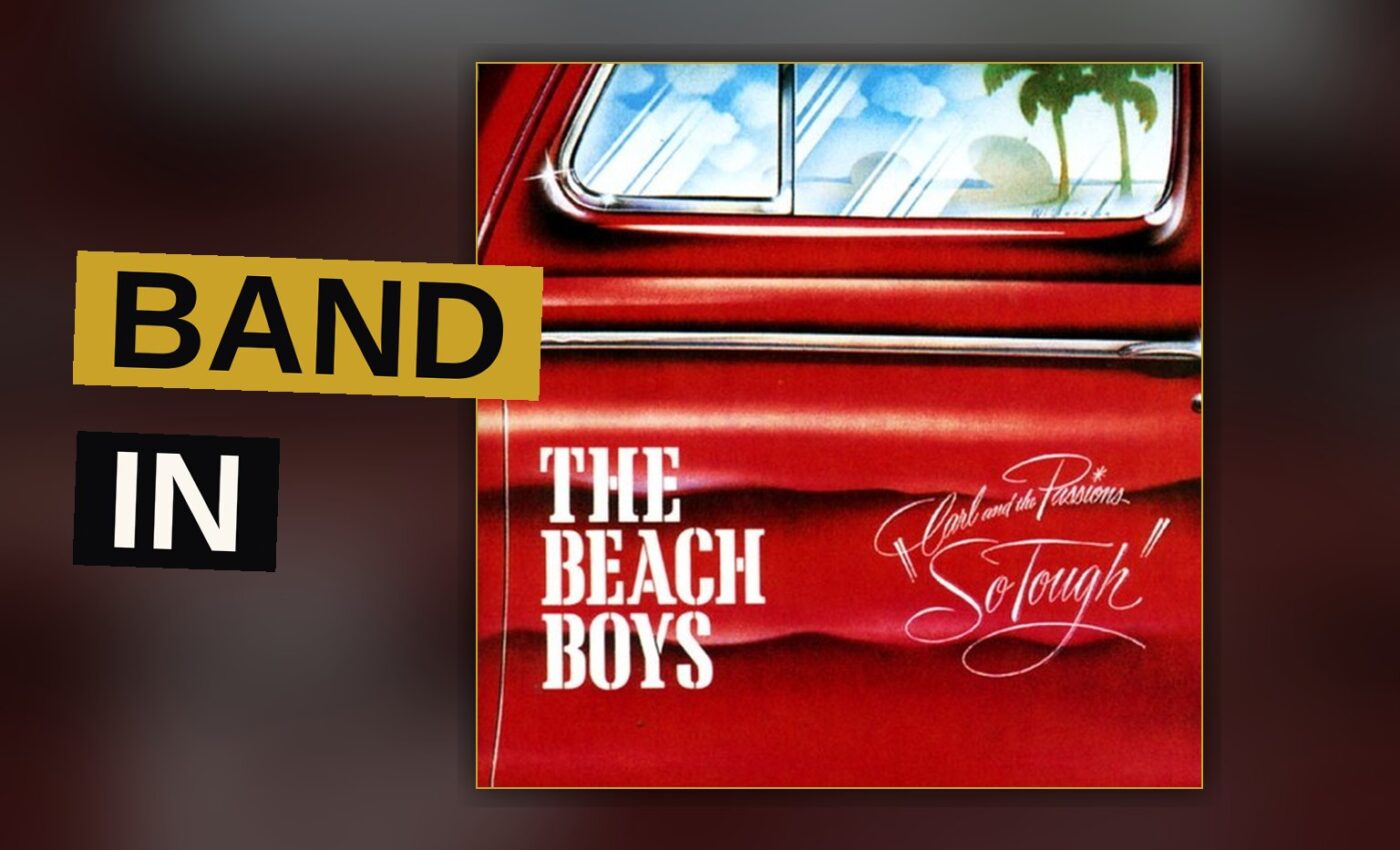
The Beach Boys were in a strange place in 1972. The band had just wrapped its most experimental period, and its two core songwriters were pulling in different directions. The album they released that year, Carl and the Passions: “So Tough”, is a record of that tension. It is a band trying to figure out what it is now that the summer is over.
The title gives Carl Wilson top billing, and his calm, soulful production anchors the record. But it is not a solo project. It is a group record, eight tracks and 34 minutes, that sits awkwardly between the ornate pop of the past and the rootsy rock the band would chase next. It does not cohere into a single statement. What it offers is a set of songs more interested in feeling than in hits.
Opening With a Mess of Help
“You Need a Mess of Help to Stand Alone” opens the record with a hard, horn-driven shuffle. It is a song about asking for a lifeline while admitting you do not quite know how to take one. The vocal arrangement is stacked and precise, the kind of thing only this band could pull off, but the mood is weary. It is a strong start, and it sets a tone of confession rather than celebration.
“Here She Comes” follows, and it is a different animal. The song is a slow, jazzy drift, built on a loping bassline and a vocal that seems to float in from another room. It does not rush. It is the most patient track on the record, and it rewards that patience with a chorus that opens up just when you think it will stay closed. It is one of the best things here.
The Strange Middle
“He Come Down” is the strangest track on the album. It is a gospel-inflected number, but not a straightforward one. The band layers voices and percussion into a dense, almost chaotic swirl. It is not catchy, and it does not resolve the way you expect. But it is ambitious, and it shows the band willing to take a risk that does not pay off in an obvious way.
“Marcella” is the other highlight. It is a straightforward rocker, with a chugging guitar line and a melody that actually bites. The song is about a woman, and the band plays it with a looseness that the rest of the record lacks. It feels like the closest thing to a single here, the one track that could have stood next to the band’s earlier hits without embarrassment.
“Hold On Dear Brother” is a softer, more reflective piece. It is a plea for unity, and it is sincere, but it is also a little slight. The melody is pleasant, and the harmonies are warm, but it does not leave a mark. It fills out a running order without defining it.
| Track | Title | Length |
|---|---|---|
| 1 | You Need a Mess of Help to Stand Alone | 3:26 |
| 2 | Here She Comes | 5:08 |
| 3 | He Come Down | 4:40 |
| 4 | Marcella | 3:54 |
| 5 | Hold On Dear Brother | 4:42 |
| 6 | Make It Good | 2:34 |
| 7 | All This Is That | 3:57 |
| 8 | Cuddle Up | 5:42 |
Make It Good or Make It Brief
“Make It Good” is the shortest track on the record, and it is a throwaway. It is a mid-tempo ballad that does not have enough of a hook to justify its existence. It is not bad, exactly, but it is forgettable.
“All This Is That” is where the record gets interesting again. The song is built on a simple, hypnotic groove, and the vocals weave in and out of it in a way that is almost meditative. It is a long, drifting piece, and it does not rush to get anywhere. It is the most spiritual track here, and it points toward the direction the band would explore next.
“Cuddle Up” closes the album with a slow, orchestral ballad. It is a big, sweeping piece, and it leans into the sentimentality that the band had always been capable of. It is the most traditional song on the record, and it works as a comedown. It is not a triumph, but it is a graceful exit.
“You Need a Mess of Help to Stand Alone” is a song about needing help, and it is the most honest moment on the record.
A Band in Flux
This is not a beach record. There are no songs about surfing, cars, or summer romance. The band is not trying to be young or carefree. It is trying to be a serious rock band, and that ambition is both the record’s strength and its weakness.
The songs are more personal, and the performances are more restrained. But the album lacks the focus that would have made those ambitions land. It is a transitional record, and it sounds like one. The band is caught between fragile pop instincts and a steady, soulful hand. That friction produces some great moments, but it also produces a record that does not know what it wants to be.
Final Call
Carl and the Passions: “So Tough” is a record for people who already love the Beach Boys. It is not an entry point, and it is not a masterpiece. It is a document of a band in flux, and it has enough good songs to justify its existence.
“Marcella” and “Here She Comes” are worth the price of admission alone, and “All This Is That” shows a depth that the band would only hint at elsewhere. But the record is uneven, and it never quite reaches the heights it reaches for. It is a solid, interesting, flawed album.
It deserves its cult following. It is not the band’s best work, but it is not their worst either. It is the sound of a group that is still alive, still trying, and still capable of surprising you. That counts for something.
- You Need a Mess of Help to Stand Alone3:26
- Here She Comes5:08
- He Come Down4:40
- Marcella3:54
- Hold On Dear Brother4:42
- Make It Good2:34
- All This Is That3:57
- Cuddle Up5:42