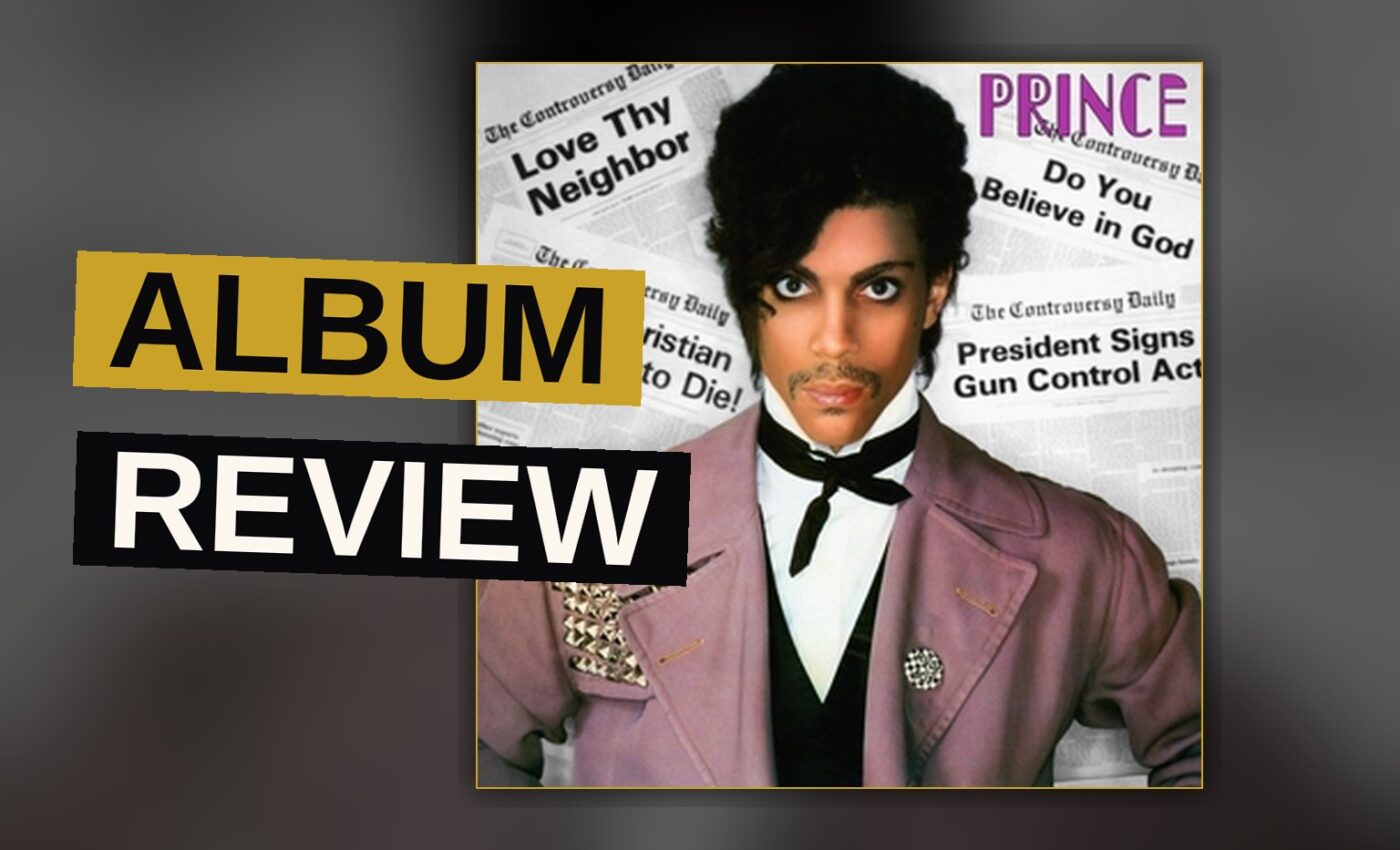
Prince released Controversy in 1981, and it is the sound of an artist pulling in two directions at once. On one side sits the raw, unapologetic sexuality of Dirty Mind; on the other, the slick, synth-heavy pop that would explode with 1999. The record tries to bridge those poles, and it does not always land cleanly. But when it works, it works hard.
This is a transitional album, and it wears that label openly. The eight tracks here shift between bedroom funk and pointed social commentary, often within the same groove. It is not a masterpiece. It is not a failure. It is the necessary messy middle of Prince’s early catalog, and it holds up better than its reputation suggests.
Opening With the Title Track
The record opens with “Controversy,” a seven-minute mission statement that asks a question Prince would spend the rest of his career answering. The track is built on a robotic bassline and a spoken-word verse that name-checks everything from the Lord’s Prayer to his own public image. It is weird, confrontational, and utterly of its moment.
The song works because it refuses to pick a lane. It is danceable and paranoid at the same time, a combination that would define much of his 1980s output. The title track is not the catchiest thing here, but it is the most important. It tells you exactly what this record is trying to do: take the funk and push it into the political.
Sexuality, Do Me Baby, and Private Joy
“Sexuality” follows, and it is the most direct link to Dirty Mind. The track is a four-minute pop-funk jam that preaches liberation through rhythm. It is lighter than the opener, but it carries the same message: be yourself, move your body, do not apologize. It is efficient and effective, even if it does not reach the heights of his best early work.
“Do Me, Baby” is the slow jam of the record, and it is a strange one. At nearly eight minutes, it stretches a single mood across a long runtime. The track is pure seduction, a whispered promise over a minimal synth bed. It is not a highlight, but it has its place. It shows Prince could slow down and still hold attention, even if the song overstays its welcome by a minute or two.
“Private Joy” is where the record starts to click. This is the most 1999-sounding track on the album, a tight, upbeat pop-funk number that could have sat comfortably on the later record. The chorus is sticky, the bass is propulsive, and the energy is unmistakable. This is the song that points forward, and it is one of the best things here.
The Short Shots and the Political Turn
“Ronnie, Talk to Russia” is a one-minute forty-eight-second burst of political noise. It is not a song so much as a sketch, a frantic plea for diplomacy set to a stuttering beat. It is the shortest track on the record and the least developed. It feels like an idea Prince had and recorded before the thought could fade. It is not bad, but it is barely there.
“Let’s Work” follows with a return to pure funk. The track is a straightforward dance number, built on a chunky guitar riff and a call-and-response chorus. It is the most direct song on the album, and it does exactly what it promises. No politics, no introspection, just a command to move. It is a solid track, though not a standout.
“Annie Christian” is the most politically pointed song here, and it is also the strangest. The track references real-world violence, including assassination attempts and high-profile murders. The lyrics are delivered over a tense, almost new-wave synth line. It is uncomfortable and jagged, and it does not quite cohere. But it shows Prince trying to engage with the world beyond the bedroom, and that ambition counts for something.
Jack U Off and the Closing Problem
The album closes with “Jack U Off,” a three-minute novelty funk track that is exactly what its title suggests. It is playful, crude, and entirely disposable. The song is a joke, and it lands as one. It is not embarrassing, but it is not substantial either. Ending the record on this note undercuts the more serious material that came before it.
The running order is a problem. The political tracks are grouped in the middle, and the record loses momentum after “Let’s Work.” “Annie Christian” and “Jack U Off” do not belong next to each other, and the album ends on a shrug rather than a statement. A stronger sequence would have placed the title track or “Private Joy” at the end. As it stands, the record fades out rather than concluding.
Core Tracks Carry the Weight
The best material on Controversy is the title track, “Sexuality,” “Private Joy,” and “Let’s Work.” These four songs form the spine of the record, and they hold up against anything Prince released in the early 1980s. “Private Joy” in particular is a hidden gem, a track that deserved more attention than it received. The rest of the album is filler or experiment, and it shows.
The record is uneven, and that unevenness is the point. Prince was testing sounds and themes, trying to figure out what the next phase of his career would look like. Controversy is the workshop where he built the tools he would use on 1999. It is not the finished product, but it is essential context for it.
Verdict on Controversy
Controversy is a record that rewards context more than repeated listening. As a standalone album, it is inconsistent, with clear highs and clear lows. As a bridge between two defining records, it is invaluable. It shows Prince stretching toward the political and the pop, and it captures him at a moment of genuine transition.
The core tracks are strong enough to justify the record’s existence. “Controversy” and “Private Joy” are essential Prince, and “Sexuality” and “Let’s Work” are solid additions to his early canon. The filler drags the whole thing down, and the sequencing does not help. But the ambition is real, and the execution is often good enough to matter.
This is not the album you put on to convert a skeptic. It is the album you put on after Dirty Mind and before 1999 to understand the full arc. It is a workmanlike record with flashes of brilliance, and it deserves its place in the catalog.
- Release date: 1981
- Total runtime: 37 minutes
- Track count: 8
- Longest track: “Do Me, Baby” (7:47)
- Shortest track: “Ronnie, Talk to Russia” (1:48)
Controversy is not Prince’s best album. It is not even his best album of the early 1980s. But it is the record where he started asking bigger questions, and that matters. The funk is still there, the sexuality is still there, but the horizon is wider. It is a stepping stone, and it is a good one.
Get the Notebook.
The day's best stories and every fresh verdict, in plain English, in your inbox by seven. One email a day, no more.
- Controversy7:14
- Sexuality4:20
- Do Me, Baby7:47
- Private Joy4:25
- Ronnie, Talk to Russia1:48
- Let’s Work3:57
- Annie Christian4:21
- Jack U Off3:12