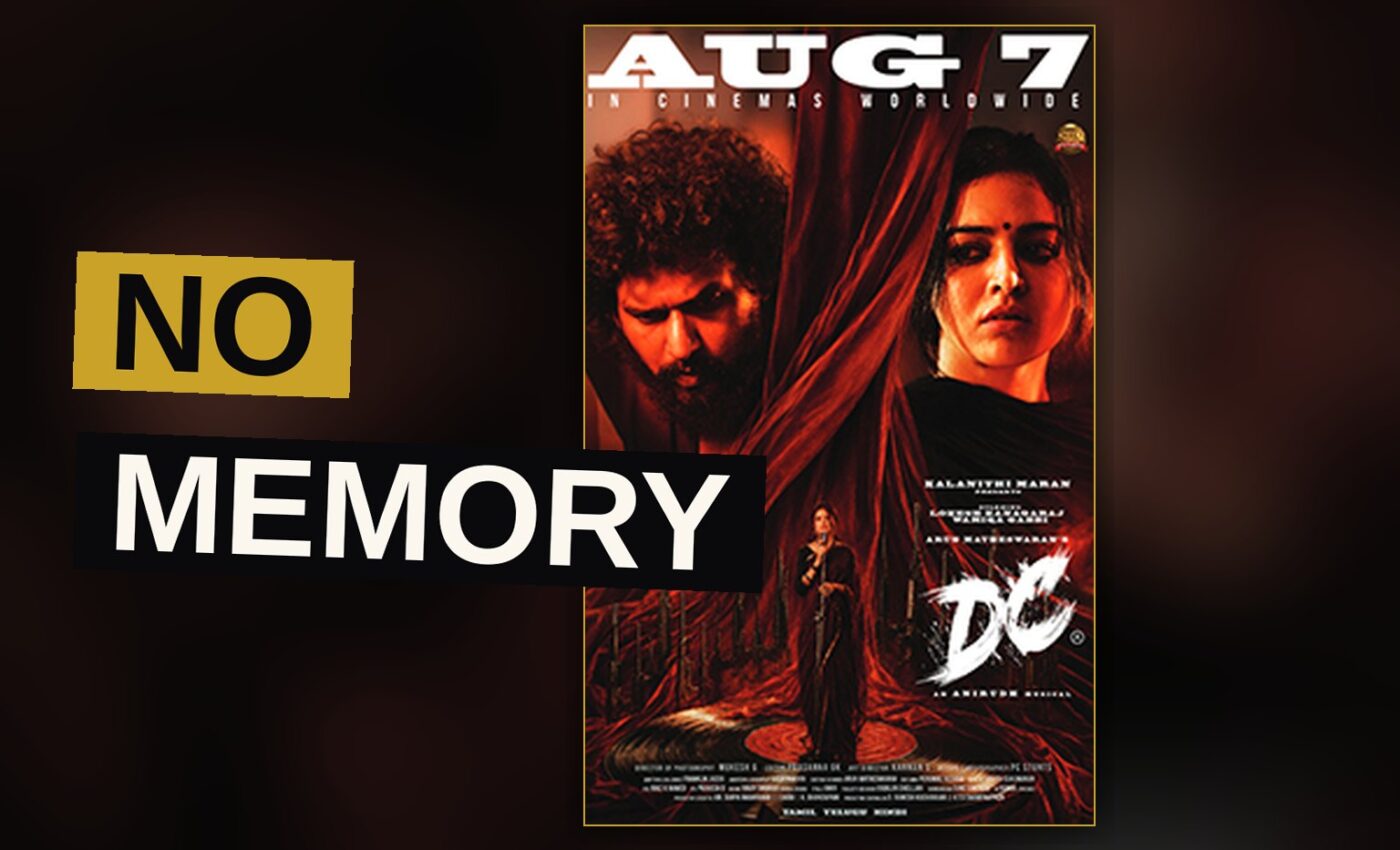
DC is a film about memory, grief, and the strange ways people hold on to the past. It asks whether a life can be rebuilt from pieces that no longer exist, and it answers that question with a shrug. The movie doesn’t pretend to have an answer. It just watches the characters try.
The story follows a man who wakes up with no memory of his wife. As he pieces together fragments of their shared life, he finds himself moving through versions of her that are not quite real. The film keeps shifting between present-day scenes and memories, sometimes blurring the two until the audience isn’t sure which is which.
That approach is the whole film. It’s built around disorientation, and it mostly works. The performances carry the weight of a script that trusts in atmosphere over dialogue.
Trailer, via Sun NXT.
Memory and the Present
The film’s central trick is simple: it shows the protagonist living with a wife who exists in memory but not in the room with him. That tension drives every scene, even when the plot stalls.
The film also leans heavily on color and sound to distinguish its timelines. Scenes set in the past often feel warmer and softer, while the present feels cold and sharp. This contrast is effective early on, though it repeats enough that later scenes lose some of their force.
One sequence stands out. A long stretch near the middle of the film uses a slow dissolve to blend a remembered conversation with the present day, and it’s genuinely unsettling. The film earns that moment through patient buildup rather than spectacle.
Sound Design
The sound design deserves special note. It uses silence and ambient noise to mark the shift between memory and reality, and it works better than any character telling the audience what’s happening.
| Element | Approach | Effect |
|---|---|---|
| Color | Warm vs. cool tones | Establishes a clear visual distinction |
| Sound | Silence and noise | Marks the shift between timelines |
| Performance | Subtle | Carries the weight of the script |
The performances are the film’s strongest asset. They’re quiet, restrained, and they sell the confusion without ever turning it into a joke. That restraint is what separates DC from a similar film that would lean on comedy.
There are moments where the film’s own tricks work against it. A few late scenes rely too heavily on the same dissolve technique, and the repetition starts to weaken the effect. The film also struggles with pacing in its final act, where the mystery of the wife’s disappearance gets resolved in a way that feels rushed rather than earned.
Still, the film’s ambition is clear. It’s trying to do something more than just tell a story about forgetting. It’s trying to make the audience feel what it’s like to lose someone without being able to say goodbye.
DC is a film about the difficulty of holding onto people we love. It doesn’t resolve that difficulty. It just watches it happen.