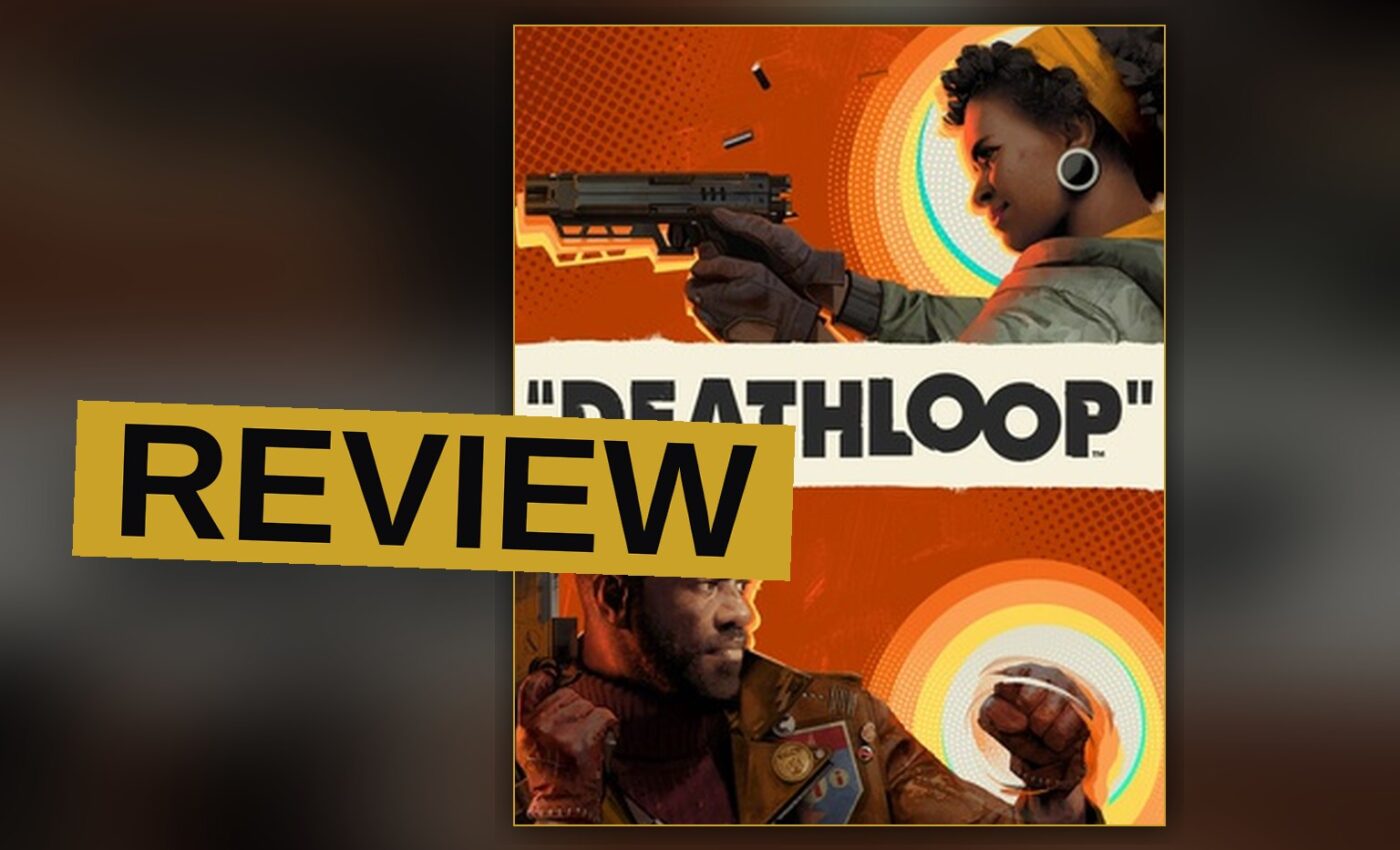
Deathloop is a puzzle box dressed as a shooter, and it is still one of the most satisfying games of 2021. You play as Colt, a man stuck on the island of Blackreef, doomed to repeat the same day forever. The only way out is to kill eight targets, known as the Visionaries, in a single loop. That sounds simple. It is not.
The loop has four distinct periods of the day: morning, noon, afternoon, and evening, across four districts, each with its own secrets and schedules. Your actions in one period can change what happens in the next. Kill a certain Visionary in the morning, and a door opens in the evening. Sabotage a machine at noon, and a guard is elsewhere by night.
This is the core of Deathloop: not a traditional run-and-gun shooter but a systems-driven sandbox where knowledge is your real weapon. The first few hours are confusing, as you learn the maps and routines. The last few are a masterclass in planning, as you chain together a perfect run that kills all eight Visionaries before the day resets.
Trailer, via XBOX.
Colt and Julianna
The heart of Deathloop is the relationship between Colt and his rival, Julianna. She is a Visionary, but also the one who hunts you across the island, appearing at any moment, in any district, to turn your careful plan into chaos. Her voice is in your ear, taunting, mocking, and occasionally helping you. She is the best character in the game.
Julianna is played by a real person, sometimes. When you are online, another player can take control of her and invade your game. This PvP is optional; you can turn it off and face an AI Julianna instead. The AI is good, but the human version is unpredictable, and that unpredictability is where the game shines.
The writing is sharp, and the two leads have real chemistry. Colt is a gruff, amnesiac killer who just wants to escape; Julianna is a playful, murderous fan who wants him to stay forever. Their banter is funny, and their backstory is revealed slowly through audio logs and environmental details. The plot is not deep, but it does not need to be — it is a frame for the loop, and it works.
Eight Targets to Learn
The eight Visionaries are the targets, and each is a distinct puzzle. One is a paranoid artist who hides in a bunker. Another is a scientist who experiments on himself. A third is a DJ who broadcasts from a party that never ends. Each has a routine, a weakness, and a way to be killed that is not just shooting them in the face.
You can kill them in the simplest way possible, but the game rewards you for learning their habits and exploiting them: poison a drink, sabotage a machine, or lure a target into a trap. The best moments come when you figure out a chain of events that takes out three Visionaries in a single afternoon. The game calls these “lead” combinations, and they are the real goal.
The levels are dense and layered. The four districts are not huge, but they are packed with detail. Updaam is a seaside town with a party at its center. Fristad Rock is a military base with a giant antenna. Karl’s Bay is a frozen harbor. The Complex is an underground facility. Each changes with the time of day, so revisiting them never feels stale.
Loop as a Weapon
The most clever part of Deathloop is how it uses the loop itself as a mechanic. When the day resets you keep your weapons, powers, and knowledge; you lose your progress through the level, but you keep your gear. Failure is rarely punishing — you just try again, with a little more information.
Your powers come from “slabs,” essentially magical abilities. You can teleport short distances, shift through solid matter, or link enemies so they die together. You can upgrade these slabs by killing the Visionaries who hold them, and the upgrades are meaningful, making you more powerful as you play.
The shooting feels tight and responsive. Weapons range from pistols to shotguns to a surprisingly effective nail gun. A “trinket” system lets you customize your loadout: add silencers, increase damage, or make yourself harder to detect. Combat is fast and deadly, and you can die in a few hits, which keeps the tension high, especially when Julianna is hunting you.
“The first time you pull off a perfect loop, you will feel like a genius.”
That moment is the game’s greatest reward. It takes a while to get there — you will spend hours failing, dying, and restarting — but when it clicks, it clicks hard. The final sequence, where you execute a plan that has been building for the entire game, is a rush that few games can match.
Sound and Look
Deathloop looks great. The art direction is a 1960s retro-futurism style, with bold colors and sharp geometry. Blackreef is beautiful, even covered in snow or lit by neon, and the distinctive visual style sets the game apart from other shooters.
The sound design is also excellent. The music shifts with the action, and the voice acting is top tier. The soundtrack mixes period-appropriate pop and electronic tracks and fits the mood perfectly. The audio logs are well written and well performed, adding depth to the world.
The game ran well on the Series X and PS5, with fast load times and a solid frame rate at the time of release. The PC port was good, though it had some stuttering issues at launch. The game is also on Game Pass, which makes it an easy recommendation for Xbox owners.
Where It Stumbles
Deathloop is not perfect. It can be confusing at first, and the tutorial is thin. You might spend the first few hours not knowing what to do or where to go. The “visionary lead” system tracks your objectives, but it is not always clear; you will need to read and explore to understand what is going on.
The AI for regular enemies is not smart. They are easy to fool, do not react well to chaos, and will chase you but forget about you quickly. This makes stealth and combat easier than it should be. The challenge comes from the Visionaries and Julianna, not the grunts.
The PvP invasion system is a double-edged sword: thrilling when it works, frustrating when it does not. You might be mid-plan when a player-controlled Julianna appears and ruins everything. You can turn it off, but the game is designed with it in mind, and playing offline is a lesser experience.
The ending is also a bit abrupt. Once you complete the perfect loop, the game just ends — no epilogue, no post-game content. You can go back and replay the levels, but there is not much reason to do so. The game is about the journey, not the destination.
Final Score
Deathloop is a bold, clever game that rewards patience and experimentation. It is not for everyone: if you want a straightforward shooter, this is not it. If you want a game that respects your intelligence and lets you solve problems your own way, this is a must-play. The loop mechanic is fresh, the world is memorable, and the characters are great. It stumbles in a few places, but it is a triumph of design.
The game is a 9.0 out of 10. It earns that score with its originality, its style, and its willingness to trust the player. Deathloop is a game you will think about long after you have broken the loop.