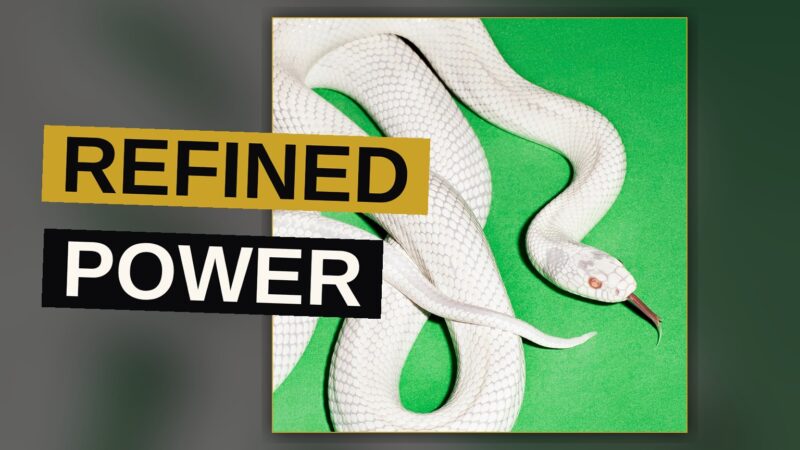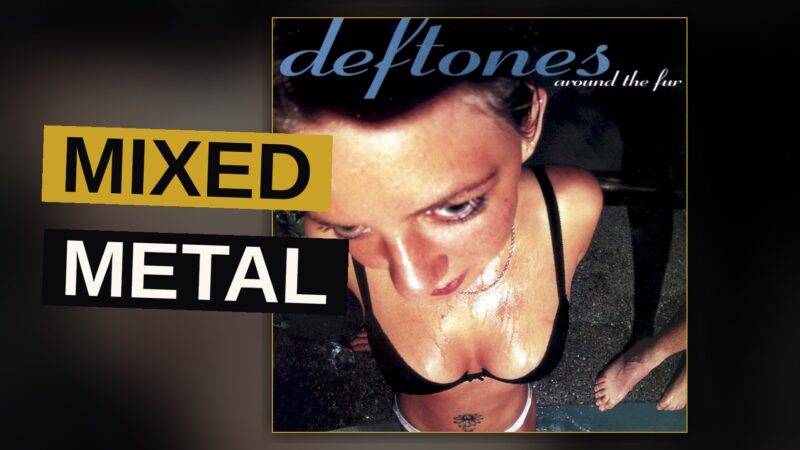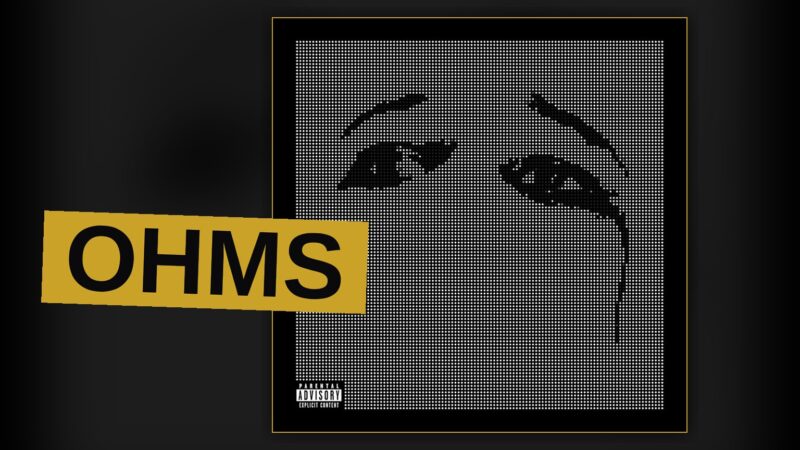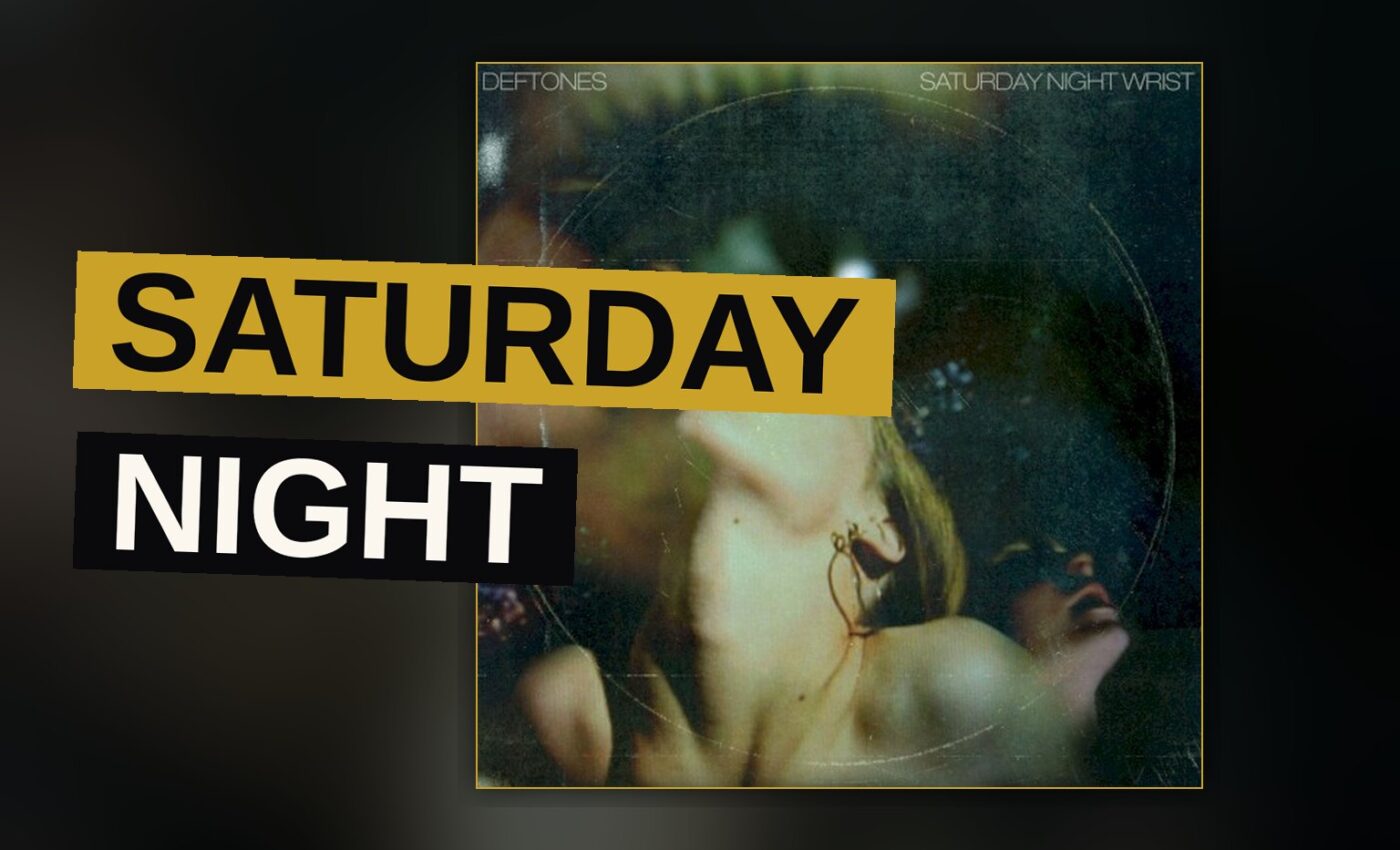
Deftones made White Pony in 2000, and Saturday Night Wrist is their attempt to make another one. The band wanted the same mix of heavy guitar, clean singing, and quiet melody that made White Pony a classic. That formula worked once. It does not work twice.
Hole in the Earth Opens the Record
Hole in the Earth opens the record with a slow build, guitar sliding into a heavy riff before the song opens up into a chorus. It is the strongest opening statement here, and it sets the tone for what follows.
Rapture follows at 3:26, a shorter, tighter track that leans on distorted guitars and a driving rhythm. It is solid but not essential, a warm-up rather than a standout.
Beware runs 6:01 and is the longest track on the front half of the record. It stretches out with a slow, tense verse before the chorus hits. It is the most atmospheric moment on the record, though the length does not always serve it.
Cherry Waves closes the first stretch at 5:18, a track built around a clean guitar line and a melody that carries the weight of the song. It is one of the better moments on the record, a track that shows the band can still land a hook even when the production gets busy.
“The review treats White Pony as a classic and Saturday Night Wrist as a less successful attempt to repeat its formula.”
Mein comes next, at 3:58, a track that keeps the heavy guitar sound while the singing stays clean throughout. It is competent but unremarkable, a track that does not move the record forward.
U,U,D,D,L,R,L,R,A,B,Select,Start is a strange title for a rock song, and the track lives up to it. At 4:13, it is one of the more interesting tracks here, with a guitar line that cuts through the mix and a chorus that lands. It is the kind of track that rewards attention, even if it does not reach the heights of the best songs on White Pony.
Xerces, Rats!Rats!Rats!, and Pink Cellphone
Xerces, at 3:42, is a track about ants and war, and it carries a sense of dread that fits the band’s usual themes. It is a strong track, though the subject matter is familiar ground for the band.
Rats!Rats!Rats! is a short, sharp track at 4:01, built on a driving beat and a chorus that repeats its title. It is fun but slight, a track that works better as a live closer than as a statement.
Pink Cellphone is a quiet, acoustic-led track at 5:05, a departure from the heavy sound that defines most of the record. It is a welcome change of pace, though it feels like a detour rather than a destination.
Combat, at 4:46, brings back the heavy guitars and the clean singing, a track that tries to recapture the energy of the earlier parts of the record. It is solid but forgettable, a track that blends into the middle of the album without leaving much of an impression.
Kimdracula, at 3:14, is the shortest track on the record, a quick burst of distorted guitar and a chorus that sticks. It is the most immediate track here, a song that rewards a single listen.
Rivière Closes the Record
Rivière closes the record at 3:45, a track that slows things down and ends the album on a quieter note. It is a fitting close, though it does not match the ambition of the opening tracks.
The record runs 51 minutes across 12 tracks, and the track list moves from heavy opener to quiet closer without a wasted minute. The problem is that the songs themselves do not always match the ambition of the arrangement.
Where Saturday Night Wrist Falls Short
Saturday Night Wrist is not a bad record. It is a record that plays it safe where White Pony took risks, and the difference shows. The band is clearly trying to repeat what worked before, and that repetition is the problem.
The production is dense and layered, with guitars sitting high in the mix and the singing floating above them. It is a sound the band has used since White Pony, and it works well here. But the songs underneath that sound are thinner than the songs on White Pony.
The record’s best tracks — Hole in the Earth, Cherry Waves, U,U,D,D,L,R,L,R,A,B,Select,Start — are the ones that break through the surface. The lesser tracks — Mein, Combat, Rats!Rats!Rats! — are the ones that get lost in the mix.
The Verdict
Saturday Night Wrist is a record that wants to be White Pony. It is not that record, and it does not pretend to be. What it is is a competent, often enjoyable collection of songs from a band at the peak of their career.
The highs are higher than the lows, and the record holds together as a whole. But there is a distance between the ambition and the execution that keeps it from greatness.
Saturday Night Wrist is a solid record from a great band. It is not the band’s best work, but it is worth hearing for the moments where it connects.
7.2 of 10.
- Hole in the Earth (album version)4:09
- Rapture (album version)3:26
- Beware (album version)6:01
- Cherry Waves (album version)5:18
- Mein (album version)3:58
- U,U,D,D,L,R,L,R,A,B,Select,Start (album version)4:13
- Xerces (album version)3:42
- Rats!Rats!Rats! (album version)4:01
- Pink Cellphone (album version)5:05
- Combat (album version)4:46
- Kimdracula (album version)3:14
- Rivière (album version)3:45