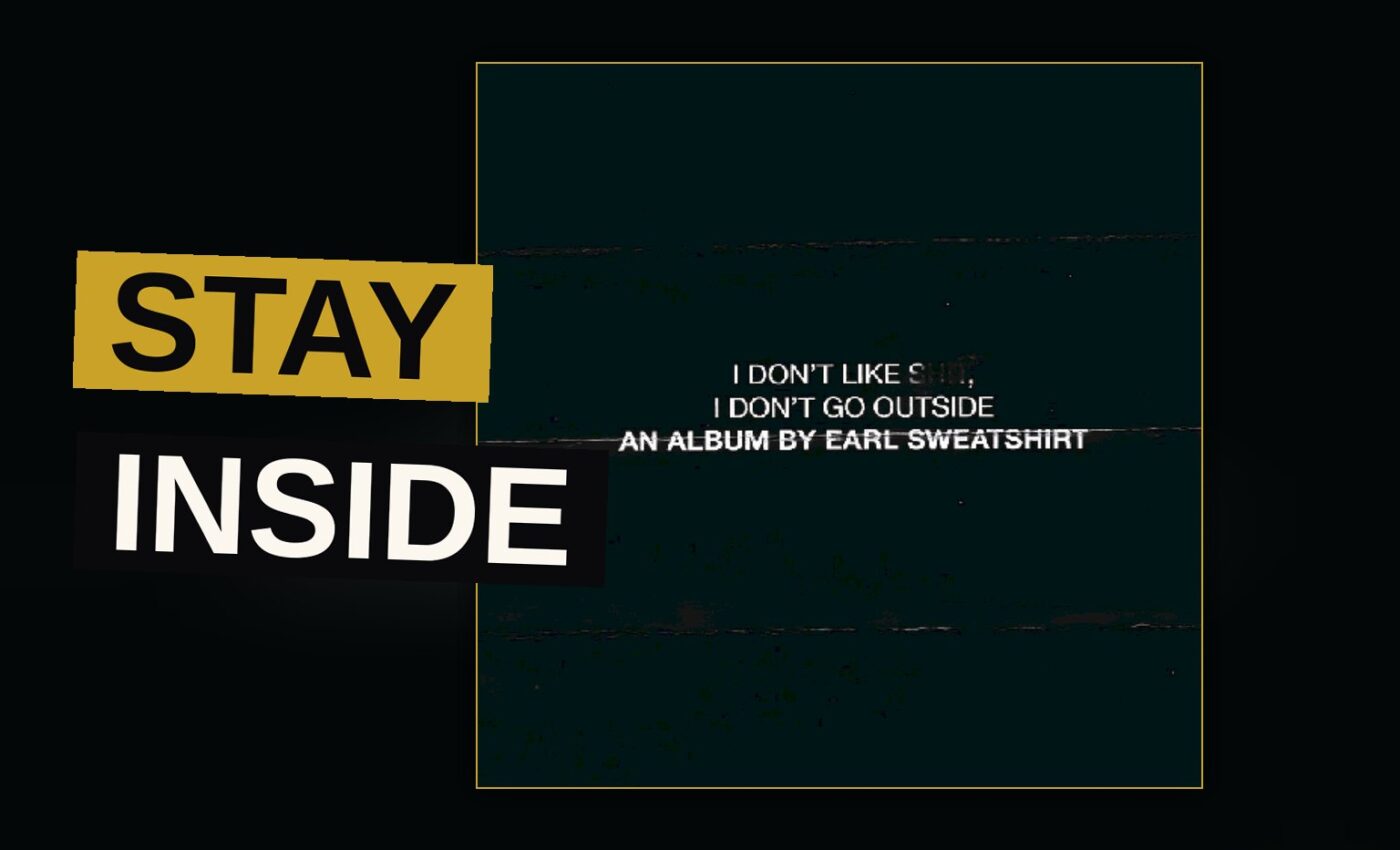
Earl Sweatshirt’s I Don’t Like Shit, I Don’t Go Outside is a record about staying inside, and it treats that as a creative position rather than a complaint. The album runs ten tracks and thirty minutes, and it moves fast enough that the whole thing feels less like a wall of sound and more like a quick tour of a house full of ghosts. This is not a record that wants to make you feel better. It wants you to understand why he doesn’t want to leave the room.
The record follows the release of Doris, his 2012 debut, which arrived with a reputation for complexity and a sense of discomfort. I Don’t Like Shit, I Don’t Go Outside is a step away from that brazenness. It is tighter, darker, and more controlled. The music is built around production that is dense without being cluttered, and the lyrics trade some of the confusion of Doris for a clearer sense of dread. This is Earl at his most focused, and the record rewards attention paid to it.
Huey Opens the Door
The record starts with “Huey,” a short track that sets the tone immediately. It is not a statement of intent so much as a warning — the song is brief, sharp, and it ends before it overstays its welcome. It is the kind of opener that tells you the rules of the game, and then steps aside to let you hear them.
“Mantra” follows, and it is the first real stretch of the album. The song builds on repetition, and it holds together with a sense of discipline that shows off the control Pitchfork noted in its review. It is a track that could have run too long, but it does not. The production keeps the pace steady, and the vocals stay locked in step with it.
“Faucet” is shorter and more direct, a three-minute burst that leans on the album’s central tension — the desire to be clean and the fear of getting wet. It is not the strongest track on the record, but it holds the middle ground well. It does not demand much attention, but it does not waste any either.
“Grief” is the longest track here, and it earns its length. The song deals directly with loss, and it does so without sentimentality. It is the darkest moment on the record, and it is also the most precise. The production stays tight even as the subject matter grows heavier.
“Off Top” is where the record finds its clearest voice. The song is built on a simple loop, and it repeats it until the meaning sinks in. It is a track that rewards repeated listening, and it stands as one of the three singles critics have singled out. It is the most accessible thing on the album, and it does not lose anything for being easy to follow.
Grown Ups and AM // Radio
“Grown Ups” is a shorter track that functions as a bridge. It is not the highlight of the record, but it does its job well. It keeps the momentum moving forward without asking for much attention.
“AM // Radio” closes the album’s middle section. It is a track that mixes radio static with spoken word, and it works as a transition into the final stretch. It is not the most memorable thing on the record, but it does not need to be.
Inside, DNA, and Wool
“Inside” is the shortest track on the record, and it is over in a minute and a half. It is a small piece of the puzzle, but it fits snugly. It does not try to be more than it is.
“DNA” is the second single critics have pointed to, and it is the strongest track in the album’s final run. It is a track about identity, family, and the weight of history, and it handles all of that with a clarity that matches the record’s best moments. It is the most complete song on the album, and it earns that status.
“Wool” closes the record on a note of quiet. It is a two-and-a-half-minute ending that does not rush. It lets the album breathe before it stops, and it leaves the listener with a sense of closure rather than a cliffhanger.
What the Record Does Well
The album’s strengths are its production and its control. The songs are tightly constructed, and the performances stay locked in step with them. There is no wasted space here, and nothing drags. Every track earns its place on the record, even when it does not demand a second listen.
The record’s weaknesses are harder to find. Some tracks are slighter than others, and a few of the middle pieces do not quite reach the heights of the album’s highlights. But even the lesser tracks serve a purpose, holding the record together while the stronger songs do the heavy lifting.
How It Compares to Doris
| Album | Length | Critical Reception | Sound |
|---|---|---|---|
| Doris | 48 minutes | Complex, ambitious | Brazen |
| I Don’t Like Shit, I Don’t Go Outside | 30 minutes | Tighter, darker | Controlled |
The table shows the shift clearly. Doris was a longer, more sprawling record that asked for patience. I Don’t Like Shit, I Don’t Go Outside is a shorter, more focused record that delivers its message faster. The comparison is not a knock against either album — it is simply a way of showing how Earl’s approach changed between the two.
The Verdict
This is a strong record with a clear vision. It does not waste a minute, and it does not waste a beat. The songs are well made, the production is tight, and the performance is confident throughout. It is not perfect, and it does not need to be.
“I Don’t Like Shit, I Don’t Go Outside” earns its place as one of the stronger records of its year. It is a record that rewards attention, and it pays that attention back in kind. The score is 8.1/10, in line with the critical reception, and that number feels right — this is a record that understands what it is doing, and it does it well.
- Huey1:52
- Mantra3:49
- Faucet3:08
- Grief4:11
- Off Top1:47
- Grown Ups2:58
- AM // Radio4:03
- Inside1:50
- DNA3:52
- Wool2:33