Marvin Gaye and Tammi Terrell made their name as the most natural-sounding duo in Motown’s golden age. Their chemistry was a living thing that turned hits into enduring templates for romantic pop.
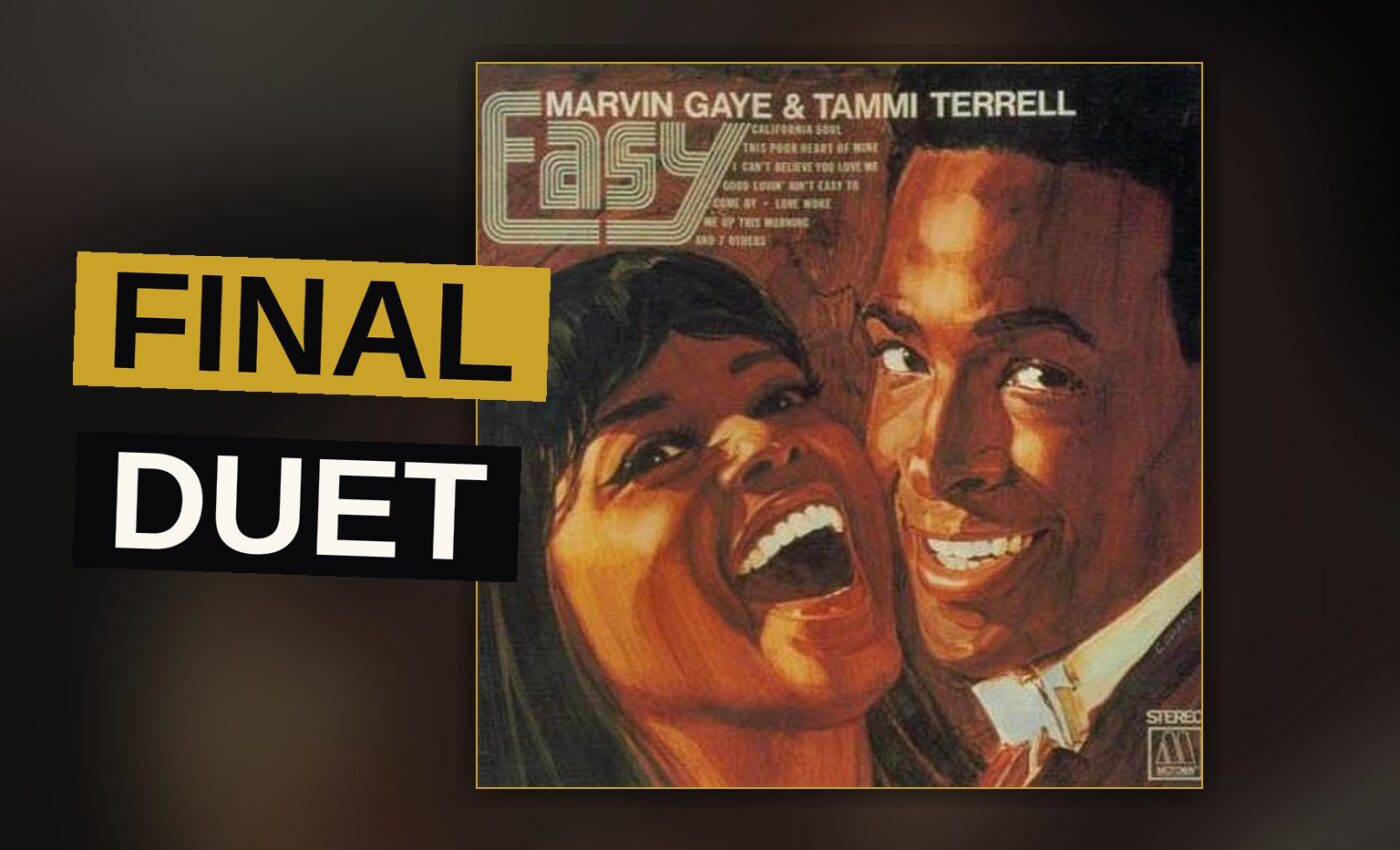
Easy, their third and final studio album together, arrives with a different story. Terrell’s health was failing, and her vocal parts on several tracks were filled by Valerie Simpson, the songwriter who, with her partner Nickolas Ashford, had written much of the duo’s best material. The record is trying to do what its title suggests: coast. It aims for a relaxed, breezy summer feel, but the circumstances behind it are heavier than the music lets on.
The album runs just 33 minutes across 12 tracks, a tight, efficient package that never overstays its welcome. It is a product of its era, with lush orchestration and warm basslines, but it also carries a quiet tension. When Terrell is on the mic, the record crackles with the old magic. When Simpson steps in, the engine runs smoothly but the soul of the partnership is missing.
That split is the whole story of Easy, and it makes for a record that is pleasant, intermittently thrilling, and ultimately a little sad.
Good Lovin’ and the Strong Start
The album starts strong with “Good Lovin’ Ain’t Easy to Come By,” a track that critics have consistently singled out as a highlight. It is a brassy, confident opener that puts the duo’s interplay front and center. Gaye and Terrell trade lines with the ease of old friends finishing each other’s sentences, and the chorus lands with a hook that refuses to let go. It is the sound of two people who genuinely enjoy singing together.
“California Soul” keeps the momentum going. It is a slice of West Coast fantasy filtered through the label’s assembly line, all sunshine and strings. The track has a groove that feels effortless. “Love Woke Me Up This Morning” follows, another track that critics have flagged as a standout. It has a lighter touch, a gentle sway that suits the album’s easygoing title. These first three tracks are the record’s strongest opening salvo.
Then comes “This Poor Heart of Mine,” a mid-tempo number that leans into Gaye’s lead vocals. It is a solid, workmanlike performance, but it lacks the spark of the opening trio. The song is fine; it just does not demand attention the way “Good Lovin'” does. It is the first sign that the album is willing to settle for competence rather than brilliance.
The Onion Song and the Simpson Question
“I’m Your Puppet” is where the album’s central tension becomes audible. The song is a cover, and it is a natural fit for the duo’s romantic dynamic. But on this track, it is Simpson, not Terrell, who shares the mic with Gaye. Simpson is a gifted singer, but she is not Terrell. The AllMusic review put it plainly: Simpson “is a good singer but doesn’t have the charm, charisma, or sexy Southern drawl that Tammi was blessed with.”
That assessment holds up on every note she sings here. She hits the notes cleanly, but the chemistry that made the duo special is gone. The song becomes a competent performance rather than a conversation.
“The Onion Song” is the album’s most curious entry. It is an Ashford and Simpson composition with a positive social message about poverty and unity, but the metaphor is strained. The AllMusic review called it “Ashford and Simpson’s silliest composition despite its positive social message.” The track is not a disaster, but it is hard to take seriously when the chorus is built around onions.
“What You Gave Me” picks things up slightly. It is a straightforward love song with a decent hook, but it does not leave a lasting impression. The album is now in its middle stretch, and the energy is flagging. The opening three tracks promised a stronger record than the next four deliver.
“Baby I Need Your Loving” is a cover of a well-known classic, and it is a strange choice. The song is so closely associated with its original lead vocal that any cover risks falling flat. Gaye gives it his best, but the track feels like a karaoke version rather than a reinterpretation. It is not bad; it is just unnecessary.
More, More, More and the Home Stretch
“I Can’t Believe You Love Me” brings a little life back. It is a playful, upbeat number that lets Gaye and Simpson trade lines with some of the old energy. It is not a classic, but it is a pleasant reminder of what the duo could do when the material clicked.
“How You Gonna Keep It (After You Get It)” follows, a funky little number with a wink in its title. It is the kind of track that works better in a club than on a careful listen, but it has a groove that keeps it afloat.
“More, More, More” is a slight, forgettable entry. It is not bad; it is just there. The album closes with “Satisfied Feelin’,” a warm, laid-back track that brings the record full circle. It is a gentle ending, the kind of song that fades out like a summer afternoon. It does not aim for greatness, and it does not achieve it.
The back half of Easy is not a disaster, but it is a letdown. The record loses focus after the opening tracks, and the Simpson substitutions rob the album of its central selling point. Terrell’s voice is the thing that made the duo special, and her absence is felt on every track she does not sing.
Terrell’s Last Chapter
The story of Easy is inseparable from Terrell’s health. She was diagnosed with a brain tumor, and she continued to record when she could, but her appearances became less frequent. By the time Easy was assembled, her parts were limited, and Simpson was brought in to fill the gaps. The album was released in 1969, and Terrell died the following year at the age of 24.
That context hangs over the record. It is impossible to listen to “This Poor Heart of Mine” without thinking about what Terrell was going through. The album’s title, Easy, starts to feel like a wish rather than a description. The record is not easy at all; it is a document of a partnership in decline, made by people who knew the end was coming.
The AllMusic review noted that the album is “not as arresting as two previous albums.” That is a fair summary. Easy is a lesser work in the Gaye-Terrell canon, but it is not a failure. It is a record made under impossible circumstances, and it manages to be pleasant, occasionally lovely, and always professional.
Satisfied Feelin’ and the Verdict
Easy is a record caught between two worlds. It has the polish and craft of the label at its peak, and it features some of Gaye’s finest singing. But it is also a record about absence. Terrell’s voice is the heart of the duo, and when she is not there, the music loses its pulse. The opening tracks are strong enough to make the album worth a listen, and “Good Lovin’ Ain’t Easy to Come By” is a genuine highlight.
But the middle stretch drags, the Simpson substitutions are a noticeable downgrade, and “The Onion Song” is a misstep that time has not improved. This is a record for completists and for fans who want to hear the final chapter of a great partnership. It is not a starting point.
It is a modest, bittersweet farewell, and it deserves a modest, bittersweet score.
Key Facts
- Album: Easy by Marvin Gaye & Tammi Terrell
- Release year: 1969
- Running time: 33 minutes
- Tracks: 12
- Notable standouts: “Good Lovin’ Ain’t Easy to Come By,” “Love Woke Me Up This Morning”
- Vocal substitution: Valerie Simpson fills in for Terrell on several tracks
- Our score: 6 of 10
Get the Notebook.
The day's best stories and every fresh verdict, in plain English, in your inbox by seven. One email a day, no more.
- Good Lovin' Ain't Easy to Come By2:52
- California Soul2:46
- Love Woke Me Up This Morning2:29
- This Poor Heart of Mine2:39
- I'm Your Puppet2:56
- The Onion Song2:55
- What You Gave Me2:40
- Baby I Need Your Loving2:59
- I Can't Believe You Love Me2:42
- How You Gonna Keep It (After You Get It)2:49
- More, More, More2:29
- Satisfied Feelin'2:50