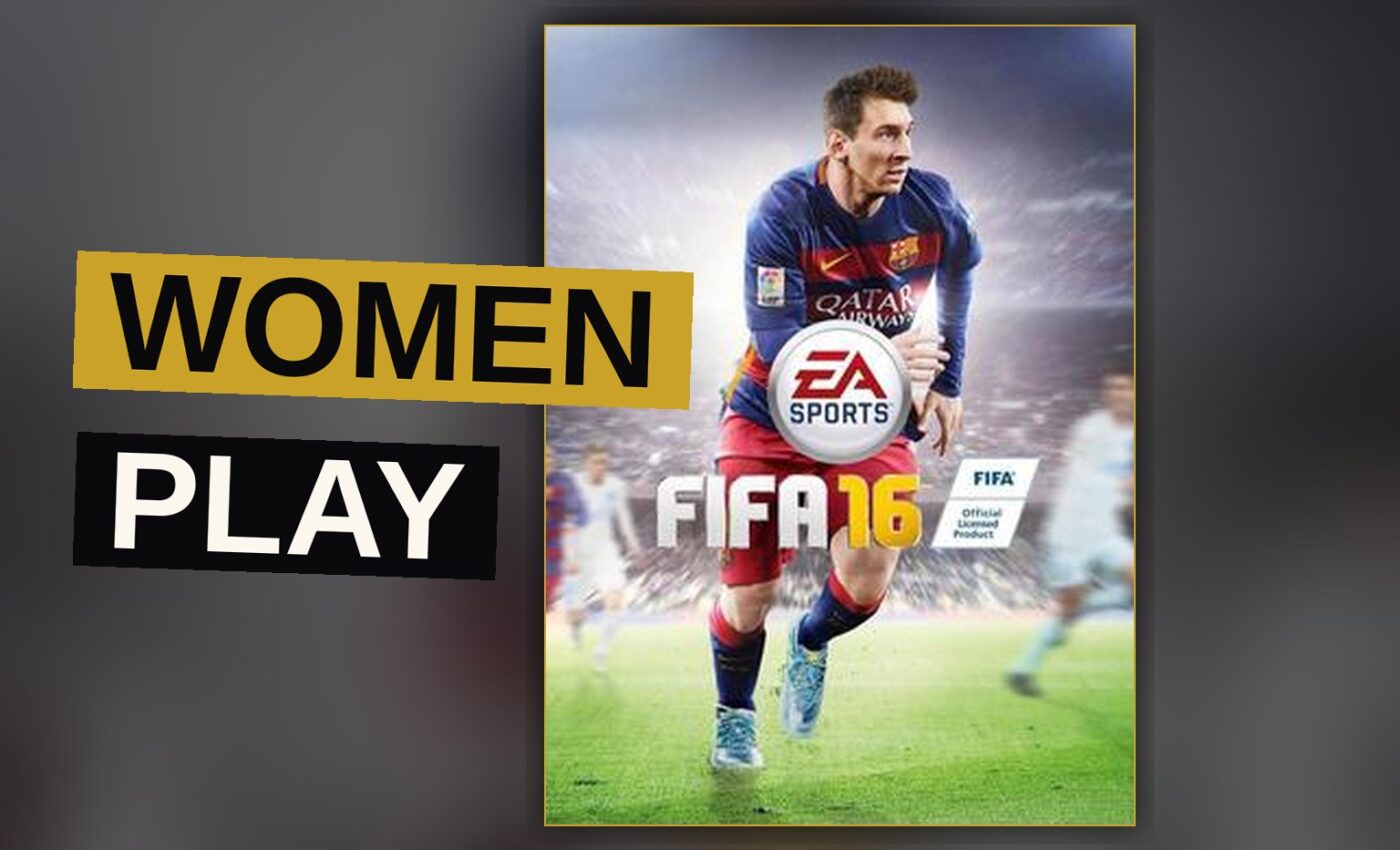
FIFA 16 put women on the pitch and a trainer in your ear, and it still holds up as one of the most complete football games EA Canada has shipped.
Released in 2015 for PlayStation 4, PC and Xbox One — with PlayStation 3, Xbox 360, Android and iOS versions also released — FIFA 16 arrived with a clear pitch: balance the whole field, not just the attack. The cover line said it plainly — “Play Beautiful” — but the changes underneath were more interesting than the slogan. This is a game that promised better defending, gave midfield a purpose, and made a quiet bet that the series could grow by adding rather than overhauling.
Trailer, via IGDBcom.
Female Players Arrive in the Series
The headline change is historic. FIFA 16 is the first game in the FIFA series to include female players. That is not a cosmetic addition or a menu toggle buried in an exhibition mode — it is a structural first for a franchise that had gone more than two decades without it.
The game is also the first in which the players on the covers were chosen by popular vote. One of the first three women to appear on the cover came out of that vote. The source does not say the two firsts were connected by design; they are simply two things FIFA 16 did before anyone else in the series.
Martin Tyler and Alan Smith return as commentators. Their presence keeps the broadcast feel steady while everything around them shifts.
FIFA 16 – Play Beautiful.
Confidence in Defending, Control in Midfield
EA Canada’s stated goal was innovation across the entire pitch. The marketing language named three pillars: Confidence in Defending, Control in Midfield, and more Moments of Magic. That is promotional copy, and it is worth treating as such — the source describes the pillars, not a completed fix.
Defending in previous FIFA entries often felt like a punishment — a scramble to recover after a failed tackle. FIFA 16’s pitch was that holding shape and reading passes would become viable. Midfield got similar billing, with the promise of a reason to build through the middle instead of sprinting down the wing every possession.
The FIFA Trainer is the tool aimed at players who want to compete at a higher level. The source says fans new to the franchise and skilled players looking to improve “will have a chance” to use it. It is a coaching feature built to teach new fans and sharpen experienced ones.
78 Stadiums and a Tribute to Simon Humber
FIFA 16 shipped with 78 stadiums, 50 of them real-world venues. That number is the kind of detail that separates a roster update from a full release, and it gives the game a sense of place that smaller football titles cannot match.
One stadium carries more weight than the rest. Fratton Park, home of Portsmouth, was added to honour Portsmouth fan Simon Humber, creative director of the FIFA series, who died of cancer in 2015. It is a small gesture inside a large product, and it is the most human thing in the game.
Career Mode gained a Training Mode that lets you develop footballers on your team without actually playing them. The mechanic runs on skill games, a feature first added to the series in EA Sports’ 2014 World Cup official game. You set a specific focus for each player, and he grows according to that chosen attribute. Doing so also raises his transfer value, which turns development into a financial decision as much as a football one.
Ultimate Team Draft and Two-Year Loans
FIFA Ultimate Team received the deepest set of changes. The interface was rebuilt across pack management, the transfer market, squad chemistry, consumables, and swapping players. Anyone who spent hours fighting the old menus will notice the difference immediately.
The bigger addition is FIFA Ultimate Team Draft. Players get a choice of five random players for each position, then take their newly assembled team into a tournament-style format. It is a mode built on commitment — you live with the squad you draw.
Xbox players saw the FIFA Ultimate Team Legends roster expand to include historic names: George Best, Ryan Giggs, Deco, Vítor Baía and Alessandro Nesta. Friendly enhancements also arrived, letting players pick a friendly tournament before a season starts. Winning one gives a transfer budget boost, and unlimited substitutions are permitted in these friendly games. Two-year loans round out the list of additions.
What FIFA 16 Gets Right, and What It Does Not
The aggregate critic score sits at 8.3 out of 10 across 13 outlets, and that feels about right for a game that improved broadly without transforming radically.
The women’s national teams are the most significant thing here. Adding female players filled a gap that had stood for more than two decades. The cover vote compounded it, handing players a say in who fronted the game. That combination — representation on the pitch and choice on the box — is the part of FIFA 16 that will still matter in ten years.
The Ultimate Team changes are the part that will matter to the most people right now. Draft is a genuine addition, not a reskin, and the interface work addresses complaints that had built up over several entries. Two-year loans and friendly tournaments are smaller, but they fill gaps that dedicated players had been working around for years.
The weaker ground is the pitch itself. Confidence in Defending and Control in Midfield are real adjustments, but they are refinements to an established formula rather than a rebuild. FIFA 16 plays like a better-tuned version of what came before. Anyone hoping for a new foundation will not find one.
The FIFA Trainer is the most debatable addition. It is useful, and it points to where the series was heading: toward more instruction, more overlays, more guidance for players who might not need it. Whether that is help or clutter depends on how you play.
One fact sits outside the review and deserves mention anyway. The online servers for FIFA 16 were shut down on 14 February 2023. Ultimate Team, the mode that received the most attention in 2015, is no longer playable online. Draft, the transfer market, the friendly tournaments — all of it is gone. What remains is the disc, the stadiums, the Career Mode training, and the women’s teams that made the game matter.
That is a strange afterlife for a sports title, and it is the reality of the genre. FIFA 16 was built to be played online for years.
The score reflects what the game was when it launched and what it still offers offline. FIFA 16 delivered on its promise to innovate across the pitch, even if the innovation was steadier than it was dramatic. The women’s teams alone justify the place it holds in the series.
Get the Notebook.
The day's best stories and every fresh verdict, in plain English, in your inbox by seven. One email a day, no more.