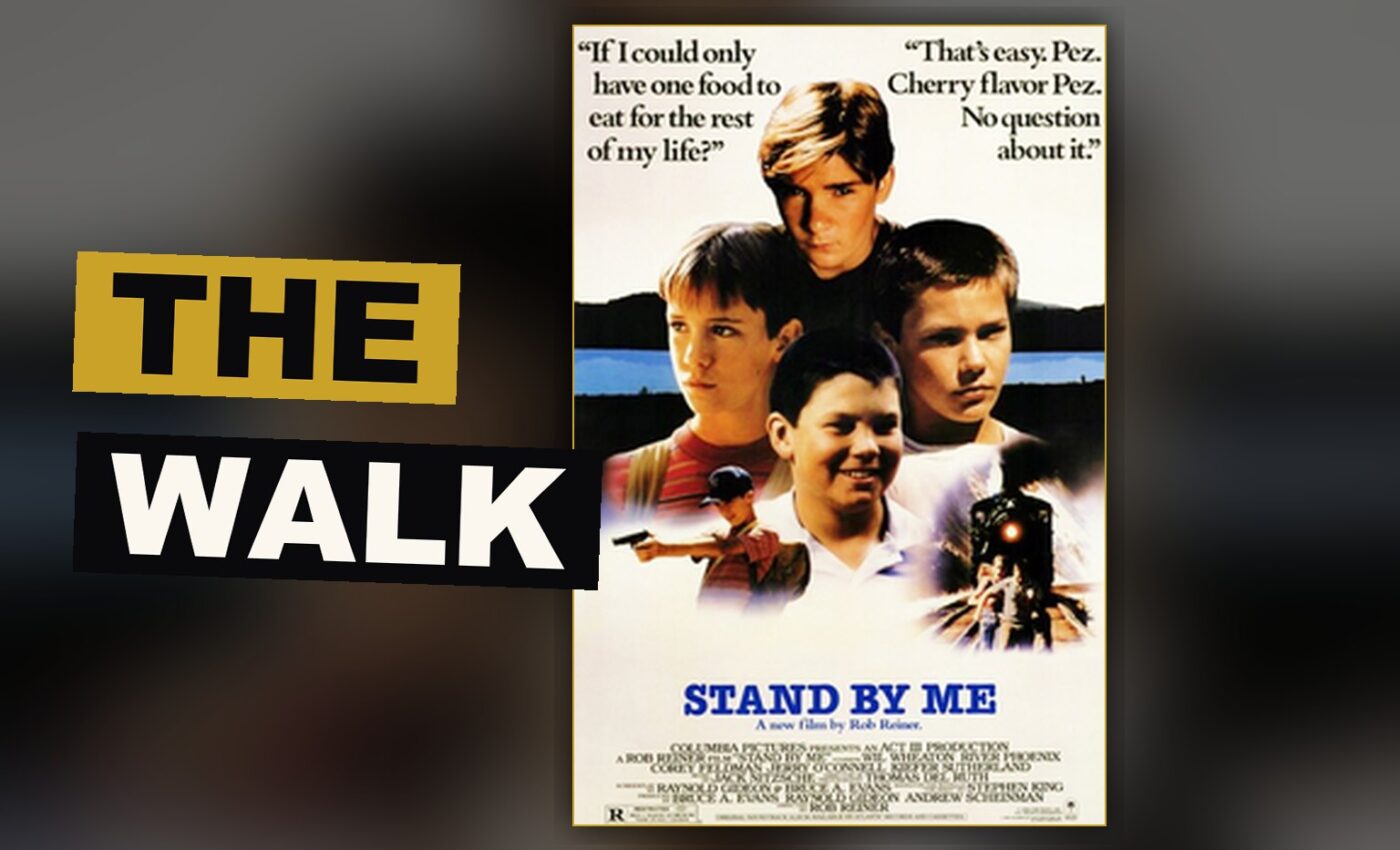
Four boys walk down a set of train tracks looking for a body. That is the story of Stand by Me, and it is enough. Rob Reiner’s 1986 film takes a simple premise and turns it into one of the most quietly effective films about growing up ever made.
The Walk
The film follows four boys in a quiet town who set out on foot to find the body of a missing boy. The trip is short in distance but long in what it asks of each of them. Reiner does not rush it. He lets the walk unfold slowly, lets the boys talk, argue, and sit around a fire at night telling stories.
The film is based on a short work of fiction, but it does not depend on horror or fear for its effect. Instead it stays close to the four boys and the small, clear moments between them. That quiet approach is part of what makes it work.
The Four Boys
One boy tells the story, a quiet kind who wants to be a writer and is working through a loss he has not named yet. Another carries the weight of a family name his town has already judged him by. A third wants to prove he has boldness. The fourth mostly wants to belong.
The bond between the four leads carries the film. None of them acts like a small adult, and none of them acts like a hero from an action film. They act like boys, scared and funny and loyal in ways that feel true rather than written.
The boy who plays the one judged by his family name draws particular notice. He brings a worn feeling to the part that seems earned, especially in a speech about being unable to escape what his town already believes about him. It stands as one of the film’s clearest scenes.
What the Film Gets Right
Stand by Me does not push its stakes too far. The body itself is almost beside the point by the end. What matters is what the search reveals about each boy: grief over a brother, fear of a fixed reputation, the need to prove courage, the wish simply to belong.
Not every scene carries equal weight, though. The pace loses strength in the middle part of the film, particularly a side scene involving a dangerous dog, which feels like a device more than a true part of the journey. It serves the need for obstacles rather than the boys’ need to change. Some of the lines aimed at humor also date the film slightly, though this rarely breaks the mood for long.
The film also avoids a neat, easy wrap-up. An adult version of the narrator, shown briefly at a keyboard near the close, delivers a plain, closing line about how no friendships later in life ever matched the ones from that age. It is a simple thought, and it lands harder for being simple.
A Quick Comparison
| Element | Stand by Me | Usual 1980s Films About Youth |
|---|---|---|
| Focus | Turned toward the boys themselves | Often driven by story or comedy |
| Tone | Quiet, tinged with sadness | Frequently broad and light |
| Ending | Open, left with sadness | Often wrapped up neatly |
| Cast | Four young leads carrying the full weight | Ensemble often led by adults |
Its Place in Film History
Stand by Me has held its spot in conversation about American films about youth for decades, largely on the strength of its performances and its refusal to ease the sadness at its core. It does not need spectacle. It needs four boys on a set of train tracks, talking, and it gets everything it needs from that.
Numbers Worth Noting
- Director: Rob Reiner
- Came out in 1986
- Based on a short work of fiction
- Length and box office figures: not covered here
- Critical score: 8.1 of 10
Stand by Me remains a small film that does a great deal with little. It trusts its actors, trusts its pace, and trusts an audience to sit with sadness instead of rushing past it. That trust is why it still holds up.