
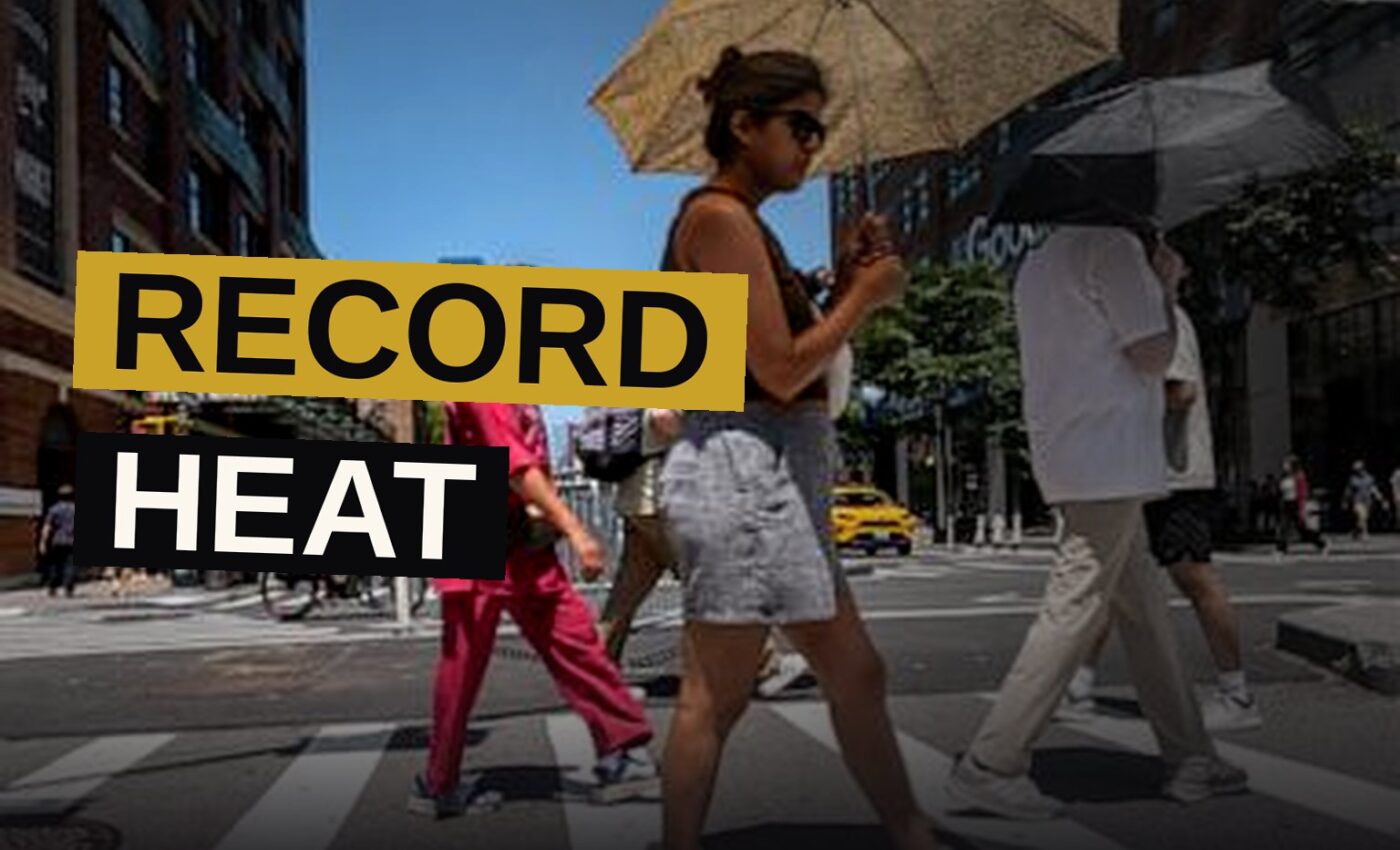
A new report says global temperatures reached record highs as El Niño strengthened. August 2026 became the warmest August ever measured, tying with July 2023 as the hottest month across all calendar months in a dataset that reaches back to 1940. The findings come from the Copernicus Climate Change Service (C3S), which released its analysis on Wednesday.
Last month, the Earth’s average surface air temperature came in at 62.5 degrees Fahrenheit, a measurement that pushes past the previous August records set in 2023 and 2024. The reading also stands as the first record-breaking month for global temperatures since January 2025.
The Warmest Month on Record
The Copernicus Climate Change Service referred to August 2026 as a “remarkable month in the global climate record.”, and it tied with July 2023 for the joint-warmest month on Earth among all calendar months.
The data set starts at 1940, and last month marked the first time since November 2025 that temperatures exceeded the 1.5 degree Celsius threshold above the 1850-1900 pre-industrial average. August 2026 hit a reading of 1.65 degrees Celsius above that benchmark.
Scientists consider the 1.5-degree Celsius mark, which translates to 2.7 degrees Fahrenheit, a crucial point beyond which human-amplified climate change could bring on its most severe effects. That threshold was set by the 2015 Paris Agreement.
El Niño’s Role in the Heat
The unusually high temperatures are occurring alongside potentially unprecedented El Niño conditions unfolding across the central and eastern equatorial Pacific.
Record-breaking warmth happens when short-term El Niño temperature jumps sit atop the long-term rise in global temperatures. Scientists stress that the phenomenon itself is not the only cause of these record highs. Instead, they point to human-caused greenhouse gas emissions as the primary driver of the long-term warming trend.
El Niño years tend to produce record highs in the global average temperature. Still, the pattern itself cannot account for how much the world has warmed recently.
Ocean Temperatures Reach New Highs
Last month saw global sea surface temperatures reach a new record high. In the central and eastern equatorial Pacific, El Niño conditions kept growing stronger. Marine heatwaves kept appearing across the planet at the same time.
The Copernicus record for daily average global sea surface temperature was broken on Aug. 22. Between 60 degrees south and 60 degrees north, the water hit a high of 69.98 degrees Fahrenheit.
The reading exceeded the earlier mark of 69.96 degrees Fahrenheit set in February and March 2024, which occurred during the last El Niño event. Sea surface temperatures across the globe likewise reached a record for August, marking a new monthly high for the second straight month.
“This record is another clear signal of an ocean under growing stress,” said Samantha Burgess, deputy director of the Copernicus Climate Change Service. “El Niño is adding heat to the system, but it is doing so on top of decades of human-driven warming.”
What the Scientists Are Saying
In her statement, Burgess addressed the larger context, saying “Combined with record global sea surface temperatures and the warmest summer on record for Western Europe, these observations show how climate change is driving extremes across both the atmosphere and the oceans,”.
“The impacts of these conditions are increasingly being felt by communities, economies and ecosystems across the world,” she added.
The C3S report connects readings from the air and the sea, presenting them as joined signs of a warming world caught between short-term natural shifts and lasting human interference.
US Summer Also Breaks Records
A separate report from the National Oceanic and Atmospheric Administration (NOAA) has its own findings. The agency determined that meteorological summer, spanning June through August, was the warmest summer on record for the nation.
That record surpasses the previous highs set in 1936 and 2021.
Modern records for heat have been exceeded on both a global scale and within the United States.
Western Europe’s Hottest Summer
Across Western Europe, the meteorological summer delivered heat waves that arrived unusually early, endured for a long time, and reached extraordinary intensity. The season proved to be the warmest ever recorded for the region, outdoing the mark set in 2003.
Throughout the summer, persistent heat and drought created ideal conditions for severe fires to spread across wide regions.
The season brought unusually dry conditions across a wide stretch of Europe, with western and central Europe, southern Scandinavia and southeastern Europe all seeing far less rain than usual over the summer months.
The lack of rain had concrete consequences for daily life:
- Water levels in several major rivers dropped dramatically
- Water supplies were disrupted in several countries
- Irrigation systems faced shortages
- Energy production was affected in several nations
The disruptions hit multiple sectors at once.
The Global Picture
The August 2026 records do not exist in isolation.
The temperature reached 1.65 degrees Celsius in August, which marks the first time it has crossed the 1.5-degree threshold. That threshold was a central goal of the Paris Agreement.
Monthly and yearly averages are the focus of climate scientists’ attention. The report leaves open whether a single month’s crossing of the threshold alters the larger picture at all.
What Happens Next
The El Niño pattern is getting stronger. The report describes its ongoing development across the central and eastern parts of the equatorial Pacific.
Both C3S and NOAA report the same fundamental finding: the warmth is real and it does not affect all regions equally. It can be seen in the oceans, in the atmosphere, in water levels, and in the seasons of wildfires.
She said it plainly, according to Burgess. “These observations show how climate change is driving extremes across both the atmosphere and the oceans,”
The record-breaking month is now part of the climate record.
| Record | Value | Previous Record | Period |
|---|---|---|---|
| August air temperature | 62.5°F | 2023, 2024 | August 2026 |
| Monthly temperature anomaly | 1.65°C above pre-industrial | — | August 2026 |
| Daily sea surface temperature | 69.98°F | 69.96°F (Feb/Mar 2024) | Aug. 22, 2026 |
| Western Europe summer | Warmest on record | 2003 | June–August 2026 |
| US meteorological summer | Warmest on record | 1936, 2021 | June–August 2026 |
These August 2026 records sit within a broader pattern, not alone. The report ties them to record global sea surface temperatures and the warmest summer ever recorded for Western Europe. A separate NOAA account documents a US summer record, adding a national angle to the wider picture.
The thread that holds these results together is the pairing of El Niño conditions with long-term warming caused by people. The C3S report says that short-term rises in temperature linked to El Niño happen on top of the longer-term upward trend in global temperatures, which is mainly brought about by greenhouse gases released by human activity. Burgess described the record of the ocean as a “clear signal of an ocean under growing stress.”.
No forecast for the future appears within the document. It offers no assertion about whether the present El Niño will match or surpass past ones, nor does it state what passing the 1.5-degree threshold in a single month means for the longer-term goal of the Paris Agreement. Instead, it notes that warmth is manifesting across the atmosphere, the oceans, river levels and wildfire seasons. The record-breaking month has become part of the climate record, and the next monthly update from C3S will reveal whether the pattern persists.
Source: abcnews.com
Get the Notebook.
The day's best stories and every fresh verdict, in plain English, in your inbox by seven. One email a day, no more.