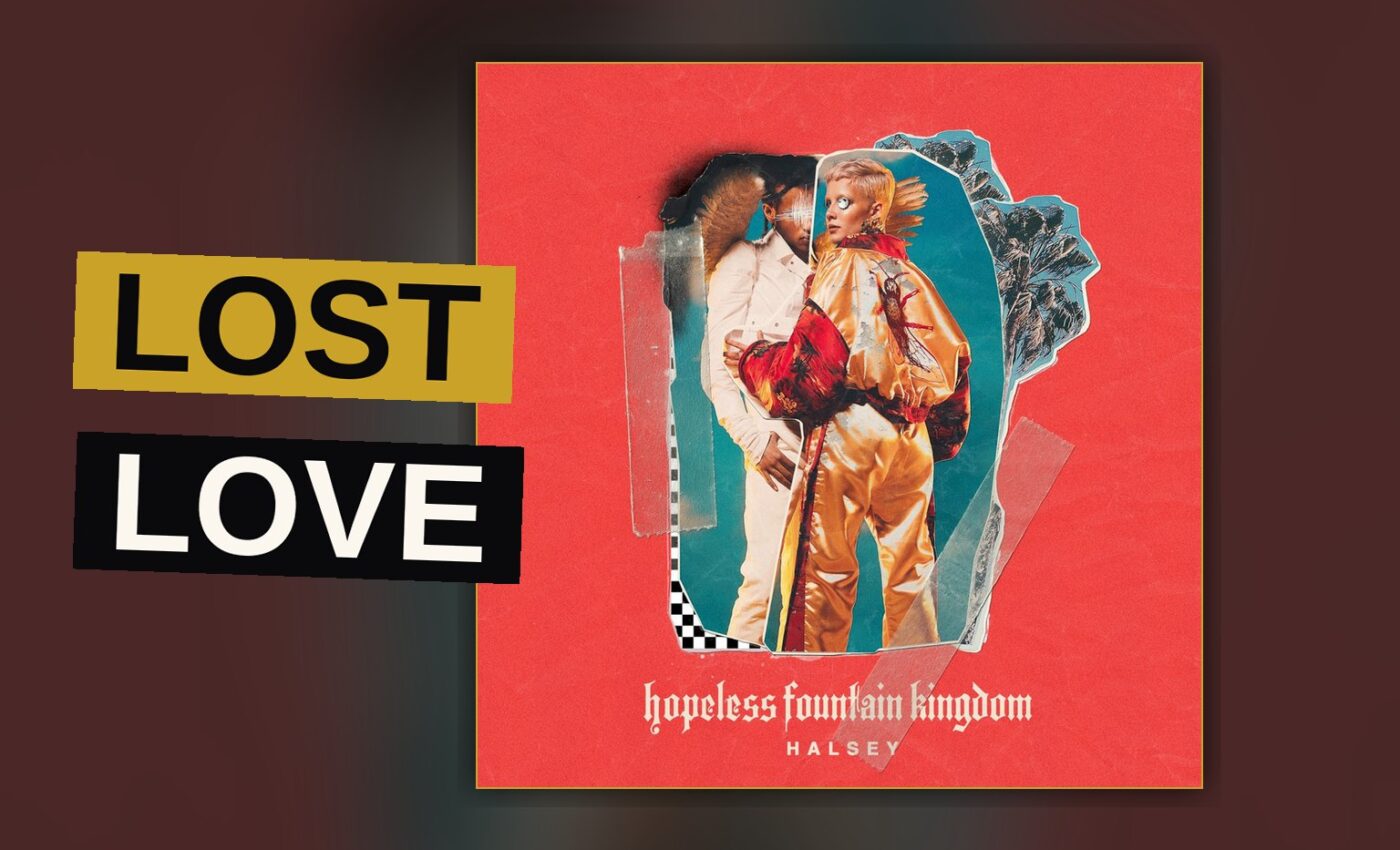
Halsey built hopeless fountain kingdom as a concept album about growing up, moving away, and finding love again in the wake of loss. The idea is simple: a young woman leaves her hometown, loses her father, and eventually finds happiness with a new partner. The execution is less simple. Thirteen tracks, 38 minutes, and a narrative thread that asks listeners to connect puzzle pieces across songs about grief, distance, and reconciliation.
The album is ambitious. It wants to be a full story told through pop music, complete with a prologue and a title track that closes things out. It also wants to sound big, glossy, and emotionally raw at once. That tension shows in nearly every song on the record.
Opening With The Prologue
The album opens with “The Prologue,” a brief instrumental that sets the scene before the first real song begins. It is a small gesture, but it works — the record announces itself as something structured, not just a collection of singles.
“100 Letters” follows, and it is the strongest statement of the album’s thesis. Halsey sings about writing letters to someone who has moved away, and the song’s chorus lands because it is specific: “I wrote you 100 letters / I wrote you 100 lies / I wrote you 100 reasons / Why I want to die.” The count is exact, and the contrast between the number and the content is the song’s engine. It is a great single, and it sets the tone for everything that follows.
“Eyes Closed” slows things down. It is a ballad about intimacy and trust, and it works because Halsey commits fully to the emotion. The production is clean, and the vocal is front and center. It is a quiet moment in a record that mostly keeps the volume turned up.
The Middle Stretch
“Alone” is the first real misstep. It is a breakup song that leans on repetition rather than melody, and the chorus starts to feel like a hook that never quite arrives. It is not bad, but it is forgettable, and it sits in the middle of the album’s best stretch without adding much to it.
“Now or Never” picks things back up. It is a song about urgency and regret, and Halsey delivers the lines with conviction. The production is bright and layered, and the song earns its place as one of the record’s highlights.
“Sorry” follows, and it is the weakest track here. The song is a confession, but the confession feels thin — the apologies pile up without landing anywhere. It is a song about guilt that never quite gets to the guilt.
She doesn’t kiss me on the mouth anymore
That line, from Variety’s review, captures the album’s central tension: the narrator’s grief is real, but the songs about it often feel like placeholders rather than fully realized statements.
“Good Mourning” is a short interlude, a breath between two bigger moments. It is effective in its brevity — a minute of piano and voice that sets up what comes next. It is not a standout, but it does its job.
The Back Half
“Bad at Love” is the album’s centerpiece, and it is one of the strongest songs here. The production is dense and layered, and the vocal performance is commanding. The chorus is a hook that sticks, and the lyrics about being terrible at relationships but still wanting them anyway land with real weight. It is the song that proves the concept can work when the songwriting matches the ambition.
“Strangers” follows, and it is a quieter, more reflective track. It is about distance and familiarity wearing thin, and Halsey captures the feeling well. It is not as immediate as “Bad at Love,” but it holds its own.
“Devil in Me” is a darker turn. It is a song about self-sabotage and the ways people hurt themselves, and Halsey sounds exhausted throughout. The production is heavier than most of the record, and the song earns its place as one of the album’s most memorable tracks.
The Final Stretch
“Walls Could Talk” is a short, atmospheric piece that functions as a bridge into the finale. It is not a song so much as a mood, and it works because it prepares the listener for what comes next.
“Hopeless” closes the album, and it is a fitting end. The song is a meditation on faith, hope, and acceptance, and Halsey delivers the final lines with genuine warmth. It is a good closer.
The Verdict
The problem with hopeless fountain kingdom is that the ambition exceeds the execution too often. The album is at its best when the songs stand alone — “100 Letters,” “Now or Never,” “Bad at Love” — and at its worst when the narrative demands coherence that the individual tracks cannot deliver. Critics questioned whether the album succeeded as a concept, noting its ambition and production quality while questioning the cohesion of its narrative.
The album is not a failure. It is a record with highs that justify the listen and lows that frustrate it. The concept is there, and the ambition is there, but the cohesion that should bind the record together never quite arrives.
It is a record that works best in fragments, and it rewards attention paid to those fragments while frustrating attention paid to the whole.
- The Prologue1:48
- 100 Letters3:30
- Eyes Closed3:22
- Alone3:26
- Now or Never3:35
- Sorry3:41
- Good Mourning1:08
- Lie2:29
- Walls Could Talk1:42
- Bad at Love3:02
- Strangers3:41
- Devil in Me4:09
- Hopeless3:07