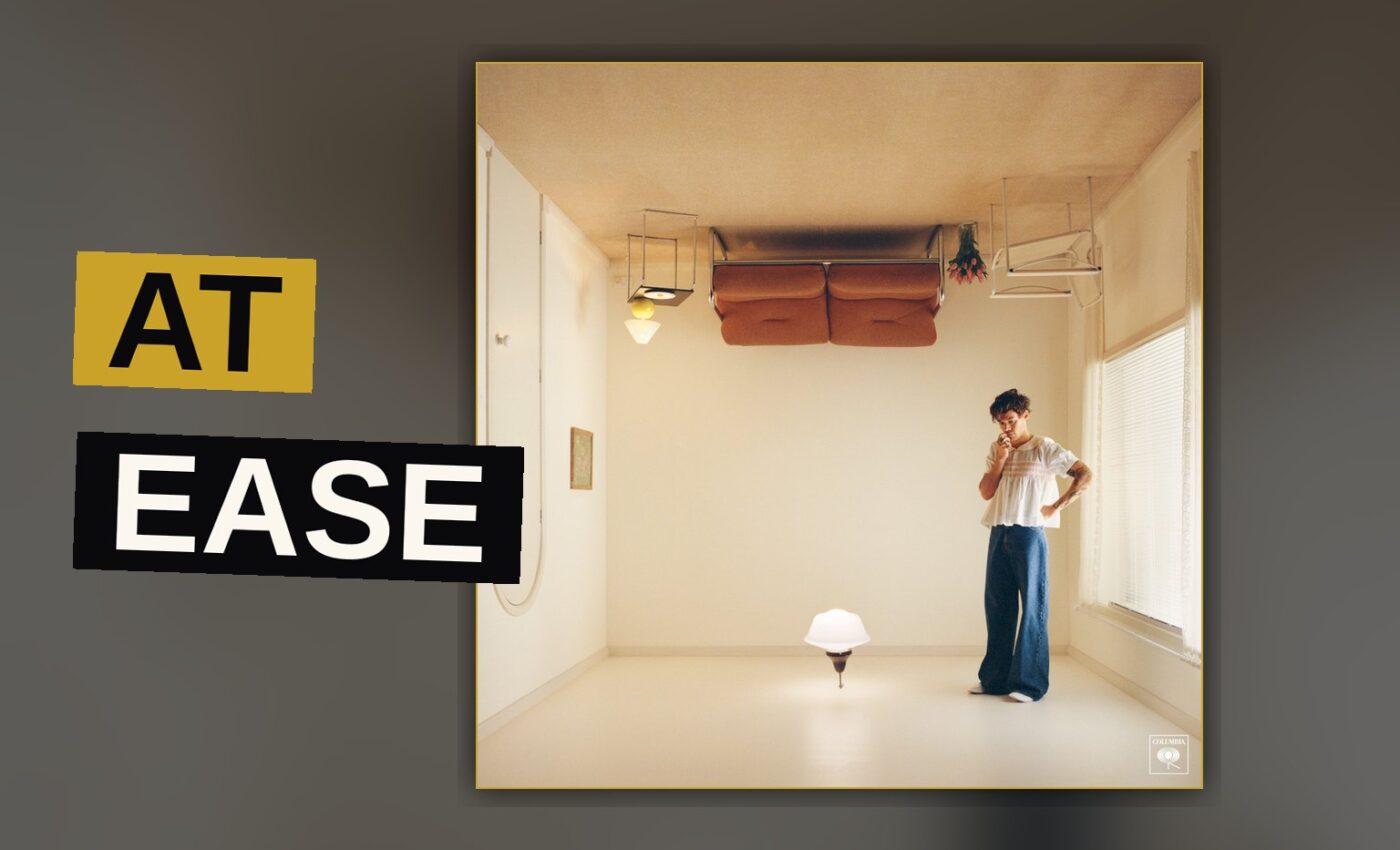
Harry Styles built a record around comfort rather than spectacle, and Harry’s House makes that plain from the first track to the last. It runs 13 songs across 42 minutes, and it rarely raises its voice. This is an album about a man settling into the life he has made, content rather than restless, and it says so through soft arrangements rather than bold statements.
Music for a Sushi Restaurant Opens the Door
The album opens on an odd choice: Music for a Sushi Restaurant, a horn-and-bass number full of vocal repetition and low, rolling bass. It sounds like a party warming up before anyone important arrives. Critics named it among the record’s best tracks, and the choice makes sense — it tells you early that this album trusts its own sound more than its words.
Late Night Talking follows next, and it is the clearest pop song on the record: a bright, rising chorus built for wide play, simple in its ideas and generous with its melody. Grapejuice keeps the mood light, an easy tune that asks little of the listener but gives back a strong hook in return. It has a relaxed pull to it, the kind of song that does not demand attention but rewards it when given.
Then comes As It Was, the song that carried this album everywhere it went. It moves fast, carries real sadness under its bright synth line, and rests on a hook that repeats until it stays with you. It was the first taste anyone had of this record, and it remains the clearest example of Styles joining sorrow to a beat built for movement rather than stillness. The track earned its place at the front of the conversation around this album, and it holds that place without effort.
Daylight and the Quiet Stretch
Daylight is short and pleasant, a track that moves along without much friction and does not ask to be remembered long. Little Freak slows the pace further, a soft, dreamy piece that drifts rather than builds toward anything in particular. Both songs sit comfortably in the middle of the record, doing their work quietly and moving on.
Matilda changes the temperature entirely.
It is the most direct piece of writing on the album, a quiet song addressed to someone leaving behind a hard home, and it comes closest to real heartfelt weight. Critics singled it out for good reason: it sets aside atmosphere in favor of plain, direct address, and that choice pays off. The song runs longer than most here, and it uses that time to let its subject breathe.
Cinema, Daydreaming, and the Middle Stretch
Cinema lifts the record’s energy back up, playful and confident, and it was one of the songs reviewers returned to most often. Daydreaming matches its pace, a horn-led, bright number that feels like the mood of the opening track finding its own full expression later on. Both songs earn their praise because they do what this record does best: dress up simple ideas in confident, light arrangement, without straining for more than that.
The middle of the record holds together as a run rather than as separate pieces. Each song passes into the next with little friction, and the album feels most alive in this stretch, where the sound shifts between soft and bright without losing its center.
Keep Driving, Satellite, Boyfriends
The later stretch of the album is its least even, and it holds together better taken as a run than judged song by song.
- Keep Driving is brief and light, closer to a set of small images than a full song, never settling long on one idea.
- Satellite runs longer, full of longing, competent but without much drive behind it.
- Boyfriends turns soft and a little sorry for itself, a gentle song about being hard to love, tender rather than gripping.
None of these three let the album down. None of them define it either. They are rooms in the house a listener walks through without lingering long. They serve the whole without standing out on their own, and that is enough for a record built on ease rather than force.
Love of My Life Closes It Out
The record ends on Love of My Life, a soft, string-touched farewell that closes things on warmth rather than a big finish. It suits the whole project well: a gentle landing, no grand statement, comfort standing in for drama. The song does not reach for a last high note or a final burst of sound; it simply lets the record come to rest.
Style Over Substance, and Styles Knows It
Pitchfork put it plainly: “Substance sometimes lacks, but style always abounds.” That is the fairest single line written about this record. Harry’s House is confident in its sound and modest in its ideas, and it rarely pretends to be anything else. It knows what it is and does not strain against its own limits.
The Guardian said the album “has abundant charm, which makes it a perfect reflection of the pop star who made it.” That reading fits. This is a record shaped entirely around the image of the man who made it, comfortable in his own skin and unwilling to disturb that comfort for the sake of ambition. The Washington Post offered a sharper view, calling it “pleasant and mild and distinctly unadventurous, calculated to occasionally titillate but never offend.” That line carries its own truth, and it balances the praise from other outlets.
Metacritic has the album at 83. Pitchfork scored it 7.2. The gap between those two numbers tells its own story: listeners drawn to craft and mood found plenty here, while those hoping for risk mostly did not get it. Neither number is a rejection, and neither is a full embrace. The record sits between those positions, and it seems to want to stay there.
What the Album Gets Right
The strongest moments on Harry’s House share a common thread: they commit fully to a single mood and see it through without apology. As It Was commits to sadness inside a fast beat. Matilda commits to plain, direct feeling. Music for a Sushi Restaurant and Cinema commit to sound and movement over meaning, and both succeed because they never pretend to be something heavier than they are.
The record also benefits from its own length. At 42 minutes, it does not overstay its welcome. It says what it has to say and steps aside, which is a kind of confidence in itself. A longer record might have turned its ease into fatigue; this one stops before that happens.
The Verdict on Harry’s House
Harry’s House is not an overhaul, and it never tries to be one. It is a record about ease, made by an artist who has earned the right to sound at ease, and it succeeds almost every time it commits fully to that idea. As It Was, Matilda, Cinema, Daydreaming, Late Night Talking, and Music for a Sushi Restaurant carry the weight of the album; Keep Driving, Satellite, and Boyfriends coast along without pulling it down. The house holds together because Styles never asks it to hold more than it comfortably can.
The record will not change anyone’s mind about Harry Styles. It does not need to. It is a warm, well-made pop album from an artist fully at home in his own fame, and it delivers exactly what it promises. That is a modest goal, but the album meets it with consistency and charm. For a record this comfortable in its own skin, that counts as success.
Get the Notebook.
The day's best stories and every fresh verdict, in plain English, in your inbox by seven. One email a day, no more.
- Music for a Sushi Restaurant3:14
- Late Night Talking2:58
- Grapejuice3:12
- As It Was2:47
- Daylight2:45
- Little Freak3:22
- Matilda4:06
- Cinema4:04
- Daydreaming3:07
- Keep Driving2:20
- Satellite3:39
- Boyfriends3:15
- Love of My Life3:12