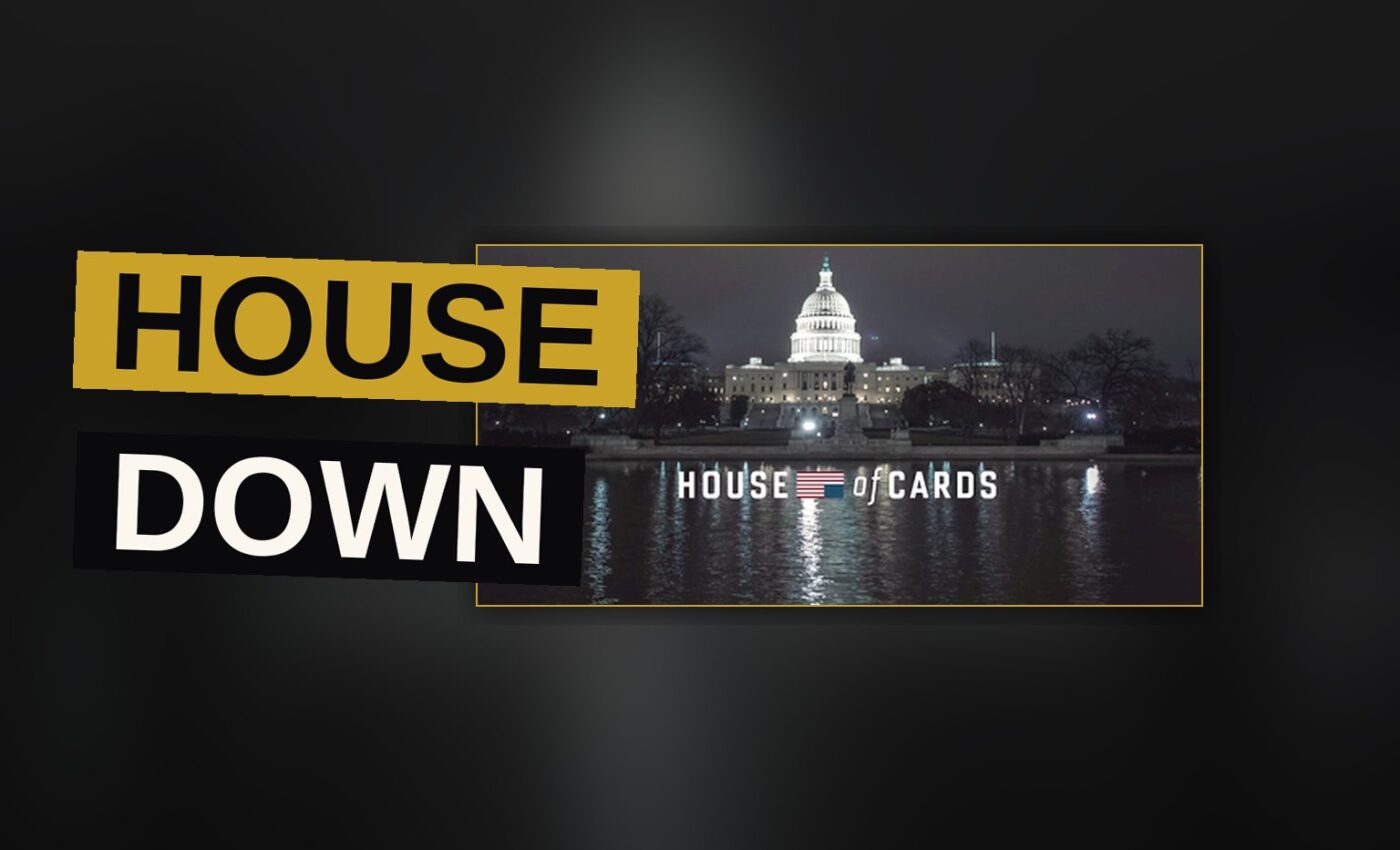
Frank Underwood is a man who knows what he wants and will do almost anything to get it. That’s the engine of House of Cards, and it still drives the show today, even though its politics feel dated and its villains feel familiar.
The Netflix series premiered in 2013, and it changed the streaming game by delivering a full season of 13 episodes at once. That was a big deal back then. It also introduced a new kind of anti-hero: a congressman from South Carolina who becomes vice president, then everything else. Frank Underwood, played by Kevin Spacey, is ruthless, charming, and completely without conscience. He’s the kind of man who would step over a dead body if it meant moving closer to power.
Trailer, via Netflix.
Kevin Spacey’s Performance
Spacey won a Golden Globe for the role, and it’s easy to see why. His Frank Underwood is a master of manipulation. He reads people like a book, and he uses that skill to climb the political ladder. He’s also a romantic, in his own twisted way. The show opens with him telling the camera about the nature of power, and that opening monologue sets the tone for the entire series. It’s intimate, seductive, and a little terrifying.
The supporting cast is strong too. Robin Wright plays Claire Underwood, Frank’s wife, who starts as a trophy wife and ends up running things behind the scenes. Her arc is slower but no less compelling. Mandy Patinkin plays Peter Russo, a congressman who serves as Frank’s protégé and falls apart under pressure. James Purefoy plays Douglas Stamper, Frank’s chief of staff, who is loyal to a fault and willing to commit murder to keep things running smoothly.
The Political Machine
House of Cards is built around Washington, D.C., and the show doesn’t flinch from showing how messy the sausage gets made. Deals are cut, enemies are destroyed, and the machinery of government runs on favors and fear. The show doesn’t pretend that politics is noble. It shows it as a game, and Frank is the best player in the room.
The second season introduces a new threat: a young senator named Will Conway, played by Rashida Jones, who tries to take Frank down. This is where the show starts to lose some of its edge. Conway feels like a cartoon villain, and her crusade against corruption comes off as naive. The show wants to say something about ethics, but it can’t quite make the argument stick. The result is a subplot that feels thin compared to the first season’s tight focus on Frank.
The Third Season
The third season is where House of Cards really starts to fall apart. The show introduces a new president, a new administration, and a new set of characters who are supposed to be Frank’s rivals. None of them land. The show spends too much time on its own mythology and not enough on the actual stakes. The plot twists are frequent, but they feel manufactured rather than earned.
The season also includes a major shift in direction. Frank steps down as vice president and runs for the presidency himself. This is a bold move, but it’s not executed with the same precision as the earlier seasons. The show tries to build tension, but the payoff feels hollow. By the end of the season, the show has lost some of its momentum, and it takes a while to recover.
The Fourth Season
The fourth season picks up after the election, and it’s a mixed bag. On one hand, the show has a clearer sense of what it’s doing. Frank is now president, and the show explores what happens when he actually holds the office. There are moments of genuine tension, especially when the government faces a crisis. On the other hand, the show’s writing has become more repetitive. The same beats get played out again and again, and the characters start to feel like cogs in a machine rather than people.
The season also introduces a new antagonist: Raymond Tusk, played by Jeffrey Donovan. Tusk is a wealthy businessman who wants to control the country, and he sees Frank as a means to that end. Their relationship is the most interesting part of the season, but even that is hampered by the broader script. The show wants to say something about corporate influence, but it doesn’t dig deep enough.
The Fifth Season
The fifth season is the shortest of the series, and it’s also the weakest. The show is clearly running out of steam. The plots are thinner, the characters are less developed, and the dialogue has lost its bite. The season ends with a cliffhanger, but it feels more like a placeholder than a genuine cliffhanger. The show is clearly looking for a way to wrap things up, but it hasn’t found it yet.
The season also introduces a new character: Catherine Durant, played by Diane Lane. She’s a lobbyist who wants to take down Frank, and she’s smarter than most of the show’s villains. But even she can’t save the season. The show has become a shadow of its former self, and it’s hard to shake the feeling that everyone involved knew it was time to go.
The Final Season
The sixth season is the last, and it tries to tie everything together. Frank finally gets what he’s been chasing for six years: the presidency. But the victory is bittersweet. The show spends its final episodes showing the cost of winning. Frank is isolated, paranoid, and consumed by the office. The show wants to say something about power, but it’s too late. The message has been buried under six seasons of excess.
The finale is a strange mix of resolution and open-endedness. It’s clear that Frank’s reign is ending, but the show doesn’t offer a clean break. Instead, it leaves the door open for a future season that never came. That’s a shame, because the show deserved a better send-off. As it stands, the finale is a letdown, and it leaves viewers with more questions than answers.
What Works
- Kevin Spacey’s performance remains the strongest element of the show
- The first two seasons are tightly constructed and genuinely tense
- The show’s depiction of Washington is sharp and unsentimental
- The opening monologues are a signature touch that never loses their impact
What Doesn’t Work
- The later seasons lose focus and repeat themselves
- The villains in the later seasons are underdeveloped
- The show’s politics feel dated by the end
- The finale fails to deliver a satisfying conclusion
The Numbers
- Premiere: 2013
- Seasons: 6
- Episodes per season: 13 (except season 5, which has fewer)
- Network: Netflix
- Critical score: 7.6/10
House of Cards is a show that started strong and ended weak. The first two seasons are essential viewing, and they hold up as some of the best political drama ever made for television. The later seasons are a different story. They’re watchable, but they don’t have the same spark. The show’s legacy is secure, but its final stretch is a reminder that great television can’t sustain itself forever.
The show is worth a revisit, but only for the early years. The later seasons are a reminder that even the best shows have their limits. House of Cards is a flawed masterpiece, and it deserves its reputation. Just don’t expect the whole thing to hold together.
Get the Notebook.
The day's best stories and every fresh verdict, in plain English, in your inbox by seven. One email a day, no more.