
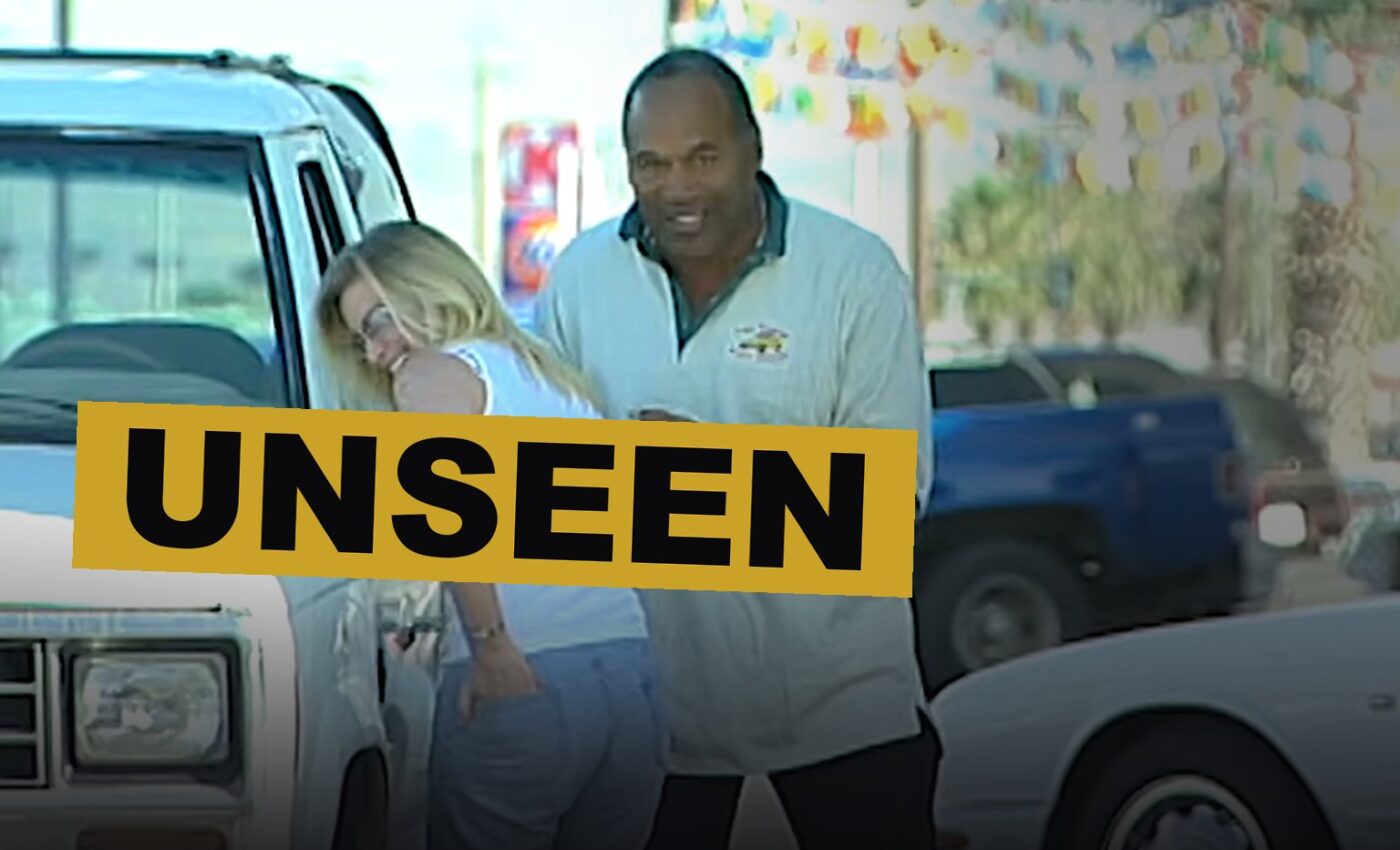
A show that used secret cameras to try to bring back O.J. Simpson’s career in 2006 never made it into stores. Now ID’s docuseries “O.J. Unseen: Exploitation of Evil” looks back at the ruins of that show, called Juiced, using hours of unseen material shot during its making and new interviews with the people who built it.
What Was Juiced
Juiced was built along the lines of Punk’d, with Simpson popping up to play tricks on people who did not expect him. Rick Mahr, who had built a business selling videos advertised heavily on the outer fringes of late night TV — including The Best of Backyard Wrestling — came up with the idea and brought Simpson on board. Todd Lewis directed.
A leak of the show’s details set off public anger and outrage from the families of Nicole Brown Simpson and Ron Goldman. That killed a planned DVD version of the show. Juiced briefly turned up on video on demand, but it never became the comeback vehicle Simpson wanted. Some copies and short bits still turn up on YouTube.
By the Numbers
- Juiced was made in 2006, a decade after Simpson was found not guilty in the killings of Nicole Brown Simpson and Ron Goldman.
- “O.J. Unseen: Exploitation of Evil” runs as a series of four episodes.
- The team drew on more than 60 hours of material shot during filming, along with a seated interview with Simpson.
- Simpson was later found guilty in a case involving armed theft in Las Vegas and spent nearly nine years behind bars.
Building the Documentary
Eric Day and Mark Koops served as executive producers on “O.J. Unseen” through their company INE Entertainment, whose past work includes “Jim Thorpe: Lit by Lightning.” Rebecca Halpern, who directed “Love, Charlie: The Rise and Fall of Chef Charlie Trotter,” directed and served as executive producer on this project too.
Day describes the show as a rare, complete record of a moment in entertainment history, one that came with more than 60 hours of material shot while it was being made and a seated interview with Simpson himself.
Mahr gave the team rights to use the old Juiced material for the new series. He and Lewis both appear on camera. Lewis says he now feels regret about his part in Juiced, and he admits part of him had hoped he might catch Simpson describing his part in the killings on camera. Mahr is less certain in his own reflection, saying he believed at the time that Juiced would be a hit, while also wondering now whether the show went too far.
Table: The Series
| Detail | Description |
|---|---|
| Title | O.J. Unseen: Exploitation of Evil |
| Number of parts | Four |
| Airs | Monday night |
The Draw of the Material
Day says the appeal of the project was watching Juiced come together and then come apart. He explains the team started by studying two things: the material shot during production, where viewers can watch Simpson with the workers and other cast members and see tricks work, fail, or prove impossible to carry out, and what that said about the show, about Simpson, and about why people agreed to take part.
He also points to time passed as a draw. Many of the people involved 20 years ago have carried that weight with them since, he says, and they were willing to sit down and talk about where they stood then, giving the series a fuller account.
Juiced itself, as a finished work, is mostly weak. Its tricks rely on strangers realizing Simpson is standing in front of them, drawing puzzled looks and uncomfortable laughs. One bit has Simpson posing as a car seller trying to close deals on a white Ford Bronco. A tasteless music video, with Simpson dressed as a stock figure meant to look loud and false, dancers around him, runs through the special too.
Moments That Stand Out
The material shot during production is where the documentary finds its footing. One scene, teased in the trailer for “O.J. Unseen,” appears to catch Simpson on the edge of describing what happened the night Nicole Brown Simpson and Ron Goldman were killed.
Koops describes the scene: Simpson is riding in a car with Todd, likely a few drinks in, and starts talking about the trial and his own past. For Koops, it’s the moment where true crime, reality television, and the world of celebrity come together — as close, he says, as anyone may ever get to the truth. He wonders aloud why Lewis didn’t press further or ask more.
Day recalls another moment, where Simpson sits under a false face meant to make him look like an older white man while Court TV plays on a set close by. Day says Simpson, watching the broadcast, has clear and informed views on what separates a celebrity who gets found guilty from one who gets cleared — someone, love him or hate him, who has lived through every side of fame and the court system in a way almost no one else has.
Simpson never got back the fame he had before his trial. A year after Juiced, he was involved in an armed theft case in Las Vegas, and he was later found guilty and spent nearly nine years behind bars.
“O.J. Unseen: Exploitation of Evil” offers a rare look at the strange workings behind one of Simpson’s stranger attempts at a second act.
Source: hollywoodreporter.com
Get the Notebook.
The day's best stories and every fresh verdict, in plain English, in your inbox by seven. One email a day, no more.