
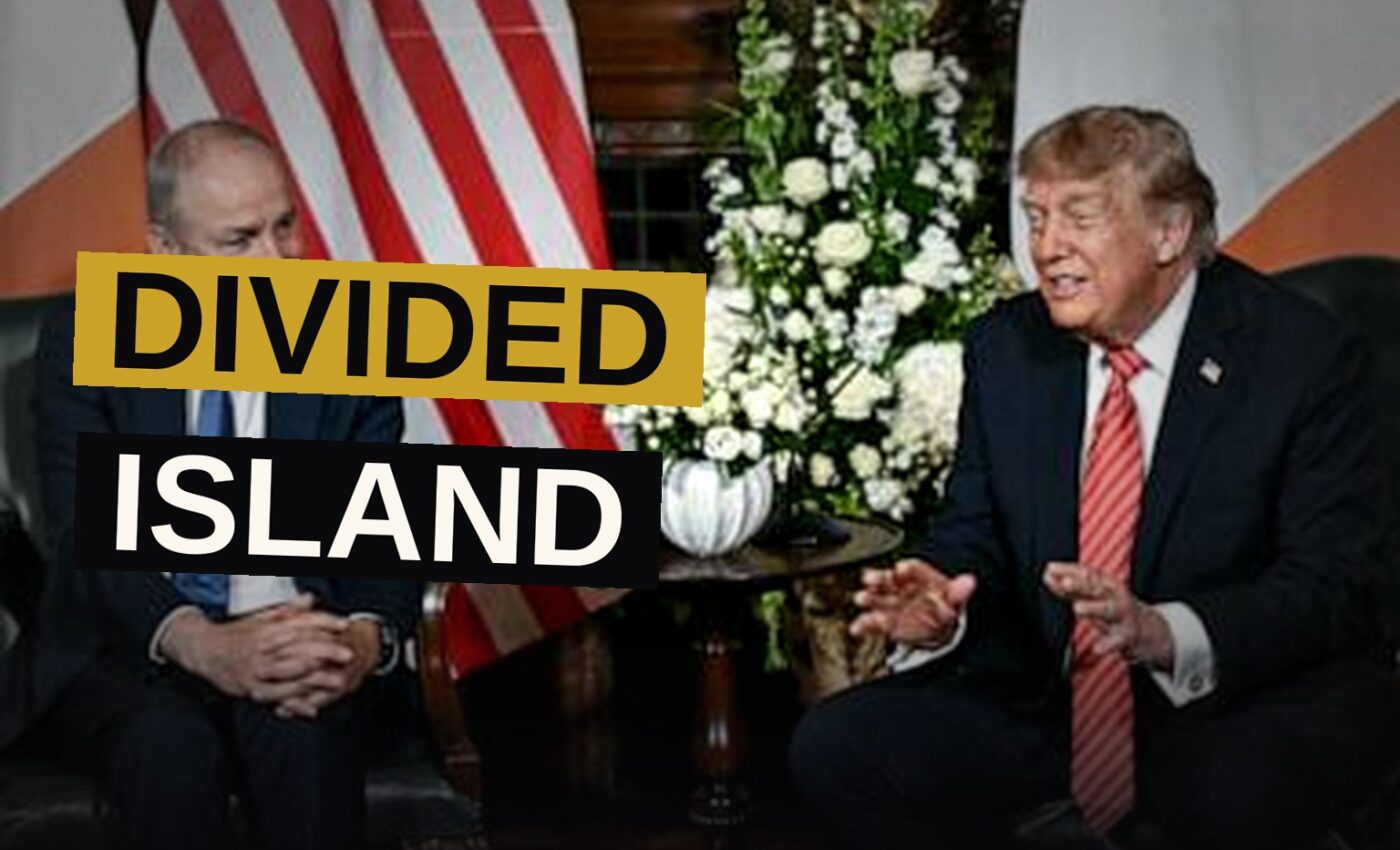
President Donald Trump landed in Dublin Saturday and immediately made waves by saying he would “love to see” a unified Ireland. The comment came during a news conference after he met with Irish Taoiseach Micheál Martin, and it set off a chain of reactions from unionist leaders and the UK government alike.
“I think it would be a great feather in everybody’s cap if that happened,” Trump said. He added that it “may as well happen now,” predicting that “it’s going to happen eventually.”
What the Good Friday Agreement Actually Says
The partition between Northern Ireland and the Irish Republic dates back to 1921, when the Protestant-majority north remained under British rule while the rest of the island became the Irish Free State. The Troubles, a decades-long conflict between republicans and British security forces, followed in the late 1960s.
The Troubles ended in 1998 with the Good Friday Agreement. That deal required Northern Ireland to remain part of the UK until a majority of its citizens approved unification in a referendum. The agreement also included:
- Constitutional changes
- Disarming of paramilitary groups
Trump’s remarks ignore that legal requirement. He spoke as if the decision could be made by fiat, rather than by the people of Northern Ireland themselves.
Unionists Push Back
Unionist leaders were quick to respond. Gavin Robinson, leader of the Democratic Unionist Party, posted on X that Trump “knows better than most that elections matter.”
“Northern Ireland’s constitutional future will be decided by the people of Northern Ireland, not by commentary in London, Dublin or Washington,” Robinson said. “Northern Ireland is part of the United Kingdom because that is the settled democratic will of its people.”
Jon Burrows, leader of the Ulster Unionist Party, echoed the sentiment. “Northern Ireland not a pawn in Trump’s fall out with the UK. Our constitutional future does not depend on him or any other foreign dignitary,” he said in an X post.
The UK Government’s Position
UK Prime Minister Andy Burnham had previously said a unity vote was “off the table.” A spokesperson for the prime minister confirmed Saturday that Burnham’s position is unchanged and he will “stick to the Good Friday Agreement 100%.”
The message from unionist leaders and the UK government is consistent: the question of unification belongs to Northern Ireland’s own citizens, not to foreign dignitaries making speeches in Dublin.
Trump Sticks to His Comment
When protesters demonstrated against Trump during his two-day visit, which included a golf tournament at one of his resorts, the president acknowledged the controversy. Speaking at the U.S. Embassy in Ireland later in the day, he defended his remarks.
“I gave a nice answer, I think. We’ll worry about it tomorrow,” he told the crowd of embassy personnel and business leaders.
The response from unionist leaders and the UK government makes clear that Trump’s remark has landed awkwardly. Unionist politicians have made it clear that Northern Ireland’s constitutional status is settled, and that the people of Northern Ireland should be the ones deciding their future.
The Good Friday Agreement remains the law. Until Northern Ireland holds a referendum, any talk of unification is premature.