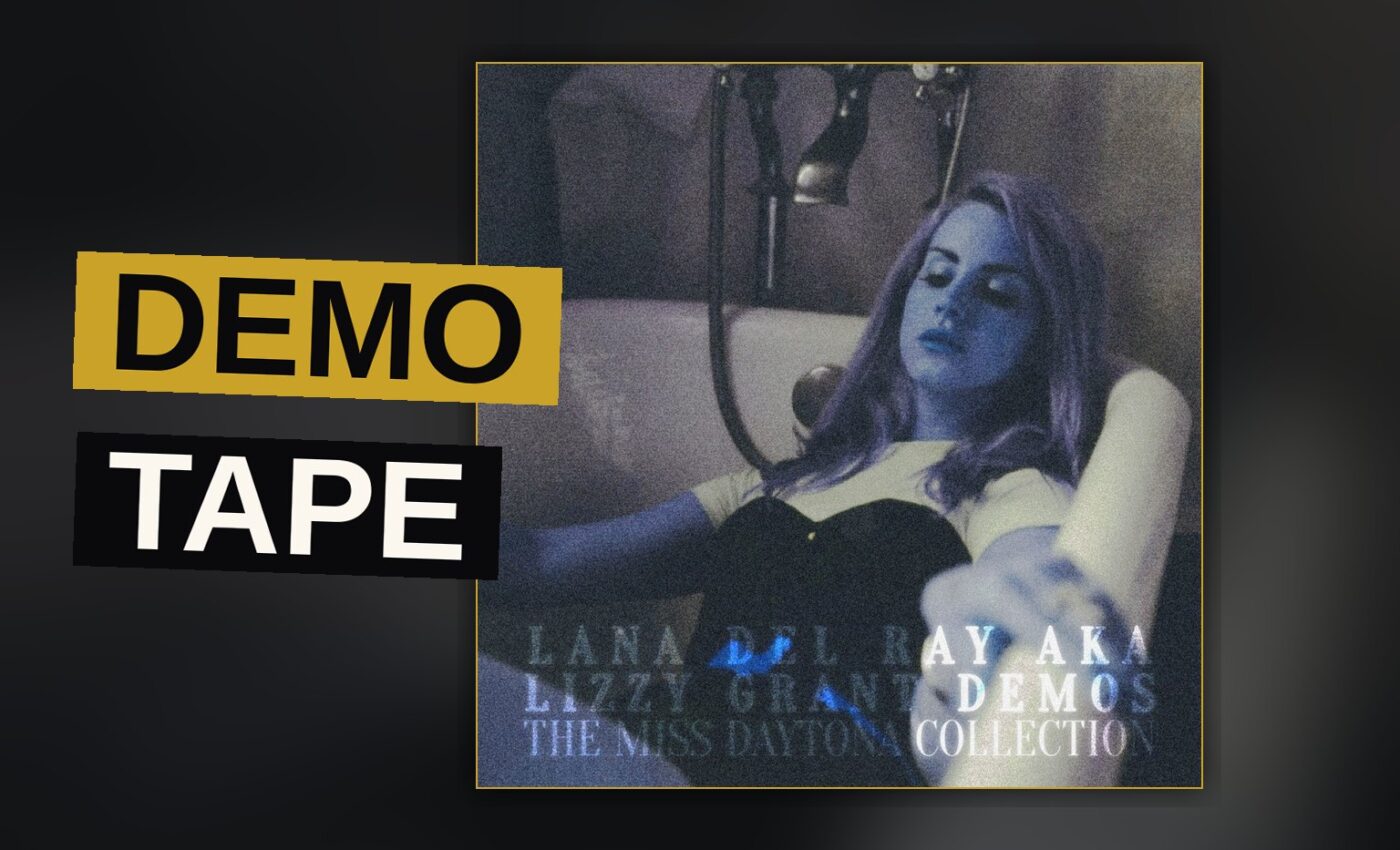
Lana Del Rey Demos is a 19-track collection of rough cuts, alternate mixes, and instrumental versions from the early years of her career. Released in 2010, it runs 73 minutes and plays like a time capsule of a singer still finding her shape. The record is not a polished statement; it is a demo tape, full of unfinished ideas and dead ends. That is the point. This is where Lana Del Rey began building the sound she would later sell to the world.
What The Record Is Trying To Do
Del Rey Demos is not meant to replace her debut album. It is meant to sit alongside it, offering a look at the songs before they were finished. The demos are rawer, looser, and sometimes stranger than the versions that made her famous. They show a songwriter working through ideas about fame, loneliness, and California in real time, without the polish of a studio budget.
The record also serves as a bridge between Del Rey’s early work and her later peak. It includes early takes on songs that would become major hits, plus a handful of tracks that never made the final cut. That mix makes the album a useful document for anyone who wants to trace how she got from demo artist to cultural force.
Track By Track
Kill Kill (Unmastered) opens the record with a loose, unhurried version of one of her signature tracks. It is a good start, though it lacks the polish of the final release. Queen of the Gas Station follows with three different demos, each taking a slightly different approach to the song’s central image. The third demo, “Queen” Demo 3, is the strongest of the trio, showing the melody locked in place even before the production was settled.
Gramma (Blue Ribbon Sparkler Trailer Heaven) comes in three forms — two mixes and an instrumental — and they all lean heavily on the trailer aesthetic that defined her early sound. For K, Pt. 2 offers two takes, with the second one carrying a distinct rehab reference that adds a layer of meaning the first version lacks. Raise Me Up (Mississippi South) appears three times across the record, moving from demo to early mix to final master, tracing the evolution of a song that became a staple of her live shows.
Pawn Shop Blues and Brite Lites are shorter detours, solid but not essential. Put Me In a Movie appears twice, with the second take drawing on the Little Girls demo. Smarty and Yayo round out the back half, with Yayo running over five minutes and showing the ambition that would define her later work.
The Best Tracks
Not every track here holds up. Some of the instrumental versions, like the Gramma instrumental and the Pawn Shop Blues instrumental, exist mainly to show how the songs stand apart from their arrangements. The demo versions of songs that already exist elsewhere can feel redundant to listeners who know the final takes.
But the best moments land hard. Here is how the strongest tracks stack up:
- Queen of the Gas Station (“Queen” Demo 3) — the clearest early version of a classic.
- Raise Me Up (Mississippi South) [Final Master] — the fully realized version of a beloved track.
- Kill Kill (Unmastered) — an unhurried start to the record.
- For K, Pt. 2 (“Rehab [Pretty Baby]” Demo 4) — the rehab reference lands with real weight.
- Put Me In a Movie (“Little Girls” Demo 3) — a rare look at a song still taking shape.
Why This Matters
Del Rey Demos matters because it shows an artist working through ideas that would later shape pop music itself. Critics describe her discography as multi-layered and mercurial, ranking albums based on ambition, impact on pop culture, and influence on peers rather than purely on quality. The record fits that description perfectly — it is ambitious, culturally influential, and deeply personal in ways that her later work would smooth over.
The demos also make a case for Del Rey’s importance to modern pop. Reviewers note that it is hard to imagine Lorde or Taylor Swift’s two 2020 albums without Del Rey paving the way. That is a strong claim, and the record supports it. Her early work pushed boundaries that other artists later crossed, and hearing those songs in their earliest form helps explain why.
The Verdict
Lana Del Rey Demos is not a record for everyone. It is a niche listen for fans who want to see the scaffolding behind the finished product. But for those fans, the record delivers real value. The strongest tracks — Queen of the Gas Station (“Queen” Demo 3), Raise Me Up (Mississippi South) [Final Master], and For K, Pt. 2 (“Rehab [Pretty Baby]” Demo 4) — justify the entire collection.
The weaker tracks, mostly the instrumentals and the second takes of songs already familiar, drag down the middle of the record. But the highs are high enough to carry the whole thing. This is a demo tape with a purpose, and that purpose is served.
- Kill Kill (Unmastered)4:09
- Queen of the Gas Station (Demo 1)3:12
- Queen of the Gas Station (Demo 2)4:34
- Queen of the Gas Station ("Queen" Demo 3)3:37
- Queen of the Gas Station (Instrumental)3:14
- Gramma (Blue Ribbon Sparkler Trailer Heaven) [Mix 3]4:04
- Gramma (Blue Ribbon Sparkler Trailer Heaven) [Mix 5]4:04
- Gramma (Blue Ribbon Sparkler Trailer Heaven) [Instrumental]4:02
- For K, Pt. 2 (Demo 1)4:31
- For K, Pt. 2 ("Rehab [Pretty Baby]" Demo 4)3:35
- Raise Me Up (Mississippi South) [Demo]3:21
- Raise Me Up (Mississippi South) ["Rayse" Early Mix]4:23
- Raise Me Up (Mississippi South) [Final Master]4:32
- Pawn Shop Blues (Instrumental)3:34
- Brite Lites (Demo 2)3:00
- Put Me In a Movie (Demo 1)3:38
- Put Me In a Movie ("Little Girls" Demo 3)3:41
- Smarty (Instrumental)2:56
- Yayo (Demo 2)5:10