
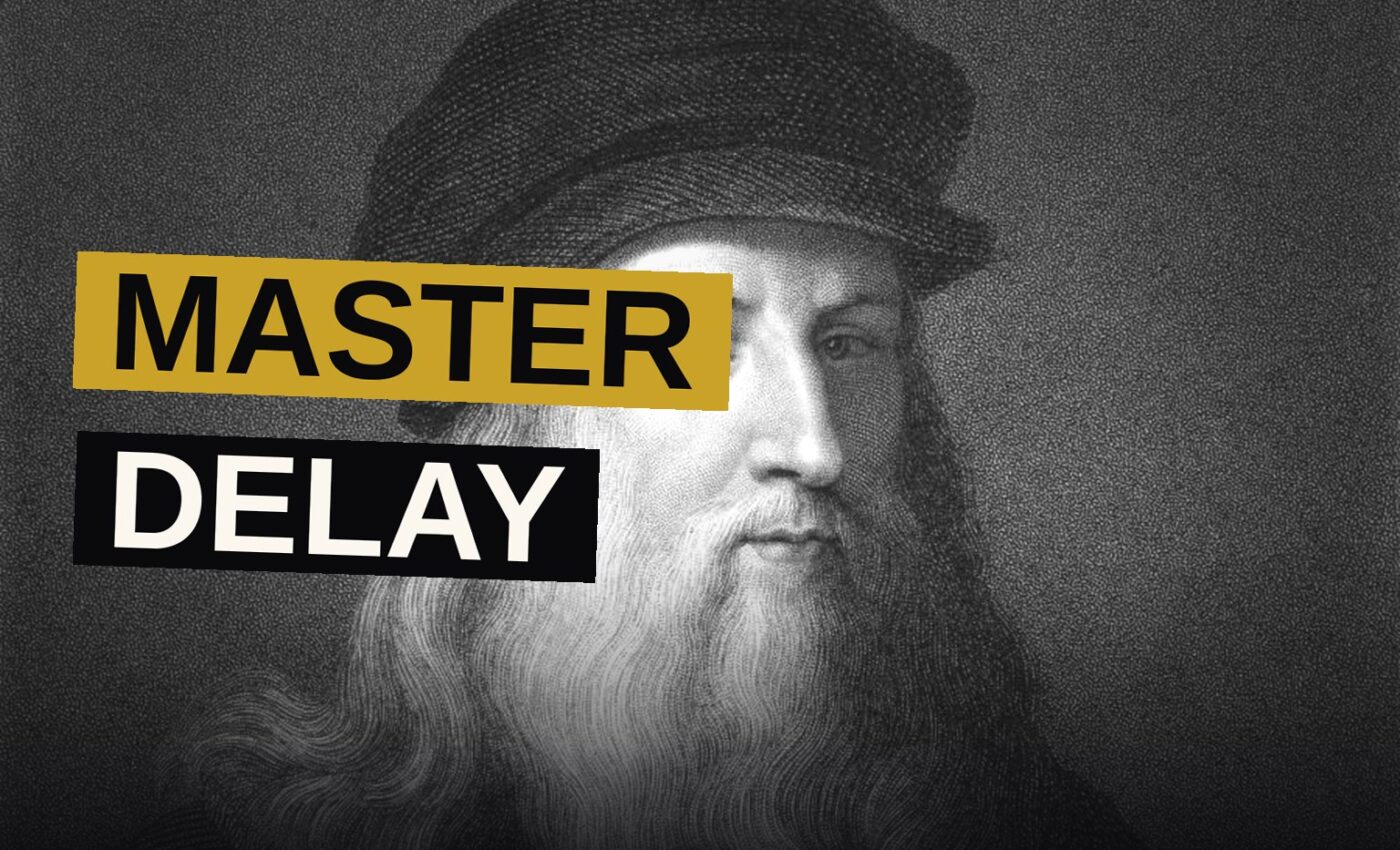
Leonardo da Vinci painted the Mona Lisa on and off for years, left it unfinished, and only completed it near his death in 1519. Catani and Isaacson frame his famous delays not as laziness, but as a feature of how he worked.
The ADHD Hypothesis
A 2019 paper by clinical neuroscientist Marco Catani, summarized by ScienceDaily, argues that Leonardo exhibited traits consistent with Attention Deficit Hyperactivity Disorder (ADHD). “Leonardo’s difficulties with sticking to tasks were pervasive from childhood,” the summary states. “Accounts from biographers and contemporaries show Leonardo was constantly on the go, often jumping from task to task.”
Staring at the Last Supper
Walter Isaacson’s biography Leonardo da Vinci describes the painter’s method on The Last Supper. “While painting The Last Supper, Leonardo would sometimes stare at the work for an hour, finally make one small stroke, and then leave,” Isaacson writes.
Leonardo’s own explanation was that “men of lofty genius sometimes accomplish the most when they work least, for their minds are occupied with their ideas and the perfection of their conceptions, to which they afterwards give form.”
The Cost of Genius
Not every patron was patient. After Leonardo worked at the Vatican for three years, Pope Leo X dismissed him, saying he would never accomplish anything, “for he begins by thinking of the end of the work, before the beginning.” Leonardo himself made a deathbed apology “to God and Man for leaving so much undone.”
Procrastination as Work
Isaacson argues that Leonardo’s version of delay was active, not passive. “Procrastinating like Leonardo requires work: it involves gathering all the possible facts and ideas, and only after that allowing the collection to simmer,” he notes.
Nicolas Cole writes at Inc. that scholarship suggests Leonardo “painted the Mona Lisa on and off for a few years starting in 1503, left it unfinished, and didn’t complete it until close to his death in 1519.”
The Beatles Comparison
At the height of their productivity as Beatles, neither Paul McCartney nor John Lennon could read or write music notation. McCartney has said they likened themselves to ancient Egyptian pharaohs, who relied on scribes rather than being literate themselves.
That lack of formal schooling may have given them the freedom to create fresh songs, just as Leonardo’s scattered focus may have fed his ideas.
A Modern Reframe
Catani concludes that Leonardo’s traits match a condition only named within living memory. Aphorist Aaron Haspel puts it this way: “We all suffer from a cluster of psychological disorders; it used to be known as personality.”
That reframe turns a lifelong struggle into something closer to a trade-off.
Related Reading
The piece also points to essays on the Neuroscience & Psychology of Procrastination, The Art of Structured Procrastination, Leonardo’s To-Do List from 1490, and Medieval Monks Complaining About Distractions.
Timeline
| Date | Event |
|---|---|
| 1490 | Leonardo’s To-Do List |
| 1503 | Mona Lisa started, then left unfinished |
| Three years at the Vatican | Ending with dismissal by Pope Leo X |
| Near 1519 | Mona Lisa completed, close to Leonardo’s death |
| 2019 | Catani paper published, summarized by ScienceDaily |
Key Facts
- Mona Lisa: started 1503, left unfinished, completed near 1519
- The Last Supper: painted with long staring sessions and single strokes
- Vatican work: three years, ending with dismissal by Pope Leo X
- Catani paper: 2019, summarized by ScienceDaily
Leonardo’s example suggests that the line between procrastination and preparation is thinner than most of us admit.
Source: openculture.com