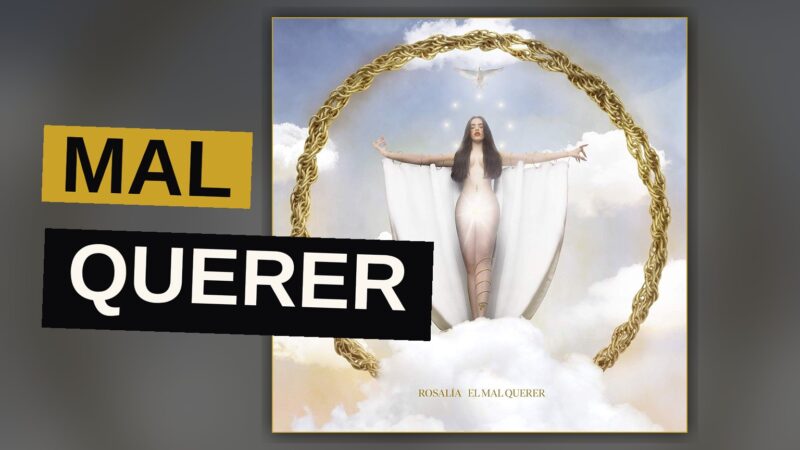
Rosalia’s Los Angeles is a 12-track album built on the bones of flamenco tradition, but dressed in modern production. It is not a cover record. It is a reinterpretation, and the Spanish singer and songwriter treats the old cantes — traditional flamenco songs — as raw material rather than museum pieces. The result is a bold, sometimes uneasy hybrid that rewards patience and punishes skimming.
Opening With “Si Tu Sabes Companero”
“Si Tu Sabes Companero” opens the record with a slow, brooding build. It sets the tone immediately: this is not the bright pop that made Rosalia a global star later. The track stretches past six minutes, and it earns every second through its patient arrangement and a vocal performance that feels both intimate and theatrical.
“De Plata” And The Middle Stretch
“De Plata” follows with a more clipped, percussive pulse. It is a strong entry point for listeners who need a foothold before the album gets heavier. The track leans into a driving rhythm that gives the record some of its most immediate hooks.
“Nos Quedamos Solitos” is where the album finds its center. It is a standout, a song that critics have singled out for good reason. The arrangement is stripped back in spots and lush in others, and Rosalia’s delivery lands with real weight.
“Catalina” And The Short Track
“Catalina” is the shortest track here, clocking in at under four minutes. It is also one of the most direct, a song that critics have flagged as a highlight. The brevity works in its favor, giving the piece a sharp focus that the longer tracks around it can’t always sustain.
“Día 14 de Abril” runs over six minutes again and takes a darker turn. It is a solid, atmospheric piece, though it does not quite reach the heights of the tracks around it.
The Shortest Track
“Que Se Muere Que Se Muere” is the shortest track on the album at just over a minute. It functions more as a palate cleanser than a statement, a brief interlude rather than a full song.
“Por Mi Puerta No Lo Pasen” picks the pace back up. It is a strong, urgent track that shows off Rosalia’s range.
“Te Venero” Through “El Redentor”
“Te Venero” and “Por Castigarme Tan Fuerte” are both brief, atmospheric pieces that serve as connective tissue rather than destinations. They are not the best tracks on the record, but they keep the flow moving.
“La Hija De Juan Simon” is a standout, a track that critics have pointed to alongside “Nos Quedamos Solitos.” It is a song that rewards repeated listens, and its narrative weight carries the album’s middle stretch.
“El Redentor” closes the main body of the record with a more conventional, almost anthemic feel. It is a strong closer, though it does not quite match the peaks earlier in the album.
Closing With “I See A Darkness”
“I See A Darkness” is the final track, and it is a bold choice for a closer. It is a departure from the flamenco template that defines the rest of the record, and it ends the album on a note that feels both unresolved and fitting.
The Tracks Worth Hearing
For newcomers, the strongest route in is simple:
- “Nos Quedamos Solitos”
- “Catalina”
- “La Hija De Juan Simon”
Those three tracks capture the range of the album’s ambitions. They are the ones that critics have flagged, and they are the ones that justify the record’s existence.
The Verdict On Los Angeles
Los Angeles is not an easy listen. Its ambition is its strength, and its unevenness is its occasional weakness. The album is a significant step forward for Rosalia, a record that takes the oldest forms of Spanish music and bends them to a modern sensibility.
That is a difficult trick, and Rosalia pulls it off more often than she misses. The album’s highlights are truly memorable, and its lesser moments are simply lesser — never bad enough to sink the whole project.
8 of 10.
- Si tú supieras compañero6:05
- De plata4:29
- Nos quedamos solitos5:15
- Catalina3:34
- Día 14 de abril6:06
- Que se muere que se muere1:29
- Por mi puerta no lo pasen4:40
- Te venero4:06
- Por castigarme tan fuerte2:08
- La hija de Juan Simón4:09
- El redentor3:01
- I See a Darkness4:09