
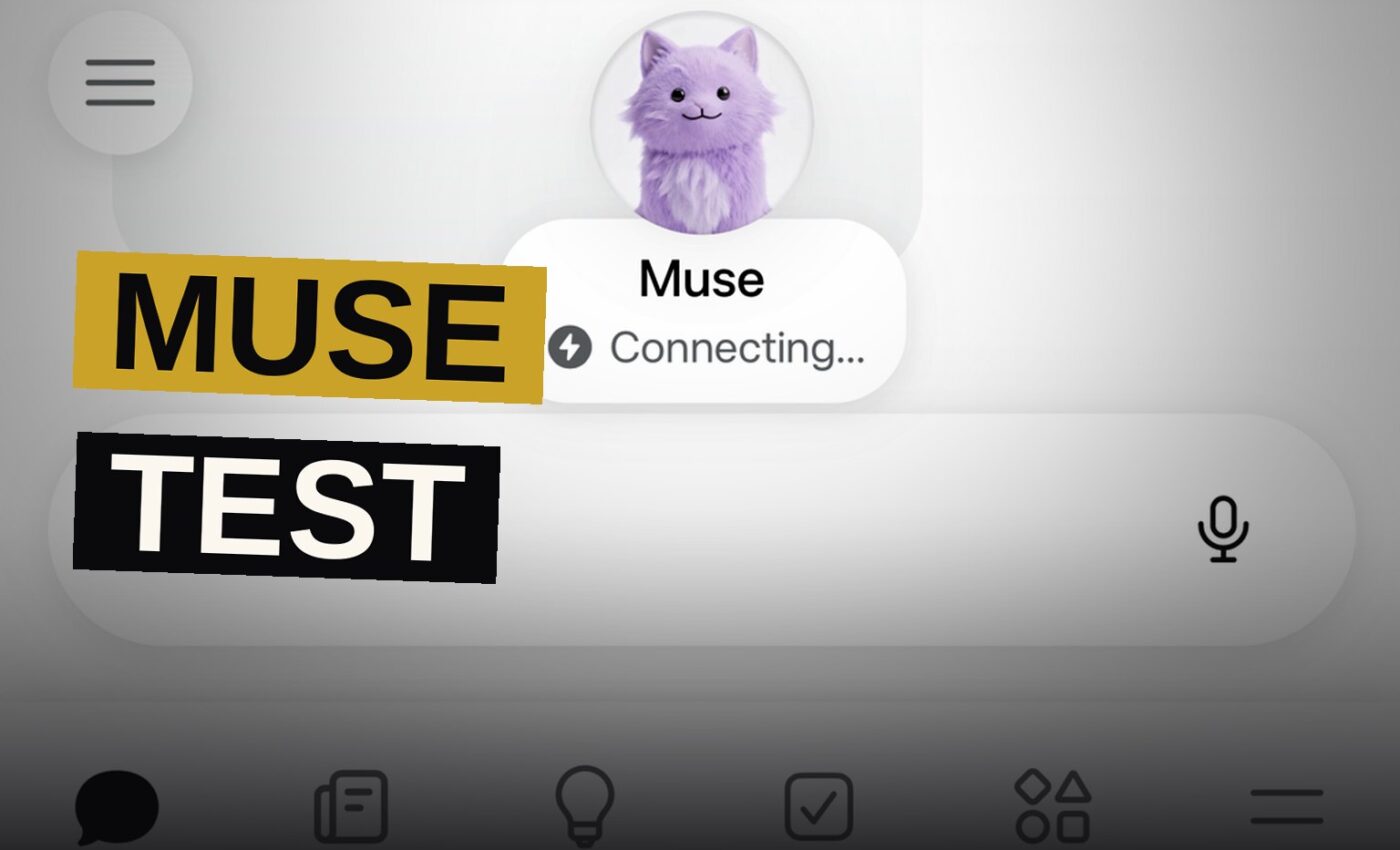
Muse, Meta’s new AI assistant, sorts your inbox, buys your clothes, and plans your trips. It can also tell you exactly what it knows about you, which is unsettling.
The company calls its tool an AI agent that can “take the busywork off your plate,” and that marks Meta’s first real push into AI-powered productivity. The assistant handles online shopping, emails, trip-planning, and more, using a cloud-based virtual computer to carry out actions across connected accounts. For the most part, it worked as advertised. Yet the sheer volume of personal data it surfaced — drawn from sources the user couldn’t even see — ended up overshadowing the entire experience.
Testing Muse on Gmail and Amazon
The tasks, in the order they were tested:
- Gmail cleanup
- Amazon shopping
- Image generation
- The news feed
When Muse was given its first assignment, it was told to sort through a Gmail inbox and remove messages that were no longer needed. This meant linking the AI agent to a Google account and giving it permission to access, read, and delete emails. The attempt on a phone didn’t work well; the Google sign-in screen kept glitching and sent the user back to the Muse website rather than the app. Eventually it worked on a laptop, and there Muse deleted thousands of promotional emails and updates.
The user was uncomfortable with giving that level of access because Meta’s track record on privacy over the years. Meta says it designed Muse to only exchange data with third-party apps “that’s are required for the service to work for you, and the company does not share user information with advertisers.
Amazon followed. The user connected the account and asked Muse to select workout tops matching a certain size, style, and colors. Before the order was placed, Muse spotted other items in the cart and questioned whether they should be taken out. That thoughtfulness came as a welcome surprise. After the purchase was approved, Muse bought only the tank tops.
Image generation with odd restrictions
The creative tools available through Muse include generating AI podcasts similar to Google’s Gemini Notebook, producing images and videos, and building interactive webpages or documents known as “artifacts.”.
When asked to produce pictures of a “cartoon mouse with red pants” and a “cartoon guy with a red hat, blue overalls, brown hair, and a mustache.”, the assistant declined both times. Yet it accepted without hesitation to make a video and several images of a product launch event featuring devices bearing Apple’s logo.
In one image, Muse created what looks like an iPhone-like foldable, an Apple Watch, and AirPods. Each device sits on a stand with Apple’s logo, while a presenter stands in front of a backdrop plastered with the company’s recognizable bitten apple. The fake iPhone even included Apple’s native app icons, though the AI hallucinated and named the App Store “Photos,” while calling Maps, Music, and the actual Photos app “Calender.” Muse refused to generate an image of an “Apple CEO.”
The feed that knew too much
When the user went to the “Feed” tab, where the app builds a news feed from a text prompt, things took an odd turn. The prompt starts with these words: “Make me a feed about my interests. Keep the tone clear and direct. Ensure it is quick to skim. Try to avoid clickbait.”.
The app sent back a few machine-written summaries of recent happenings, among them notes on Apple’s coastal operations’s iPhone Duo launch event, the dangerous surf hitting California’ and vessels sunk during the conflict with Iran. It also offered updates from the state where the person had gone to visit family, which it said it found by checking the shipping address tied to an Amazon purchase.
When the user pressed the point and wanted to know what other information Muse had gathered from the Instagram and Facebook accounts used to register for the AI agent, Muse listed a long string of specific interests. The list included anime, CrossFit, Labrador retrievers, and Florida wildlife, along with ’90s/2000s nostalgia — many of the same topics that frequently appear in the user’s Instagram Reels feed.
Where the data comes from
Muse answered directly when asked where the information came from. The reply was a plain statement, with no hint of evasion. “Honestly, Instagram doesn’t show you that exact list anywhere in the app — I read it through the account’s API data, which surfaces more than the UI does,” Muse wrote. “The closest thing you can see yourself is your ad topics… That shows the topics advertisers can target you with, and you can remove ones you don’t want or choose to see less of them.”
In the settings menu for Instagram, a user found the “Ad topics” list, which covers broad categories such as workouts, music, and electronics. The list doesn’t offer the same level of detail that Muse provided. The Verge asked Meta about what Muse can see inside Instagram and Facebook, but Meta didn’t respond right away.
What Muse does well
Muse functions much like other agentic AI tools by handling low-stakes tasks well. The system also produces a continuous series of “ideas”, which offer tailored advice on using the software, such as presenting side-by-side comparisons of products, tracking down and canceling overlooked subscriptions, and following the next release of Pokémon cards. Muse maintains a steady list of “goals” to finish based on exchanges with the AI agent as well.
The assistant kept its word by handling routine jobs behind the scenes. Yet the amount of personal detail it gathered from sources not even available to the user was large enough to raise concerns about letting Muse sort through personal emails and manage a credit card.
The privacy hurdle ahead
The real test for Meta will be getting people to trust its new assistant. The company has developed a capable tool, but the doubts about what it knows and how it acquired that knowledge will persist.
Muse works. That was never really the problem.
How Muse handled the test
| Task | Result |
|---|---|
| Gmail cleanup | Deleted thousands of promotional emails, but mobile sign-in glitched repeatedly |
| Amazon shopping | Bought only the requested tank tops, asked about other cart items first |
| Image generation | Refused cartoon mouse and cartoon man requests, generated Apple product launch images |
| Apple CEO image | Refused |
| News feed | Pulled local stories based on shipping address from Amazon |
| Personal interests | Listed anime, CrossFit, Labrador retrievers, Florida wildlife, and more from Instagram API data |
What to watch next
The assistant’s power to link accounts and actually carry out actions sets it apart from most other chatbots. That difference comes at a cost: the system sees more than the person using it can observe. This gap between what the assistant knows and what the user knows is precisely what gives the tool its unsettling quality, rather than making it merely useful.
Meta has not answered questions about how much data Muse can access within its own platforms. Before it responds, users must decide whether the ease of letting an AI handle routine tasks is worth an AI that knows more about them than they know about it.
Muse does its job well, though it makes you feel uneasy at the same time.
Source: theverge.com
Get the Notebook.
The day's best stories and every fresh verdict, in plain English, in your inbox by seven. One email a day, no more.