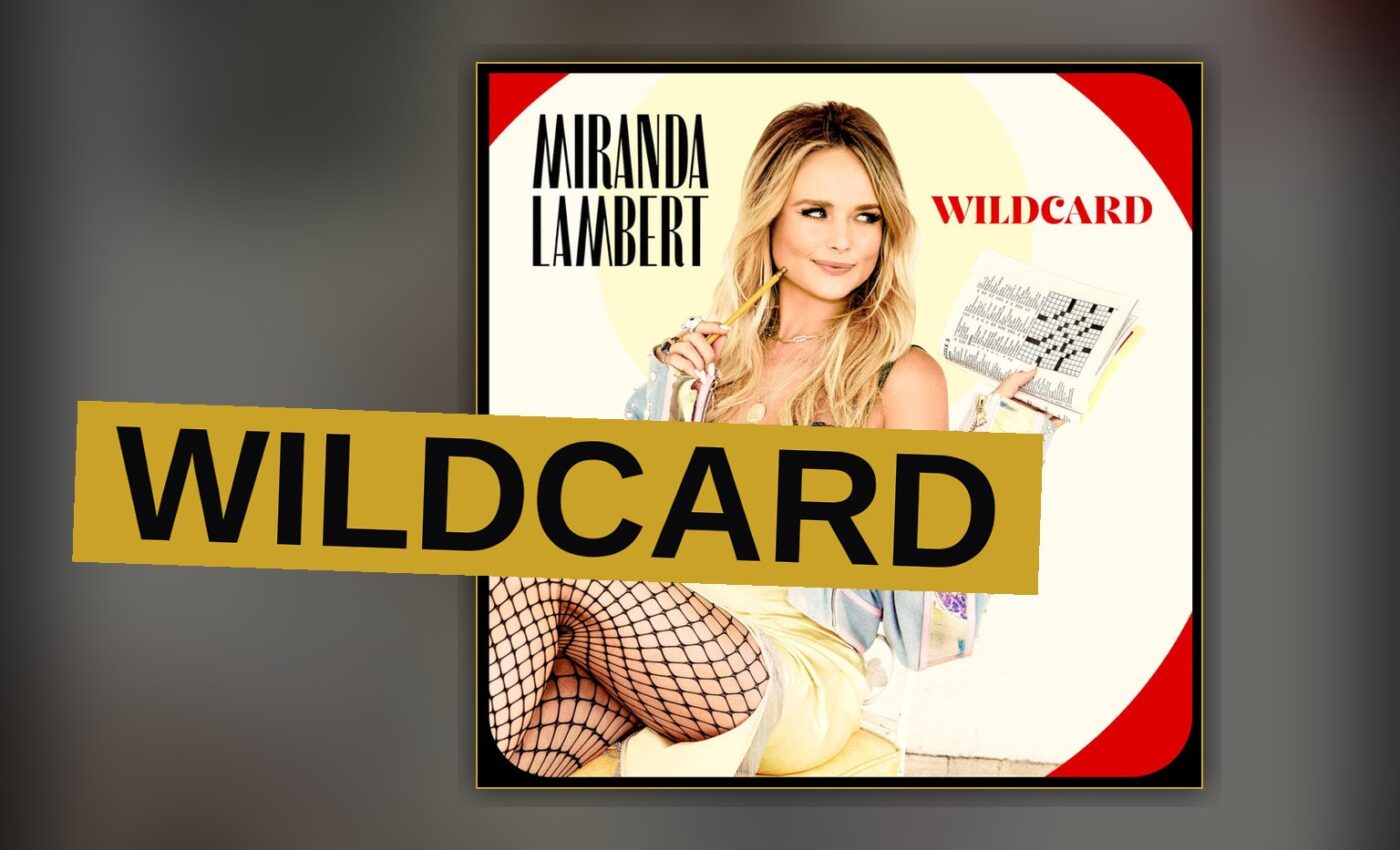
Miranda Lambert has spent her career making country records that feel like bar fights and heartbreaks rolled into one. “Wildcard,” her 2019 album, is the sound of her deciding she doesn’t need to pick a lane. It is a rock record with a twang, a pop record with a drawl, and a country record that refuses to sit still.
The album runs 14 tracks. It is trying to prove that a woman who has been country’s reigning wild child for over a decade can still surprise you. The production leans hard into electric guitars and punchy drums. The songwriting leans harder into wit. Lambert is not singing about being broken here. She is singing about being unbothered.
The result is a record that critics broadly praised as a spirited return to form, even when they could not agree on what form that was. It is messy, loud, and frequently brilliant.
Opening Shots and the Middle Stretch
The record starts with “White Trash,” a three-minute rocker that names its subject in the title and never apologizes for it. Lambert turns a slur into a badge of honor over a riff that could pass for garage rock. “Mess With My Head” follows as the shortest track on the album. It is a sharp little pop-country cut about knowing exactly what someone is doing to you and letting them do it anyway.
“It All Comes Out in the Wash” is the first real single. It is a breezy, mid-tempo number about letting time sort out your messes, with a chorus built for summer radio. It is not the deepest song here, but it does not need to be. “Settling Down” slows things down and gets personal, a ballad about the tension between wanting a home and wanting to run from it. “Holy Water” is a gospel-tinged cut that uses religion as a metaphor for a different kind of salvation.
“Way Too Pretty for Prison” is a duet, and it is the most purely fun track on the record. It is a jailhouse fantasy about two women who are too attractive to do time. It is silly, and it knows it. “Locomotive” is the album’s most straightforward rock song, a chugging, relentless number about being a force that cannot be stopped.
Bluebird and the Back Half
“Bluebird” is the centerpiece, and it is the song that everyone agreed on. It is a mid-tempo anthem about choosing hope over despair, built around a simple metaphor: if you can find the bluebird in your own heart, you can get through anything. The production is sparse, the melody is patient, and Lambert’s vocal is the most controlled it has been on the whole album.
“How Dare You Love” is a quieter, more vulnerable cut that follows it. It is a song about being shocked that someone would actually want to stick around. “Fire Escape” picks the pace back up, a rocker about finding a way out of a bad situation, literally and figuratively. “Pretty Bitchin'” is a swaggering, tongue-in-cheek number about being exactly what you look like.
The back half of the record is where the tonal shifts start to show. “Tequila Does” is a drinking song that is smarter than it needs to be, using the liquor as a scapegoat for every bad decision. “Track Record” is a self-referential cut about Lambert’s own history of chaos. “Dark Bars” closes the album as the longest track here, and it is a moody, atmospheric closer about finding comfort in the places that should not feel like home.
Where It Drags
Not every track earns its place. “Track Record” is the clearest filler, a song that repeats its central idea without adding much to it. “It All Comes Out in the Wash” is pleasant but forgettable, the kind of single that works on the radio and disappears in the sequence. The record’s middle stretch from “Way Too Pretty for Prison” through “Locomotive” is fun, but it is also where the album starts to feel like a playlist rather than a statement.
The unevenness is part of the charm. Lambert is not trying to make a cohesive mood piece. She is trying to make a record that sounds like her brain works, and her brain clearly jumps between jokes, regrets, and rock riffs. The songs that work commit fully to their own mood. The songs that do not work are the ones that hedge.
The tracks that earn the most repeat listens, ranked:
- “Bluebird”
- “Mess With My Head”
- “Dark Bars”
- “White Trash”
- “Fire Escape”
The tracks that work best as a group, if you are making a playlist:
- “Way Too Pretty for Prison” for pure fun
- “Locomotive” for raw energy
- “Pretty Bitchin'” for attitude
- “Tequila Does” for a smarter drinking song
The Verdict
“Wildcard” is not Lambert’s best record, and it is not her most consistent one. It is her most alive one. The production is sharp, the writing is funny, and the performances are confident throughout. The album’s 14 tracks run long, and a tighter edit would have made it stronger, but the sprawl is also the point.
Critics gave the album a Metacritic score of 82 out of 100, a strong showing that matches the energy on display. Lambert is not interested in trimming her personality to fit a format. The record succeeds on its own terms. It is a country album that rocks, a rock album that twangs, and a pop album that never forgets its roots. It is the sound of an artist who has nothing left to prove and is therefore free to try everything.
This is not Lambert returning to anything. It is Lambert moving forward, and dragging the genre with her.
Get the Notebook.
The day's best stories and every fresh verdict, in plain English, in your inbox by seven. One email a day, no more.
- White Trash3:10
- Mess With My Head2:33
- It All Comes Out in the Wash3:35
- Settling Down3:17
- Holy Water3:15
- Way Too Pretty for Prison3:14
- Locomotive3:14
- Bluebird3:30
- How Dare You Love3:38
- Fire Escape3:49
- Pretty Bitchin’3:32
- Tequila Does4:02
- Track Record3:19
- Dark Bars4:47