
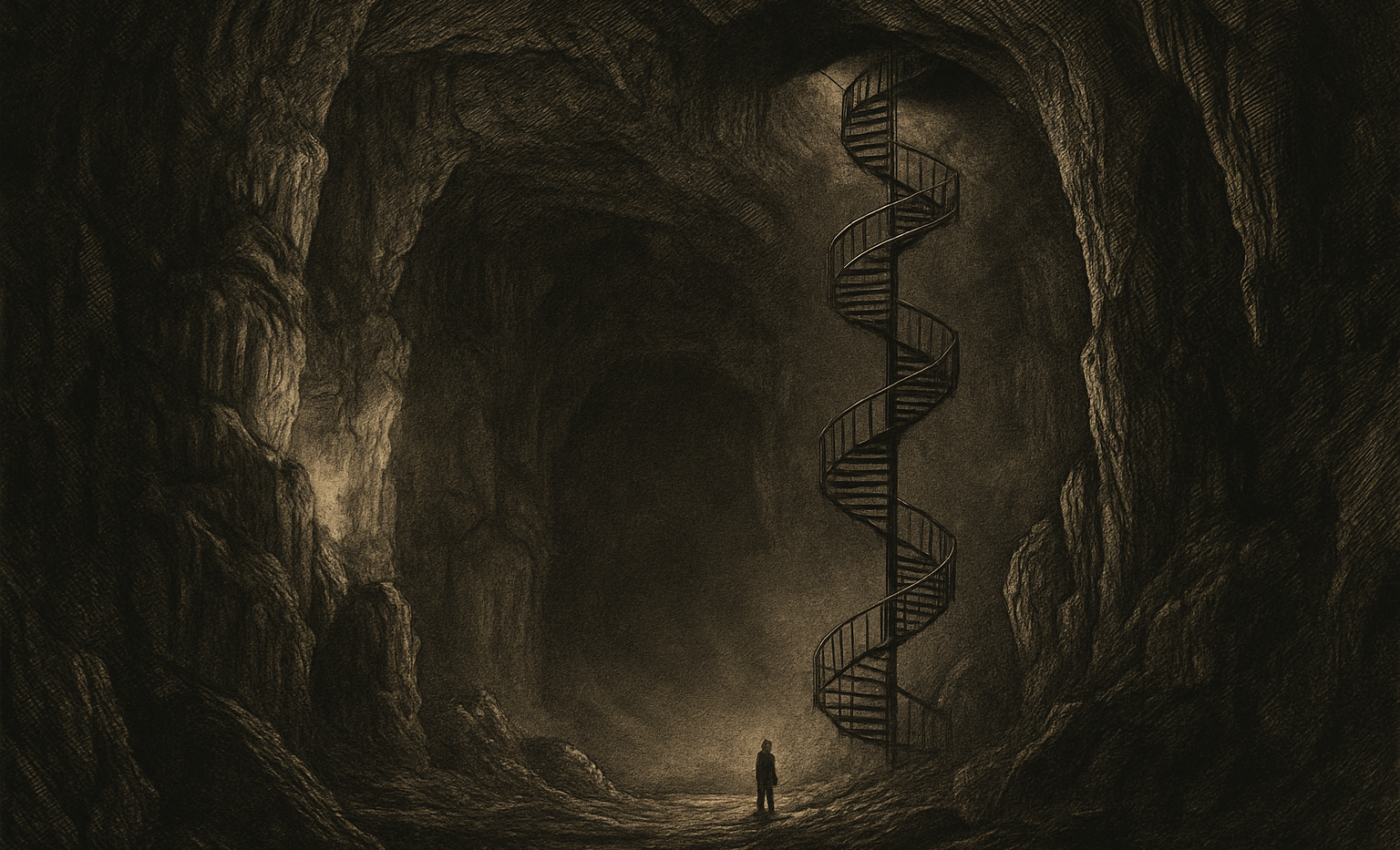
In the Sierra Nevada foothills of Vallecito, California, there lies a limestone cave containing a chamber large enough to hold the Statue of Liberty. The cavern’s most notable feature is a 165-foot steel spiral staircase that descends into the dark.
The Staircase’s Battleship Origins
The staircase was constructed from steel salvaged from a World War I battleship, built in 1922, and it leads to depths that early visitors could only reach by rope. That military-grade material carries the same kind of pedigree as the cave’s own eerie reputation.
Rappelling Into the Dark
Those willing to take a bigger risk can bypass the stairs altogether and rappel down into the cave instead, gaining a view of the cavern that casual visitors never get to see.
The rappel route offers visitors the chance to experience the cave’s sheer size firsthand. Instead of a measured, historical descent via the staircase, it drops people directly into the exposed rock faces of the cavern.
A Chamber Built for a Landmark
The main chamber’s size is the cave’s most repeated claim to fame. The Statue of Liberty could reportedly fit inside the space, giving visitors a sense of the volume they are standing in.
The chamber is enormous, its scale difficult to grasp from above.
The Sound That Named the Cave
The cavern gets its name from a moaning sound that occurs naturally inside it. Air passing through the cavern’s passages produces the mysterious noise that was once heard within. That sound was loud enough and strange enough to become permanently attached to the place.
The name remains, a reminder of the cave’s mysterious past.
Visiting Moaning Caverns Today
Guests have two ways to enter the cavern: they may descend the staircase or choose to rappel down into its depths. The site brings together geology, history, and an unusually eerie feeling in a manner that sets it apart from nearly every other cave in California.
The staircase draws the attention of most visitors, while a smaller group finds the rappel to be the true highlight. Both lead to the same place: a descent into a space that feels entirely separate from the surface world above.
What to Know Before You Go
California’s Sierra Nevada foothills hold a strange place called Moaning Caverns, found in Vallecito, where nature itself becomes the draw for visitors rather than any man-made spectacle.
Descending via the stairs is the ordinary way down. A rappel gives thrill-seekers a stronger form of adventure.
A Quick Guide to the Descent Options
- Staircase tour: The classic experience, a 165-foot spiral descent on the 1922 battleship steel stairs.
- Rappel tour: A vertical drop into the cave’s deeper passages, for those seeking a more intense adventure.
When it comes to picking between a steady pace and a rush, the decision hinges on what you want to pair with your study of the Earth.
Planning Your Visit
| Item | Detail |
|---|---|
| Location | Vallecito, California, Sierra Nevada foothills |
| Main feature | 165-foot steel spiral staircase, built 1922 |
| Staircase material | Steel salvaged from a World War I battleship |
| Cave name origin | Moaning sound from air moving through passages |
| Main chamber size | Reportedly large enough to fit the Statue of Liberty |
| Descent options | Staircase, rappelling |
| Best for | Geology enthusiasts, history buffs, adventure seekers |
Moaning Caverns serves both the curious and the bold. A staircase provides a historical descent, while a rappel delivers a physical one. The cave itself holds something neither experience fully conveys: a feeling of being underground, enclosed by stone.
The moaning may have faded, but the cavern’s pull has not.
Source: atlasobscura.com
Get the Notebook.
The day's best stories and every fresh verdict, in plain English, in your inbox by seven. One email a day, no more.