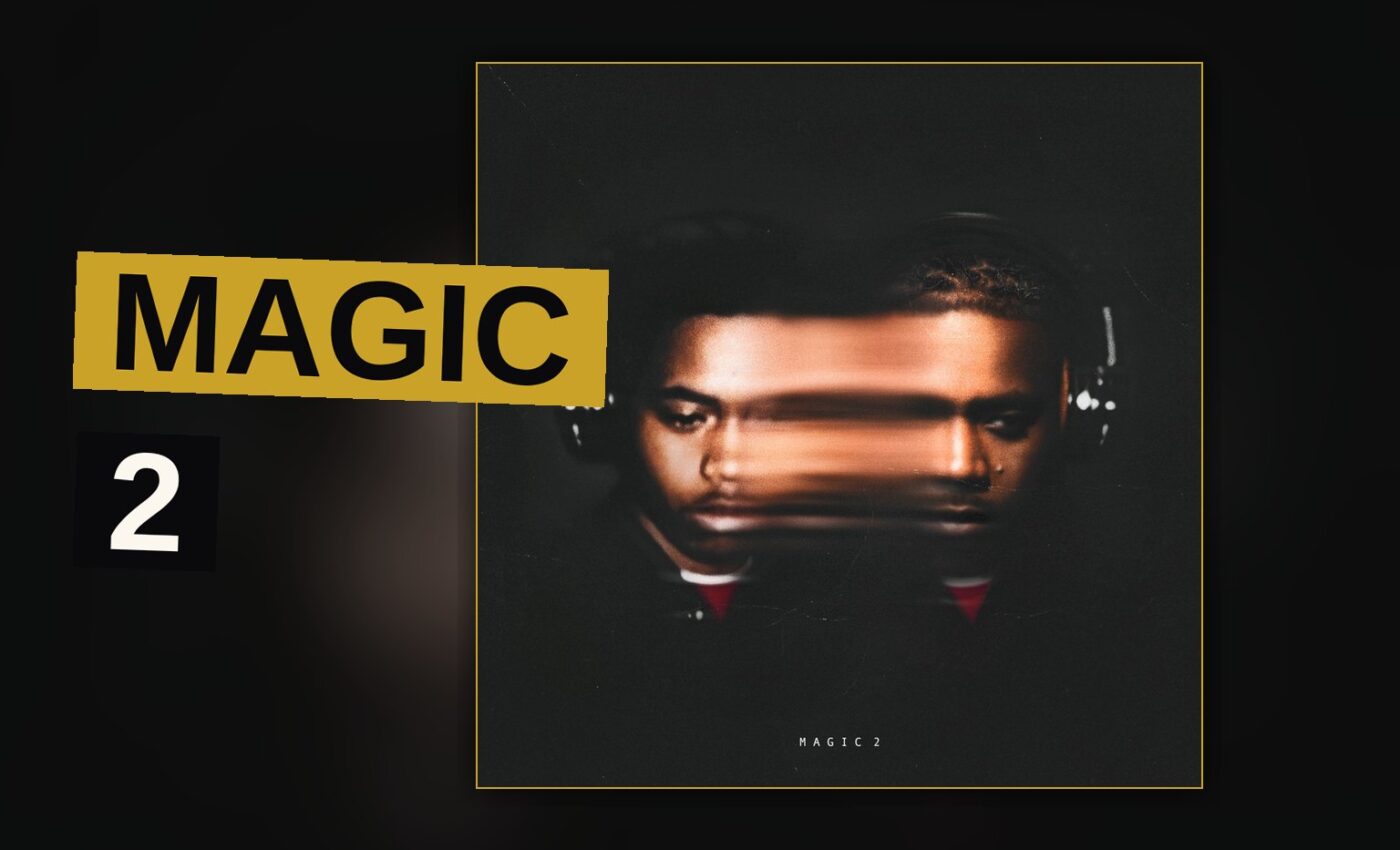
Nas has spent two decades proving he can out-rhyme anyone in the room. Magic 2 is his attempt to prove he can still make a beat-driven rap album that doesn’t need a concept. The record is a 31-minute statement of intent: Nas wants to sound like he’s still in the fight, and he mostly does.
The album opens with a title track that sets the tone. It’s a short, pointed introduction, not a statement. Then comes the record’s thesis: “Abracadabra,” “Office Hours,” “Black Magic,” and “Motion” are four tracks that critics singled out for a reason, and they’re the clearest evidence that Nas hasn’t lost his touch.
Opening With a Whisper
“Intro” runs just 40 seconds. It’s a whisper, a breath, a promise of what’s coming. It doesn’t need to do more.
“Abracadabra” follows, and it’s the strongest track on the record. The beat is loose, almost playful, and Nas sounds like he’s having fun with it. The rhymes land with force, and the song earns its reputation as the album’s standout moment.
“Office Hours” slows things down without losing momentum. It’s a patient track, built on a steady groove, and Nas lets his cadence stretch across the beat. It’s a reminder that he can pace himself as well as he can pace others.
“Black Magic” and “Motion” sit back to back and both hold up. “Black Magic” leans into its title, with a darker, more atmospheric production. “Motion” is tighter, more kinetic, and it’s the kind of track that shows Nas can move with the beat without leaning on it.
The Middle Stretch
“Bokeem Woodbine” is a tribute to the actor, and it’s one of the tracks critics singled out. The beat is sharp, and Nas uses the opportunity to show off his wordplay. It’s a small, specific moment, but it lands.
“Earvin Magic Johnson” follows, named after the former Lakers star. It’s a tribute track, and it’s fine, but it doesn’t quite reach the heights of the songs around it. It’s competent, not essential.
“What This All Really Means” is the album’s attempt at introspection. It’s a track about the weight of being a legend in the game, and Nas handles it with his usual mix of wit and gravity. It’s not a great song, but it’s a necessary one.
“Slow It Down” is a shorter track, and it’s one of the weaker moments on the record. The beat drags, and Nas spends too much time explaining himself rather than letting the music carry him.
“Pistols on Your Album Cover” is a track that criticizes artists who use guns as a marketing tool. It’s pointed, but it’s also one of the album’s more forced moments. The message is clear, but the delivery feels labored.
“One Mic, One Gun” closes the record. It’s a track about the tension between artistry and violence, and it’s a fitting end to a record that has spent its runtime wrestling with that tension. It’s a strong closer, even if it doesn’t quite match the highs of the earlier tracks.
What the Reviews Said
Critics praised the album’s beats and wordplay while noting some forced lines. That’s the full picture. The record is uneven, but its peaks are genuinely high.
“a bravura feast of word play combined to some of the most effective beats of his career”
That’s a fair description of the album’s strengths. The beats are sharp, and Nas’ wordplay remains as precise as ever. The forced lines are a problem, but they’re not the whole story.
“a low-stakes mid-career rap album to show that one of the genre’s icons is still in decent fighting shape”
That’s the other side of the coin. The album isn’t trying to reinvent rap. It’s trying to show that Nas can still put out a solid record, and it succeeds at that. Whether that’s enough for longtime fans is another question.
The Tracks That Stand Out
The four tracks critics singled out — “Abracadabra,” “Office Hours,” “Bokeem Woodbine,” and “Motion” — are the heart of the record. They’re the moments where the album feels essential, not just functional.
“Abracadabra” is the best of the bunch. “Office Hours” is the most patient. “Bokeem Woodbine” is the most specific. “Motion” is the most kinetic. Together, they make a case for the album’s best moments.
The Verdict
Nas 2 is a good album, not a great one. Its best tracks are among the sharpest in his catalog, and its worst tracks are forgettable. The record succeeds when it trusts the beats and the rhymes, and it fails when it tries to force a point.
The album’s 71/100 Metacritic score reflects that split. It’s a solid score for a rapper of Nas’ stature, but it’s a modest one for an artist of his caliber.
The album is available now.
KEY FACTS
– Artist: Nas
– Album: Magic 2
– Tracks: 11
– Total running time: 31 minutes
– Metacritic: 71/100
The verdict is clear. Magic 2 is a worthy entry in Nas’ catalog, but it’s not the statement that could have been made. It’s a solid record from an icon who knows his way around a beat. The highs are high, the lows are low, and the middle is a bit of both.
- Intro0:40
- Abracadabra2:47
- Office Hours3:52
- Black Magic2:36
- Motion2:53
- Bokeem Woodbine3:00
- Earvin Magic Johnson3:28
- What This All Really Means3:00
- Slow It Down3:31
- Pistols on Your Album Cover3:23
- One Mic, One Gun2:49