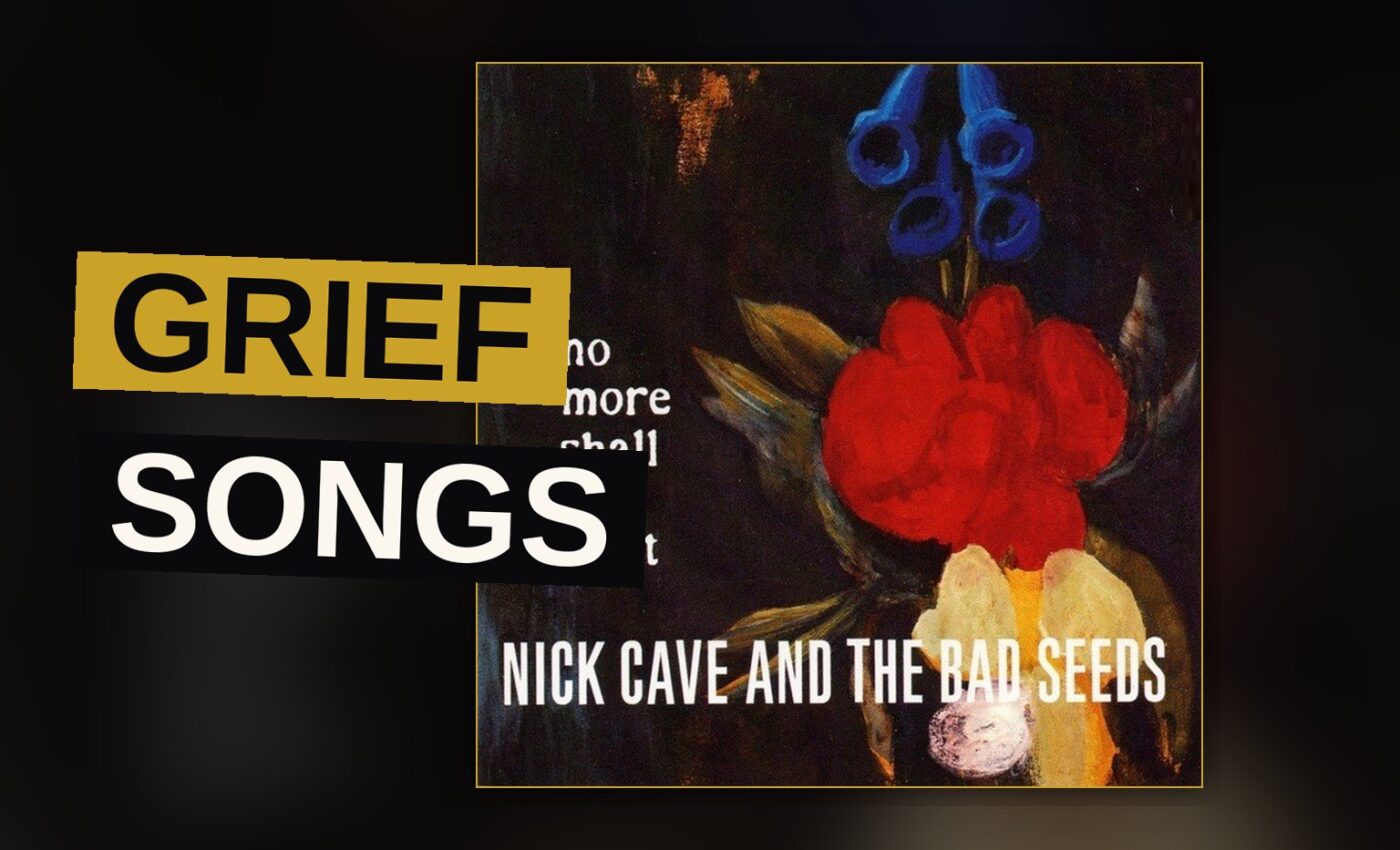
Nick Cave and the Bad Seeds built No More Shall We Part around grief, religion, and the slow passage of a man through both. The record opens with a title track that sets the tone: a weary, resigned hymn about loss and acceptance. It closes with a long, fragmentary suite of short instrumental pieces. In between sit ten songs that range from the tender to the brutal, all bound together by a sense of a man walking a road he can’t escape.
The album runs roughly 68 minutes across 12 tracks, which is unusual for a rock record. Most of the running time comes from the long, piano-driven ballads that fill the early half of the record. The shorter instrumental tracks in the back half break up the pace but don’t add much substance beyond texture. This is a record that asks patience, and it rewards it only sometimes.
Opening the Title Track
“As I Sat Sadly by Her Side” opens the record with a simple piano line and Cave’s voice settling into a familiar, worn register. The song describes a lover who has died, and Cave sings about the quiet, ordinary moments after death — sitting beside her bed, dressing her body, waiting for the inevitable. There’s no drama here, only acceptance. The melody is gentle, almost lullaby-like, which makes the subject matter hit harder.
“And No More Shall We Part” follows and functions as a title track in spirit. It’s a brief, gospel-tinged hymn that promises comfort and closure, even as the lyrics acknowledge that the comfort is temporary. The song ends abruptly, leaving the listener hanging — a fitting way to start a record that refuses neat conclusions.
Hallelujah and the Ballad Stretch
“Hallelujah” is the centerpiece of the early stretch, and it’s the most immediate entry point for anyone who knows the Leonard Cohen original. Cave’s version is slower and more solemn than Cohen’s, with a heavy organ drone underscoring the biblical imagery. It’s a standout, though the arrangement leans heavily on repetition rather than variation.
“Love Letter” is a quieter, more intimate track about romantic longing. It’s one of the few songs here that feels hopeful, with Cave singing about love as a force that can overcome fear and despair. The song is effective in its simplicity, but it doesn’t quite reach the heights of the ballads that surround it.
“Fifteen Feet of Pure White Snow” is the longest track on the record at 5:37, and it’s also one of the most ambitious. It tells the story of a man who returns home to find his wife dead, covered in snow. The song builds slowly, adding layers of piano and percussion until it reaches a climax that feels earned rather than forced. It’s a strong example of the record’s storytelling ambition.
“God Is in the House” is a darker, more ominous track about faith and doubt. Cave sings about a man who prays to God but finds no comfort, and the song’s tension comes from the contrast between the prayerful melody and the bitter lyrics. It’s a solid song, but it doesn’t quite cohere the way the best tracks do.
“Oh My Lord” is a sprawling, blues-influenced epic that stretches past seven minutes. It’s the most varied track on the record, moving from a slow, mournful verse to a faster, more urgent chorus. The song deals with the idea of a loving God who allows suffering, and Cave’s vocal performance is intense throughout. It’s a highlight, but it’s also the point where the record starts to feel overstuffed.
“Sweetheart Come” is a mid-tempo love song that stands apart from the surrounding material. It’s lighter and more straightforward than most of the record, with Cave singing about reunion and joy. The song is pleasant, but it lacks the weight of the tracks around it.
“The Sorrowful Wife” is a short, piano-led ballad about a woman’s grief. It’s a minor track, but it adds texture to the record’s portrait of domestic tragedy.
“We Came Along This Road” is a folk-influenced narrative song about a journey through hardship. It’s one of the more cohesive tracks, with a clear structure and a strong melody. The song’s narrator reflects on the road he’s traveled and the losses along the way, and Cave’s delivery is understated and effective.
Gates to the Garden Through Grief Came Riding
“Gates to the Garden” is a brief, atmospheric piece that serves as a bridge into the record’s final stretch. It’s not a standout, but it sets the mood for what follows.
“Darker With the Day” is a slow, brooding track about the passage of time and the inevitability of death. The song builds gradually, with Cave’s voice growing more desperate as the music swells. It’s a strong track, though it shares thematic territory with much of the record.
“Grief Came Riding” is a longer, more ambitious song about mourning. It’s one of the more complex tracks on the record, with a layered structure and a recurring melody. The song’s narrator welcomes grief as a companion, and the acceptance is strangely comforting.
“Bless His Ever Loving Heart” is a brief, hymn-like tribute to a loved one. It’s a minor track, but it rounds out the record’s portrait of loss.
The Instrumental Tracks
The instrumental pieces are the record’s strangest element. They’re 30 short tracks, each under two minutes, that explore fragments of melody, rhythm, and atmosphere. Some are pure piano, some add percussion, and some drift into ambient textures. They’re interesting as experiments, but they don’t add much to the overall narrative. They feel like sketches rather than finished songs.
The instrumental tracks aren’t failures, exactly, but they’re the weakest part of the record. They’re best taken as palate cleansers between the longer tracks rather than as content in themselves.
What Works and What Doesn’t
The record’s strengths are its best ballads and its storytelling ambition. “Fifteen Feet of Pure White Snow,” “Hallelujah,” and “We Came Along This Road” are the tracks that justify the long running time. The weakest sections are the instrumental tracks and the handful of middle-tier ballads that don’t quite land.
Here’s how the record’s highlights rank:
- “Fifteen Feet of Pure White Snow”
- “Hallelujah”
- “We Came Along This Road”
- “Oh My Lord”
- “Darker With the Day”
“And No More Shall We Part” promises comfort and closure, even as the lyrics acknowledge that the comfort is temporary.
The Verdict
No More Shall We Part is a serious, often beautiful record that occasionally loses focus. The best tracks are among the best of Cave’s career, but the back half drags, and the instrumental tracks feel like filler rather than content. The record’s ambition is real, but it’s not always matched by execution.
The album earns a 7.9 out of 10.
- As I Sat Sadly by Her Side6:14
- And No More Shall We Part4:00
- Hallelujah7:48
- Love Letter4:08
- Fifteen Feet of Pure White Snow5:37
- God Is in the House5:44
- Oh My Lord7:30
- Sweetheart Come4:58
- The Sorrowful Wife5:18
- We Came Along This Road6:08
- Gates to the Garden4:09
- Darker With the Day6:06
- Grief Came Riding5:08
- Bless His Ever Loving Heart4:01
- Q11:03
- Q20:30
- Q31:27
- Q40:53
- Q51:03
- Q60:37
- Q71:14
- Q80:41
- Q90:36
- Q101:20
- Q110:51
- Q120:37
- Q130:58
- Q141:06
- Q150:27
- Q160:17
- Q170:34
- Q180:44
- Q190:22
- Q201:17
- Q210:35
- Q221:59
- Q230:23
- Q240:51
- Q250:50
- Q260:40
- Q270:40
- Q280:16
- Q290:25
- Q300:35