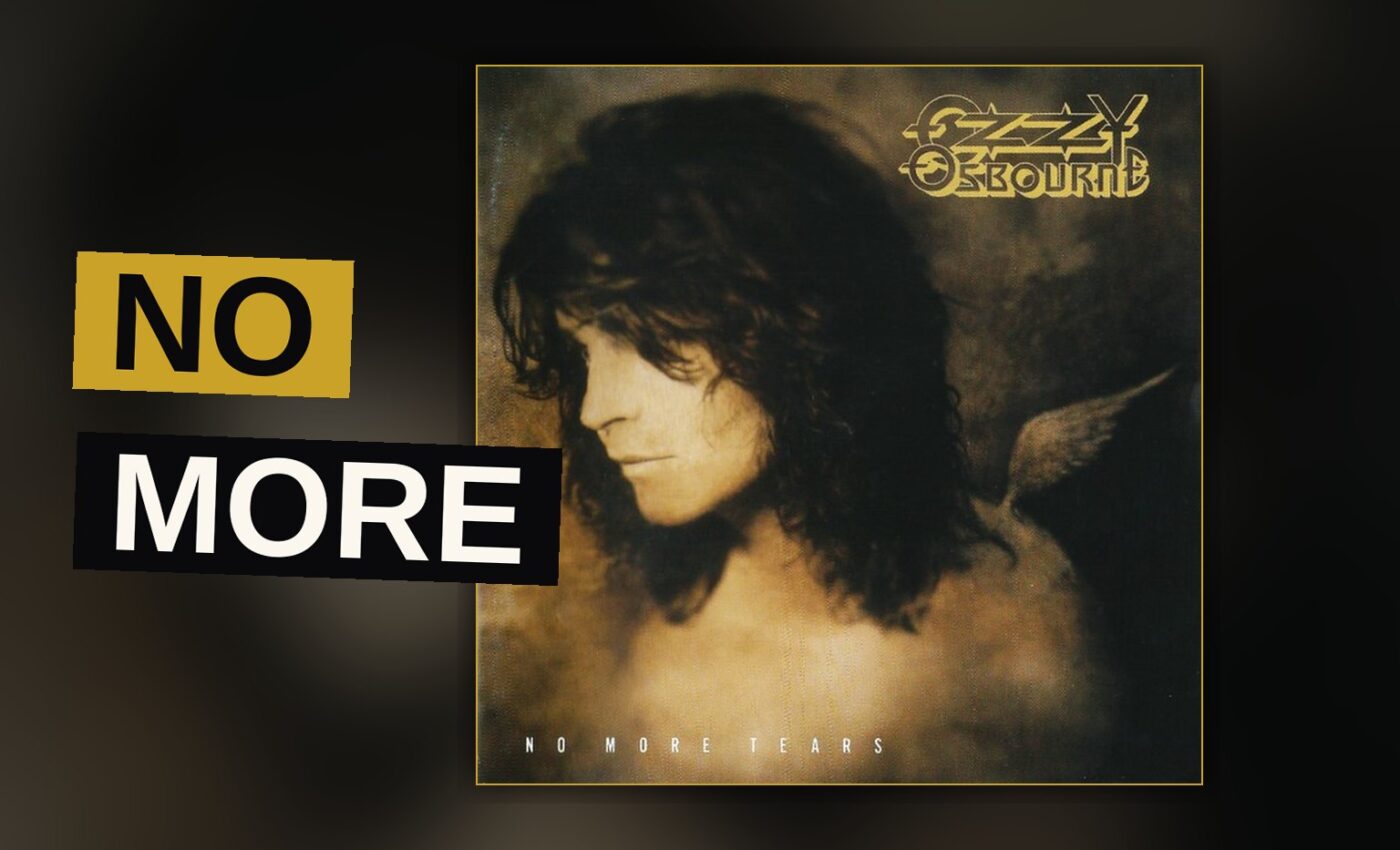
Ozzy Osbourne’s No More Tears is a heavy record with a light touch. Released in 1991, it is the Black Sabbath singer’s fourth solo album and his biggest commercial success. The record wants to sound dangerous while staying radio-friendly, and mostly pulls it off. It is not a reinvention, but it knows exactly what it is doing.
Mr. Tinkertrain Opens the Record
The album opens with “Mr. Tinkertrain,” a five-minute track that sets the tone with a simple riff and a steady groove. It is a statement of intent: this is a heavy rock record, but it is not trying to be obscure. The song earns its length with a strong chorus and a memorable guitar solo.
“I Don’t Want to Change the World” follows at 4:08, a mid-tempo rocker about the futility of activism. It is a solid track, though it lacks the impact of the opener. The lyrics are straightforward and the melody is easy to remember, but it does not reach for anything ambitious.
Mama, I’m Coming Home Carries the Weight
“Mama, I’m Coming Home” is the centerpiece of the record. At 4:14, it is a slow-burning ballad that became a hit single. The track features a guest vocal from Lita Ford, and the combination works. It is the most emotional moment on the album, and it is also the most accessible. The song’s success proved that Osbourne could still connect with listeners outside the metal world.
“Desire” closes the first half of the record at 5:48. It is a slower, blues-influenced track that shows off Osbourne’s vocal range. The song builds steadily, and the final chorus lands with real weight. It is a strong closer to the first side, even if it does not match the intensity of “Mama, I’m Coming Home.”
No More Tears Is the Title Track
The title track, “No More Tears,” runs 7:26 and is the longest song on the record. It is a sprawling, dramatic piece that leans heavily on the band’s instrumental prowess. The song is less melodic than the singles but more atmospheric. It is a showcase for the musicians rather than a vehicle for Osbourne’s voice, and it works well as a deep cut.
“S.I.N.” is a shorter, more aggressive track at 4:49. It is built around a riff that recalls the harder edge of Osbourne’s earlier work. The song is competent but unremarkable, a solid entry in the middle of the album without doing much to stand out.
“Hellraiser” follows at 4:55. It is named after the horror franchise and features a guest vocal from the film’s star. The track is a straightforward metal song with a memorable chorus, and the guest appearance adds a bit of novelty without changing the song’s identity. It is a fun listen but not essential.
Time After Time and Zombie Stomp Close the Middle
“Time After Time” is a 4:22 track that returns to the blues-rock sound of “Desire.” It is a solid, mid-tempo rocker that does not overstay its welcome. The song is a minor highlight, though it does not leave much of an impression.
“Zombie Stomp” is the album’s longest track at 6:15. It is a heavy, grinding song that leans on a relentless riff. The song is effective in its own way, but it is also the most repetitive track on the record. It is not a failure, but it is the weakest stretch of the album.
A.V.H. and Road to Nowhere End the Record
“A.V.H.” is a 4:15 track that is a slight departure from the rest of the album. It has a more melodic feel and a lighter groove. The song is a pleasant change of pace, though it is not a standout.
“Road to Nowhere” closes the record at 5:10. It is a darker, more introspective track that serves as a fitting conclusion. The song ties the album together by returning to the themes of loss and acceptance that run through the record. It is a strong closer, though it does not match the drama of “No More Tears.”
What Works and What Doesn’t
The strongest tracks on No More Tears are the singles. “Mama, I’m Coming Home” is the standout, and “Mr. Tinkertrain” and “No More Tears” are both excellent. The album’s weakness lies in its middle section, where “Hellraiser,” “Zombie Stomp” and “A.V.H.” form a stretch that does not rise to the level of the rest of the record.
The production is clean and loud, with the guitars front and center. The drums are punchy, and the bass provides a solid foundation throughout. The songs are well-written, even if they do not always reach for ambition.
Here is a quick rundown of the album’s strongest moments:
- “Mama, I’m Coming Home” — the hit single and emotional peak
- “Mr. Tinkertrain” — a strong opener with a memorable riff
- “No More Tears” — a sprawling, atmospheric deep cut
- “Desire” — a bluesy standout on the first half
- “Road to Nowhere” — a dark, fitting closer
No More Tears is a confident, well-crafted album that plays to Osbourne’s strengths. It is not a masterpiece, but it is a very good record. The singles are hits, the deep cuts are solid, and the whole package holds together. It is a record that rewards attention and deserves its reputation.
- Mr. Tinkertrain5:59
- I Don't Want to Change the World4:08
- Mama, I'm Coming Home4:14
- Desire5:48
- No More Tears7:26
- S.I.N.4:49
- Hellraiser4:55
- Time After Time4:22
- Zombie Stomp6:15
- A.V.H.4:15
- Road to Nowhere5:10