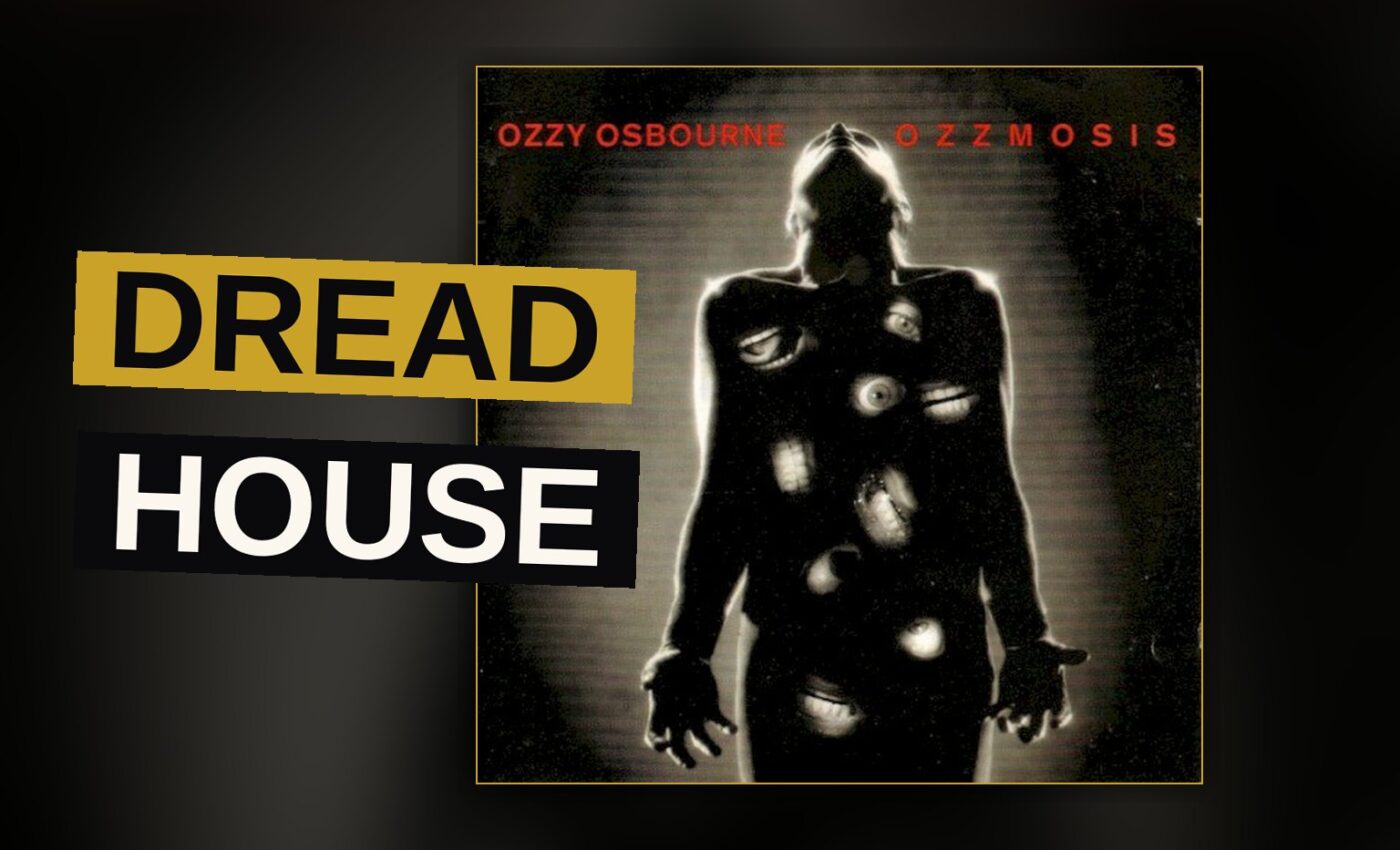
Ozzy Osbourne’s Ozzmosis is a record that wants to sound like a classic rock band playing in a haunted house. It is 1995, and the album pairs Ozzy’s vocal delivery with a backing band that leans heavily on distorted guitars and a production style built for arena-sized speakers. The goal is simple: make a heavy, atmospheric record that stands apart from the metal scene around it.
The record runs just four tracks and 23 minutes, which means every song has to carry weight from the first note. There is no filler here, only four full-length pieces built around dark imagery and a sense of dread that never fully resolves. The result is a record that feels more like a mood than a collection of songs.
Thunder Underground Opens the Record
“Thunder Underground” opens the album with a slow build. The track sets the tone immediately: thick guitar riffs, a steady drum pattern, and Ozzy’s voice pushed forward into the mix. The song moves through several movements, shifting from a heavy, grinding verse to a cleaner chorus that almost sounds like a pop melody trapped inside a metal record. The arrangement keeps changing shape over six and a half minutes, and the track earns its length through patient building rather than constant repetition.
The track is the longest on the record, and it is the centerpiece of the album’s atmosphere. Its slow, deliberate build gives the whole record a starting point, a dark foundation that the rest of the album can lean against.
Perry Mason Holds the Middle
“Perry Mason” follows at 5:54, and it is the shortest song on the record. The title track takes its name from the famous American lawyer, and the song’s central image is a man who has been buried alive. It is a grim, claustrophobic piece, with Ozzy’s vocal delivery doing most of the work to sell the horror. The music stays heavy throughout, but the song never quite finds a new idea after its initial setup.
Because it is the shortest track, “Perry Mason” ends up feeling like a breath between two heavier moments. It is not a bad song, but it lacks the development of the track before it and the one after it.
Tomorrow Offers a Shift
“Tomorrow” runs 6:37 and closes the album’s main sequence with a shift toward something closer to classic rock. The track is built around a piano-driven melody, and it is the most accessible moment on the record. The song carries a sense of longing and dread that fits the album’s overall theme, but it also shows a side of Ozzy’s writing that reaches beyond pure heaviness. It is the track most likely to appeal to listeners who want a more melodic approach.
The piano-driven melody is a clear departure from the distorted guitars that define the rest of the album, and it gives the listener a moment to breathe before the final track.
I Just Want You Closes It Out
The final track, “I Just Want You,” is a 4:56 instrumental that serves as a coda. It is the quietest moment on the record, built around clean guitar lines and a slow, steady rhythm. The track does not add much to the album’s overall statement, but it provides a peaceful ending after three tracks of near-constant tension. It is a thoughtful close, even if it is slight.
The instrumental ends the album on a calm note, a deliberate choice after the heavy material that came before it.
The Four Tracks in Order
Here is how the record breaks down across its four tracks:
| Track | Length |
|---|---|
| Thunder Underground | 6:29 |
| Perry Mason | 5:54 |
| Tomorrow | 6:37 |
| I Just Want You | 4:56 |
The total running time is 23 minutes, which makes Ozzmosis one of the shorter albums in Ozzy’s catalog.
What Works and What Falls Short
The record’s strengths are its atmosphere and its focus. By limiting itself to four tracks, it avoids the filler that often pads out longer albums. The arrangements are dense and layered, with multiple guitar parts weaving together underneath Ozzy’s voice. The production favors clarity over chaos, which means the songs are easy to follow even when they get heavy.
Where the record falls short is in its ambition. The album tries to be both heavy and atmospheric, but it rarely achieves both at once. The middle track, “Perry Mason,” feels like a placeholder rather than a fully realized idea. And the final instrumental, “I Just Want You,” does little to justify its existence as a separate track.
The record is best heard as a single listening experience rather than a set of individual songs. Taken together, the four tracks form a complete statement about dread and isolation. Listened to separately, they feel like sketches rather than finished works.
The Verdict
Ozzmosis is a solid, atmospheric record that occasionally reaches greatness and more often settles for competence. The opening track and the closing track are strong enough to carry the album, while the middle portion drags. The production is clean, the performances are committed, and the ideas are interesting, even if they are not always fully developed.
This is a record that rewards attention but does not demand it. It is a minor entry in Ozzy’s catalog, a period piece that captures a specific moment in metal history without becoming essential to it. The record succeeds when it commits fully to its atmosphere, and it fails when it tries to stretch that atmosphere across a track that has nothing new to say.
Key Facts
– Artist: Ozzy Osbourne
– Album: Ozzmosis
– Year: 1995
– Tracks: 4
– Total runtime: 23 minutes
– Longest track: “Thunder Underground” (6:29)
– Shortest track: “Perry Mason” (5:54)
The record is worth hearing for its atmosphere and its commitment to a single idea. It is not worth seeking out for its individual tracks.
- Thunder Underground6:29
- Perry Mason5:54
- Tomorrow6:37
- I Just Want You4:56