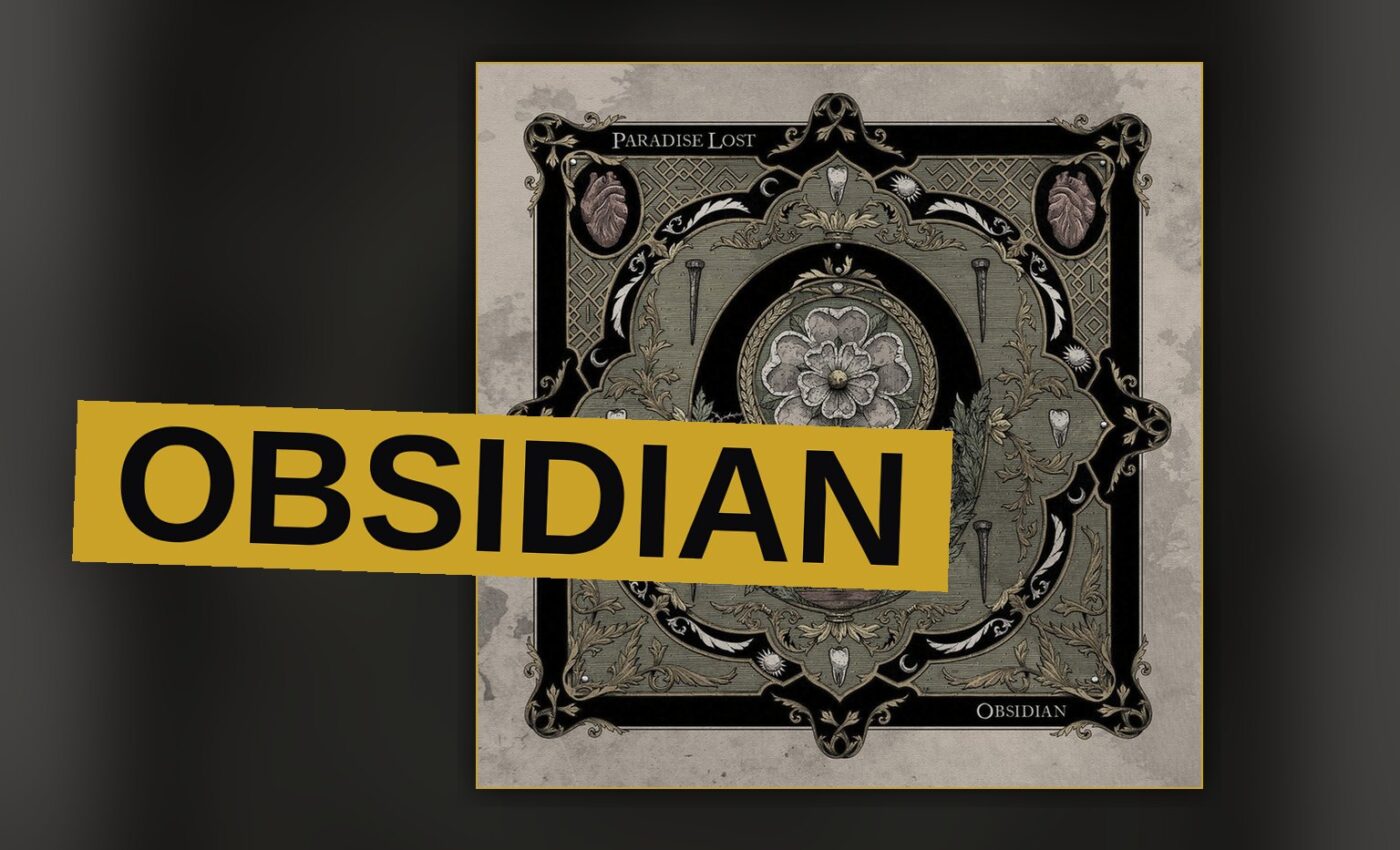
Obsidian is the sound of a band that has stopped trying to prove anything and simply become itself. Paradise Lost’s sixteenth album is not a reinvention; it is a consolidation. Across 55 minutes and 11 tracks, the band pulls together the doom metal of their early years, the gothic atmosphere of their middle period, and the post-punk pulse that has defined their recent work. It is heavy, it is melodic, and it never wastes a note.
This is a band in full command of its identity. The album does not chase trends and does not apologize for its age. Instead, it leans into everything Paradise Lost has ever done well and compresses it into a tight, focused hour. There is no filler, no drift, no padding. Every track earns its place.
Darker Thoughts Sets the Terms
The album opens with Darker Thoughts, a track that establishes the rules for everything that follows. It begins with a clean, almost gentle guitar line, then drops into a crushing riff that feels like a door slamming shut. The vocals alternate between a deep, guttural growl and a cleaner, more melodic delivery, and the contrast drives the song forward. It is a statement of intent: this is an album that will move between light and dark, and it will do so without warning.
Fall From Grace follows and tightens the grip. The song is built on a simple, monstrous groove that never lets up. The chorus is enormous, the kind of hook that buries itself in your head and refuses to leave. It is also the first moment where the post-punk influence becomes unmistakable, with a bassline that could have come from a Joy Division record sitting underneath the metal guitar work. The blend is seamless, and it sets up the album’s central trick: the band makes these disparate styles sound like they were always meant to sit together.
Ghosts and the Middle Stretch
Ghosts is the first real change of pace. It is slower, more atmospheric, and leans heavily into the gothic side of the band’s sound. The keyboards are more present here, and the song builds around a mournful, almost spectral melody. It rewards patience; the payoff comes in the final minute, when the band lets the distortion back in and the song explodes into something far heavier than its opening suggested.
The Devil Embraced is the longest track on the record, and it earns its running time. It is a slow-burning epic that shifts through several distinct movements, from a doomy, crawling opening to a mid-paced stomp and finally to a soaring, melodic conclusion. The guitar work is exemplary throughout, and the solos feel earned rather than tacked on. This is the track that most clearly shows off the band’s range, and it is the heart of the album.
Forsaken is shorter and more direct. It is a straightforward, mid-tempo metal song with a big chorus and a driving rhythm. It does not break new ground, but it does not need to. After the complexity of the previous track, it provides a moment of relief. It is the sound of a band comfortable in its own skin, delivering exactly what its audience wants without any fuss.
Serenity, Ending Days, and the Immediate Hook
Serenity lives up to its name. It is the quietest moment on the record, built around clean guitars and clean vocals. The band has done this kind of song before, but rarely with this much restraint. It is a breather, a moment of calm before the record’s final push, and it works precisely because it does not overstay its welcome.
Ending Days brings the heaviness back. It is a grim, driving track with a relentless riff and some of the most aggressive vocals on the album. The song does not let up, and it is a reminder that Paradise Lost have not gone soft. The atmosphere is still there, but it is pushed to the background in favor of pure, unadorned metal.
Hope Dies Young is the shortest track on the record, and it is also one of its most immediate. The chorus is massive, the kind of singalong hook that has become a staple of the band’s later work. It is the most accessible song here. It is the track most likely to win over new listeners, and it is placed perfectly in the running order, right when the album needs a jolt of energy.
The Final Push: Ravenghast, Hear the Night, Defiler
Ravenghast is the epic of the back half. It is a sprawling, atmospheric track that moves through doom, gothic, and post-punk in the space of five and a half minutes. The opening riff is one of the best on the record, and the song builds to a climax that feels genuinely cathartic. It is the kind of track that demands to be played loud, and it is a reminder of why Paradise Lost have remained relevant for so long.
Hear the Night is moodier and more restrained. It leans into the post-punk side of the band’s sound more heavily than anything else on the record, with a driving bassline and a clean, almost spoken vocal delivery. It is a track that could have felt out of place on a metal album, but it works here because the band has spent the entire record building toward this kind of synthesis.
The album closes with Defiler, a track that brings everything back together. It is heavy, it is melodic, and it ends the record on a note of finality. The song does not offer any easy answers; it simply stops, leaving the listener with the sense that the journey is complete. It makes the album feel like a complete statement rather than a collection of songs.
- Darker Thoughts — the perfect opener, setting the album’s terms immediately.
- Fall From Grace — a massive chorus and the first real blend of metal and post-punk.
- Ghosts — atmospheric and patient, with a payoff worth the wait.
- The Devil Embraced — the longest track and the album’s emotional center.
- Forsaken — direct and effective, a moment of relief after the epic.
-
Serenity — the quietest moment, and a necessary breather.
-
Ending Days — the heaviest track, a reminder of the band’s roots.
- Hope Dies Young — the most immediate song here, and a clear standout.
- Ravenghast — the epic of the back half, with one of the best riffs on the record.
- Hear the Night — the most post-punk track, and a bold choice that pays off.
- Defiler — a strong closer that makes the album feel whole.
A Career Defined
Obsidian is the sound of a band at the peak of its powers. Paradise Lost have spent decades building a sound that spans doom, gothic metal, and post-punk, and this album brings all of those threads together with a confidence that comes only from experience. The songwriting is sharp, the atmosphere is thick, and the record holds together as a single, cohesive statement.
It is also an album that rewards attention. The quieter moments are placed with care, the heavy tracks hit harder because of the contrast, and the sequencing feels deliberate from start to finish. This is a record to be absorbed.
Paradise Lost have made a career out of defying expectations, and Obsidian is the latest proof that they still have plenty to say. It is a career-defining album, and it stands alongside the best work they have ever released.
Get the Notebook.
The day's best stories and every fresh verdict, in plain English, in your inbox by seven. One email a day, no more.
- Darker Thoughts5:46
- Fall From Grace5:42
- Ghosts4:35
- The Devil Embraced6:08
- Forsaken4:30
- Serenity4:46
- Ending Days4:36
- Hope Dies Young4:02
- Ravenghast5:30
- Hear the Night5:34
- Defiler4:45