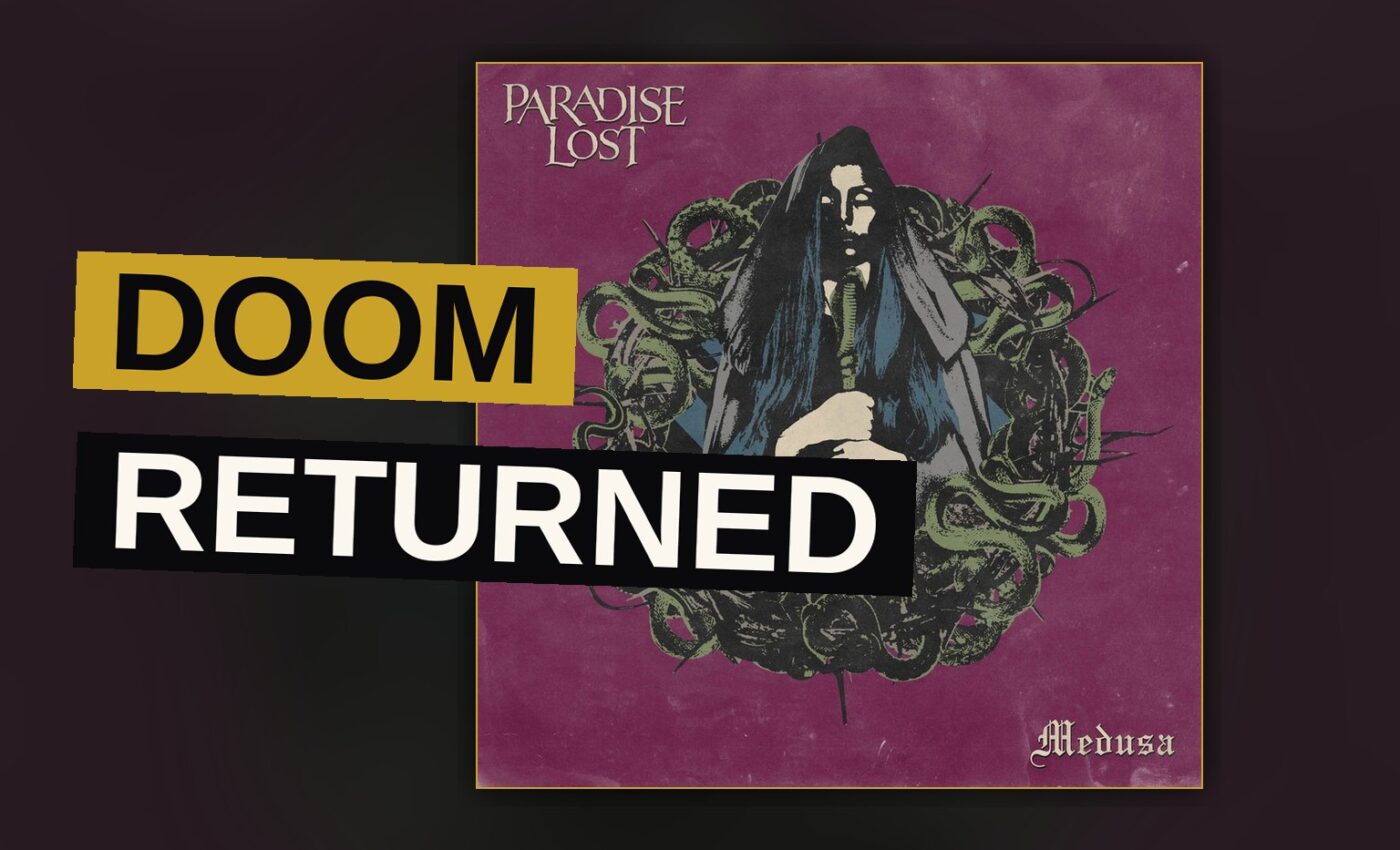
Paradise Lost’s Medusa is not a reinvention. It is a band returning to form after years of drift, and the record plays like a deliberate reset. The album leans into doom metal’s slow, crushing weight while holding onto the melodic hooks that made the band’s earlier work so effective. It is a heavy record, but it is not a punishing one. This is a band that knows exactly what it sounds like and what it wants to sound like.
Fearless Sky Opens the Record
“Fearless Sky” opens the album with a slow, grinding build that sets the tone immediately. The song is patient, letting riffs settle before they erupt. It is not the most immediate track here, but it earns its runtime by establishing the record’s core tension: dread built slowly, not smashed quickly.
Gods of Ancient and From the Gallows
“Gods of Ancient” picks the pace up slightly, with a riff that feels more urgent than anything on the opener. It is a strong track, though it does not reach the heights of the songs around it. “From the Gallows” follows and tightens the grip, a shorter, sharper burst that shows the band can still deliver a concise punch when they want to.
The Longest Winter and Medusa
“The Longest Winter” is the emotional peak of the record’s first half. It is a song about endurance, and it delivers that feeling through a melody that sticks. The title track, “Medusa,” arrives next and shifts the mood from despair to something more confrontational. It is the most aggressive moment on the album, and it works because the band lets the aggression breathe rather than bury it under excess.
No Passage for the Dead and Blood and Chaos
“No Passage for the Dead” returns to the slower, doomier territory, but it never drags. The song moves with purpose, and its central riff is one of the strongest on the record. “Blood and Chaos” closes this stretch with a blast of energy, a track that feels almost celebratory in its chaos. It is a welcome release after the album’s darker middle.
Until the Grave Closes It Out
“Until the Grave” ends the record on a note of finality. It is a fitting closer, a song that ties the album’s themes of mortality and acceptance together without ever feeling rushed.
The Track List in Order
| # | Track | Time |
|---|---|---|
| 1 | Fearless Sky | 8:30 |
| 2 | Gods of Ancient | 5:50 |
| 3 | From the Gallows | 3:42 |
| 4 | The Longest Winter | 4:31 |
| 5 | Medusa | 6:20 |
| 6 | No Passage for the Dead | 4:16 |
| 7 | Blood and Chaos | 3:51 |
| 8 | Until the Grave | 5:41 |
Comparing the Peaks
The album’s best moments sit side by side in the table below. What separates them is patience versus urgency.
| Track | Strength | Role |
|---|---|---|
| The Longest Winter | Melody | Emotional peak |
| Medusa | Aggression | Confrontation |
| No Passage for the Dead | Riff | Doom anchor |
| Blood and Chaos | Energy | Release |
The Lesser Tracks
The lesser tracks are not failures; they are simply filler between the album’s high points. “Fearless Sky” and “Gods of Ancient” set the stage well but do not demand attention on their own. “From the Gallows” is a competent burst of energy that passes without much fuss. None of these songs are bad, but none of them elevate the record beyond what the stronger tracks already establish.
Verdict
Medusa is a solid, focused doom metal record that knows its limits and respects them. It does not try to be anything it is not, and that honesty is its greatest strength. The weaker tracks are not failures; they are simply filler between the album’s high points. The record’s best moments — “The Longest Winter,” “Medusa,” “No Passage for the Dead,” and “Blood and Chaos” — are strong enough to carry the whole thing.
This is a band working within its own rules, and it works.
- Fearless Sky8:30
- Gods of Ancient5:50
- From the Gallows3:42
- The Longest Winter4:31
- Medusa6:20
- No Passage for the Dead4:16
- Blood and Chaos3:51
- Until the Grave5:41