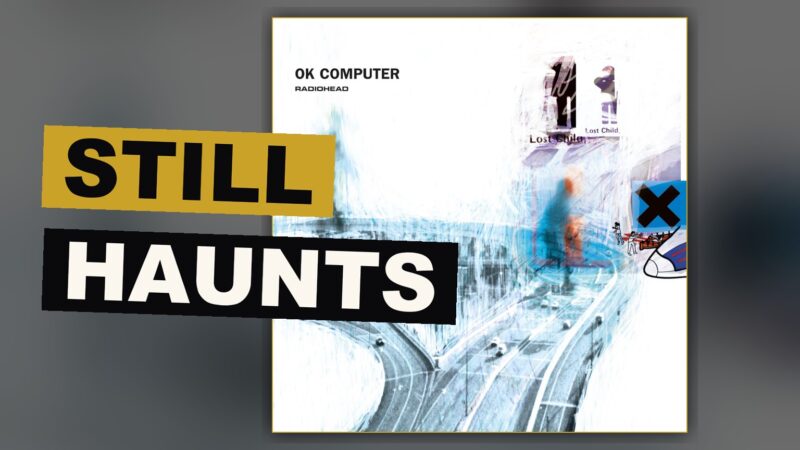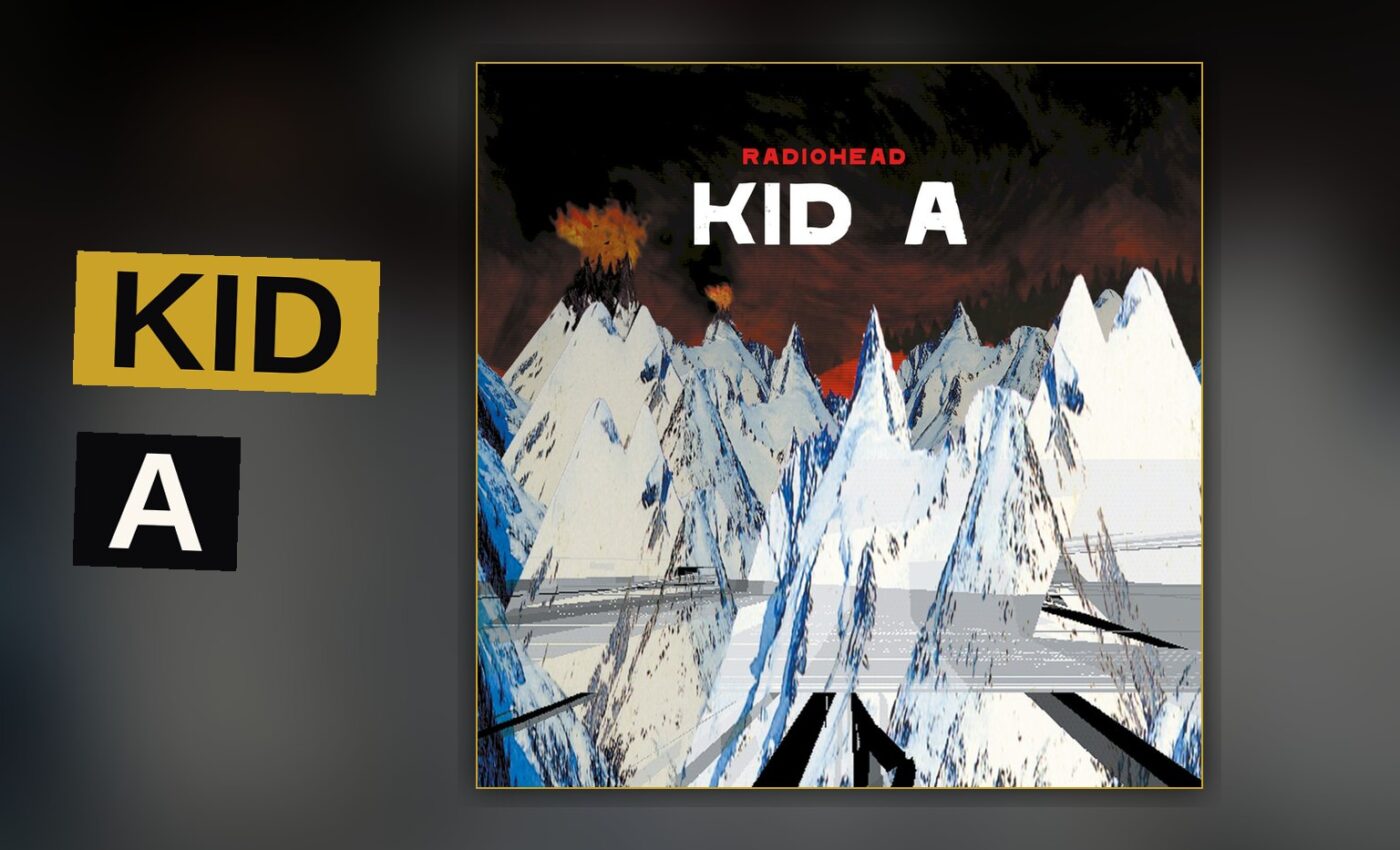
Kid A is Radiohead’s third album in a row that refuses to sit still. After the anxious, guitar-heavy rock of OK Computer, the band turned toward electronics, loops, and fractured song structures. The record does not sound like a band playing together in a room. It sounds like signals arriving from somewhere else, assembled by human hands but not quite human in feeling. It is a deliberate break, and it holds.
The album runs 49 minutes across 10 tracks. It landed in 2000, and it split listeners immediately. Some heard a masterpiece. Some heard a band abandoning what made them great. Both groups were right, in part. The record is difficult, cold, and often beautiful. It rewards patience, but it does not beg for it.
The Opening Gambit: Everything in Its Right Place
The record starts with “Everything in Its Right Place,” a track that announces the new rules. The vocal is looped and pitch-shifted, repeating fragments over a pulsing keyboard line. There is no guitar. There is no conventional verse-chorus structure. The song simply exists, circling itself like a satellite. It is a mission statement: this is not OK Computer part two.
It is also a trap. The title suggests order, but the music feels unmoored. The vocals drift in and out of sync with the keys. Nothing resolves, and that is the point. The song sets the tone for everything that follows. It tells the listener to abandon expectations.
Kid A and The National Anthem: The Pulse Quickens
The title track, “Kid A,” is the strangest thing here. It is built on a vocal melody that sounds like it was processed beyond recognition, with the singer’s voice treated as an instrument rather than a carrier of meaning. The lyrics are minimal. The mood is glacial. It is not a song so much as a texture, a piece of atmosphere that happens to have a running time.
“The National Anthem” snaps the record awake. It is the closest thing to a rock song on the album, driven by a bassline that refuses to let go. A horn section enters near the end, playing what sounds like a parade collapsing into chaos. The track builds and then breaks, with the vocalist shouting over the noise. It is messy, loud, and alive. It is also the clearest sign that the band had not lost their edge.
How to Disappear Completely: The Emotional Core
“How to Disappear Completely” is the album’s heart. It is a slow, aching piece built on strings and a distant guitar. The vocal is fragile, almost exhausted. The song was reportedly inspired by a dream about floating above the earth, and it sounds like it. There is a sense of weightlessness, of letting go.
The track is the most direct emotional statement on the record. It does not hide behind electronics or abstraction. It simply asks to be felt. It is also the song that connects Kid A to the band’s earlier work. The melody could have lived on OK Computer. The arrangement, though, points forward. It is the bridge between what Radiohead was and what they were becoming.
Treefingers and Optimistic: The Middle Stretch
“Treefingers” is not really a song. It is a three-and-a-half-minute ambient piece, all shimmering guitar loops and no rhythm. It functions as a palate cleanser, a moment of stillness between the album’s denser passages. It does not demand attention. It rewards it, barely. It is the kind of track that works in context and vanishes on its own.
“Optimistic” is the most conventional thing on the record. It has a riff, a chorus, and a structure that could almost be called radio-friendly. The lyrics are grim, though. The song is the album’s most direct nod to the band’s past, and it lands well.
In Limbo and Idioteque: The Record’s Sharpest Turns
“In Limbo” is a strange, slippery piece. It starts with a clean guitar figure and then dissolves into a rhythm that feels off-kilter, almost wrong. The vocal melody is uneasy, and the song never quite settles. It is shorter than the tracks around it, and it works as a transition, a moment of disorientation before the album’s most famous stretch.
“Idioteque” is the track that divides people. It is built on a drum loop and a jagged synth line, with the voice pitched high and desperate. The song is frantic, almost panicked. It sounds like a warning, a transmission from a future that has already gone wrong. It is the most abrasive thing on the record, and it is also the most immediate. It does not ask for patience. It demands a reaction.
Morning Bell and Motion Picture Soundtrack: The Closing Pair
“Morning Bell” is a tense, claustrophobic piece. It is built on a drum pattern that feels like a heartbeat, with the vocalist repeating the same phrases until they lose meaning. The song is about leaving, about the end of something, and it carries a quiet menace. It is not a highlight, but it sets up the finale.
“Motion Picture Soundtrack” is the album’s closing statement, and it is devastating. It begins with a simple organ line and the voice, almost alone. Then the strings enter, and the song swells into something enormous. The lyrics are about death and reunion. It is the most direct and the most moving moment on the record. It ends with a fade-out that feels like a door closing.
The Verdict: A Record That Rewards the Patient
Kid A is not an easy album. It does not want to be liked. It wants to be lived in. The electronic textures, the fractured structures, and the buried vocals all push against the idea of what a rock album should be. Some of it does not work. “Treefingers” is a stretch, and parts of the middle section drag. But the record’s best moments are extraordinary.
“How to Disappear Completely” and “Motion Picture Soundtrack” are among the best songs Radiohead has ever written. “Idioteque” and “The National Anthem” show a band willing to make noise and call it music. The album is ambitious, strange, and often alien. It is also, on its own terms, a success.
Radiohead took a risk with Kid A. They abandoned the sound that made them famous and reached for something colder and more complex. It worked. The record does not sound like anything else from its era, and it has not aged into familiarity. It still sounds like a transmission from somewhere else.
The album is not for everyone. It was not meant to be. For those willing to meet it on its own terms, it is a landmark. For those who wanted another OK Computer, it is a betrayal. Both readings are fair. The record stands on its own, and it holds.
Kid A is a bold, difficult, and rewarding album. It earns its reputation. It is not perfect, but it is essential.
8 of 10.
Album Facts
- Album: Kid A by Radiohead
- Released: 2000
- Tracks: 10
- Running time: 49 minutes
- Metacritic score: 80/100
Get the Notebook.
The day's best stories and every fresh verdict, in plain English, in your inbox by seven. One email a day, no more.
- Everything in Its Right Place4:11
- Kid A4:45
- The National Anthem5:52
- How to Disappear Completely5:56
- Treefingers3:43
- Optimistic5:16
- In Limbo3:31
- Idioteque5:09
- Morning Bell4:36
- Motion Picture Soundtrack6:59