
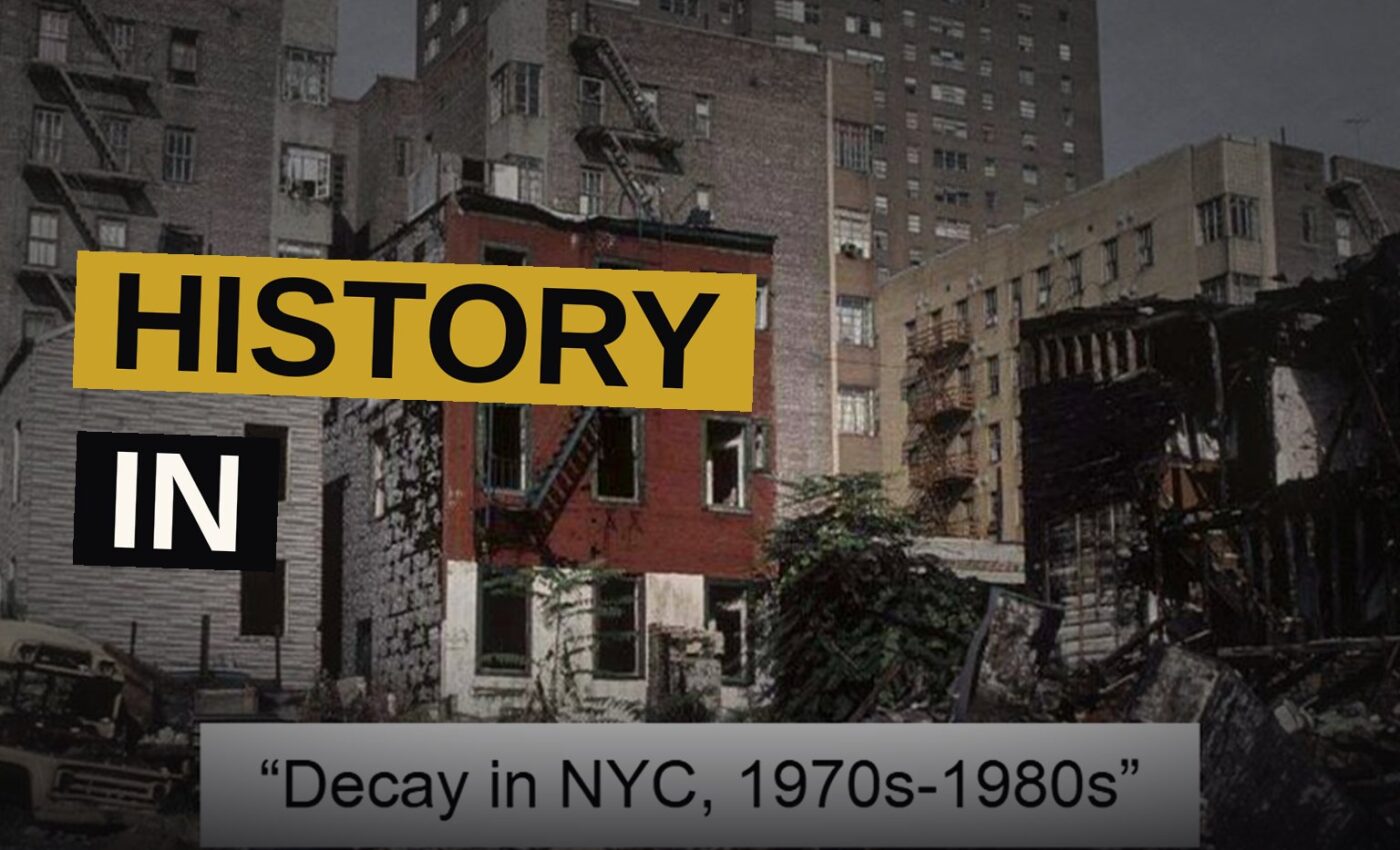
A fresh compilation of historical photographs and artifacts has emerged online, gathering scenes from American life that seldom appear in ordinary textbooks. The collection, entitled “Remarkable Images That Bring Lesser-Seen Moments Of American History To Life,” spans images from as far back as a May 1850 shot of New York City to George Washington’s Revolutionary War fold-out bed.
Among the pictures is a soldier from the Harlem Hellfighters (369th Infantry Regiment) who was caught on film with a puppy he rescued during WWI in 1918. There’s also an NYPD policewoman playing Duck, Duck, Goose in the 1970s, and Prince at Sam Goody in NYC in 1988. Other shots show a child standing in front of the Verrazzano-Narrows Bridge during its construction around 1963, along with a view of Park Avenue in 1920s New York.
The shared thread among these images is the claim that photographs go beyond being mere pictures. They exist as physical objects carrying their own history.
Photographs as Physical Things
Photography’s early days treated the image as something physical. A photograph was an object you could actually touch, frame, arrange in an album, mail across the country, or store in a private drawer. The collection begins with this observation.
Our everyday experience with images is quite different from what we see here. Today, we look at pictures on glowing displays as digital copies that can be sent to others and passed over within seconds. We capture them just as fast, frequently forgetting them soon after, and seldom print them out.
Old photographs carry a physical presence that counts. They preserve people, places, and events, yet they remain objects fashioned by human hands, possessed, employed, and handed down from generation to generation.
What Artifacts Tell Us
The Smithsonian’s own Steven Lubar and Kathleen Kendrick supply the foundation here, defining artifacts as “the objects we make and use,” and making the case that they provide “another way of approaching the past.”.
Artifacts offer a distinct form of historical insight compared with textbooks, which generally concentrate on major documents and events. Through them, we can grasp the individuals who created and employed these objects, along with the beliefs, understanding, and preferences of the communities surrounding them.
The concept applies naturally to the photographs in the collection. A photo may capture a person or a building, but the surrounding details carry their own narrative. What people wear, what cars they drive, what shop signs appear, what furniture fills rooms, and what architecture surrounds them all speak to daily life, technology, trade, and shifting preferences.
Moments of Everyday Life
Not all of the most memorable pictures in the collection show major events. Many of them instead capture quiet, unassuming moments.
- A 1969 photo shows a mother containing her baby in a Central Park trash bin while she catches up on her crocheting.
- A 1956 series follows a little NYC boy named Willie making his way through Hell’s Kitchen, stopping at a woman’s apartment window, playing on a butcher shop’s awning bar, and walking over 12 stacked garbage cans as his friend watches. Ken Heyman took the photos.
- A 1926 shot shows a tough route to traverse along Orchard Street on the Lower East Side of Manhattan.
- Huntington Beach in California used to have a bunch of oil derricks on top of it, and the collection includes an image of that.
These pictures show how people lived, traveled, and spent their days. A menu, a ticket stub, a route map with travel times, or an old grammar test can work the same way.
The Tulsa Race Massacre
Violence is not avoided in the collection, which includes an image documenting the Tulsa Race Massacre.
A white mob laid waste to the prosperous Greenwood District in 1921, dropping incendiary devices from private planes onto businesses and dwellings. The caption makes clear that these events were omitted from history lessons until fairly recently, “for some reason.”.
The Greensboro Massacre
Another image documents the Greensboro Massacre.
In 1979, members of the KKK and the American Nazi Party opened fire on a Communist Workers’ Party anti-Klan protest in North Carolina, killing five people while local police noticeably delayed their response.
Remembering the Dead
The set also honors those who have passed. It remembers Sonny Rollins, naming him the final living musician from Art Kane’s famous 1958 photograph “A Great Day in Harlem.”.
It is noted that artist Keith Haring showed up at an ACT UP demonstration at City Hall in March 1989, and he passed away the next February due to AIDS-related complications.
Opening Up the World
Lubar and Kendrick argue that artifacts become “passageways into history” when imagined in context. Through them, “we can connect to a moment in time, a person’s life, a set of values and beliefs.”
This collection applies the idea to its own images, using photographs that show a person while making the world around that person part of the story.
A number of pictures show signs of progress and change. One captures women casting ballots for the first time in the United States, in New York City in 1920. Another displays a folding bed that George Washington used while on campaign during the Revolutionary War. A 1973 photograph shows a person selling ‘The Black Panther’ on Times Square.
A family picture that stands apart shows a grandfather who came to the country on May 17, 1923, from Germany, and captured an image of what he found there.
The Oldest Photograph
This set holds what experts consider the earliest picture ever made of New York City, captured on Broadway between Franklin and Leonard Streets in May 1850.
The picture is a remnant of days gone by that endures in tangible shape. Its presence within the gathering demonstrates that such remains hold significance, since they reveal history in a manner that mere language cannot convey.
These pictures aren’t merely images of days gone by. They are physical objects from an earlier time, and they hold significance that goes beyond anything recorded within their borders.
Source: boredpanda.com
Get the Notebook.
The day's best stories and every fresh verdict, in plain English, in your inbox by seven. One email a day, no more.