
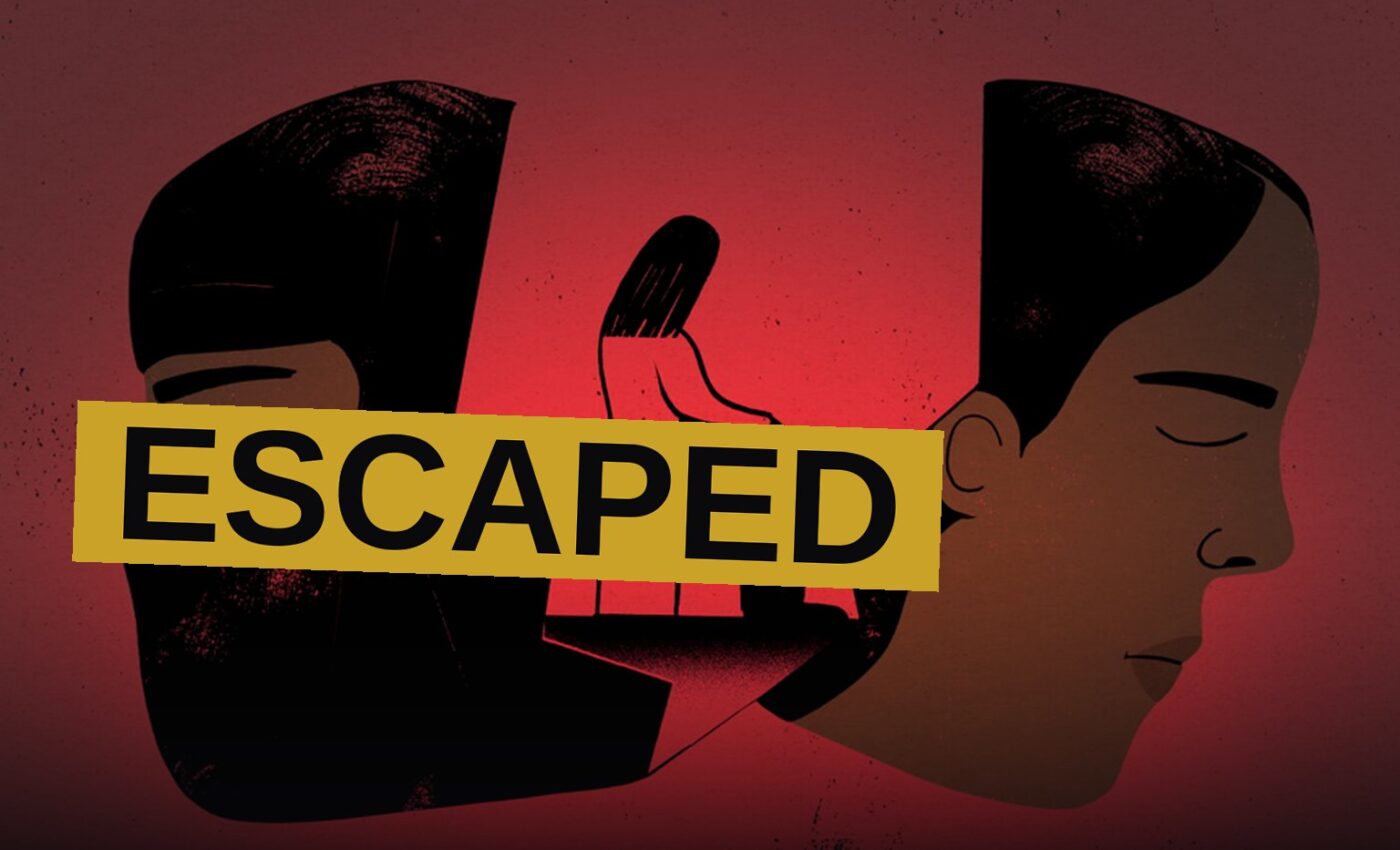
S, a Canadian woman with Somali parents who grew up in Pakistan, spoke to NPR about joining the Islamic State, fighting in Syria, and surviving her escape. She requested that only her first initial be used and that her city remain unnamed, worried that her history might put her or her family at risk.
At NPR, the full interview can be found. The piece tells of a young person whose faith drew them into ever more extreme territory, then forced them to leave a war zone with almost nothing remaining.
From Devout Teen to Radicalized Recruit
Born in Pakistan to Somali parents, S. came to Canada when she was two years old. Raised as a Muslim, her faith did not deepen until tragedy hit: her brother was shot and killed by an acquaintance who was high on drugs. In response, she turned to religion as a means to find peace.
“I turned to religion and God,” she says quietly. “My family comes from a Muslim background. So I started practicing my religion more. And I started to become friends with other Muslim girls my age.”
Her dedication became plain to see. She traded her Western clothes for a hijab and a long dress, which marked her growing devotion. This change made her a target in her own community.
“My family was picking me up from the train station, and I was attacked by a random group of people,” she remembers. “They sprayed me and my whole family with bear mace for no reason.”
Soon enough, she found herself threatened again while using public transport. Two men boarded her train and stared at her, making remarks about a possible bombing.
The Boarding School That Changed Everything
Before entering university, S. attended a religious boarding school in eastern Canada after finishing high school. At that school, she found herself surrounded by like-minded students who served as a refuge from the Islamophobia she felt growing all around her. That environment is where her path changed, moving from devout to radical.
“I started to make friends with some girls, and one of them was a returnee from Somalia who joined a terrorist organization called al-Shabab,” she says. Al-Shabab is a rebel group with ties to al-Qaida.
A Somali woman coached S. and pushed her to depart for a Muslim country. In the beginning, S. hesitated.
“I’m Canadian as it gets,” she said. “So to me it was very frustrating and confusing. And then on the other hand, when I was hearing the Islamic scholars saying, ‘Leave the West, you’re going to be targeted, you’re going to be attacked.’ It was doing something to my brain that made me feel like running away from here and living in a Muslim country where I would fit in.”
Watched by Canadian Authorities
While S. was still putting together her plans, Canadian authorities kept a close watch on her. Intelligence agencies came to her workplace and visited her home, and called her on the telephone. This made her feel uneasy and frightened.
“The intelligence agencies in Canada started to approach me at my job. They came to my house, they were calling me on the phone. And that made me feel very uncomfortable and scared because, you know, they were investigating her, but they were putting pressure on me,” she said.
Leaving Home Under Pressure
After S.’s final year of high school, she went back to her family’s home. Government investigations weighed heavily on her parents, and they ultimately requested that S. depart. S. found herself increasingly drawn to that Somali woman, who consented to fund her journey to a Muslim country. In 2014, S., still a teenager, took a determined step and flew to Turkey.
“I thought what I was doing was correct according to my religion, which was to go to a Muslim country, aid the Muslims, help the Muslims, live amongst Islam and practice my religion more freely,” she said.
A Somali woman put S. in touch with smugglers in Istanbul, where S. joined other ISIS recruits inside a van. With dread mixed with excitement, the group traveled southward into darkness until they arrived at a remote farmhouse.
“So we were driving and then abruptly stopped,” S. says. “And they swung the doors open and told us to run. And they pointed to a house that was very far in the distance and they said, ‘Go there.'”
The men who met her had AK-47s, and their pickup trucks were fitted with machine guns. She and every other recruit had their passports taken from them.
The Caravan to Raqqa
S. joined a convoy headed for Raqqa in Syria, which served as the capital of the self-declared Islamic State caliphate. She expected to find a perfect Muslim society there. Instead, when she arrived at the city’s edge and peered out the window, the reality of her destination became clear.
“We’re seeing heads cut off,” she said.
ISIS started using a familiar approach: cutting off the heads of people caught while working to help others and of reporters covering the fighting. These killings became a trademark image for the group. They put out videos of the beheadings, showing a person kneeling in an orange suit while a masked man stood over him with a big knife and spoke against the West.
Captivity and Escape
The Euphrates River brought S. and the others to a crowded guest house, where a married couple managed a group of Arab and Western women. That couple tried to force S. to take an ISIS husband, offering her four choices. She rejected every one of them. The couple reacted with anger, threatened violence, withheld clothes and showers from her, and kept her locked inside her room.
It was then that S. planned her escape alongside another Canadian woman who was expecting a child. Both women now regretted leaving their home country behind. They took their chance when the couple departed the house.
Said “So we went out the back door,” speaking of “And then we got in a random taxi and when we were leaving they were coming back. The cars passed each other and my heart stopped because I thought they were going to see us. But we just put our heads down and we went.”.
A woman whose husband and son died during the fighting gave them refuge. Her husband and son were martyred, and she was honored as the wife and mother of martyrs, which meant she had ties to al-Qaida. The house came with Internet access, letting S. finally reach her family in Canada after being separated from them for months.
“But they were already told that by Canadian authorities,” she said.
What S. Made of Her Story
Before S. reached out to Canadian intelligence authorities, her family says they were already informed by those same officials.
| Stage | Action | Outcome |
|---|---|---|
| Devotion | Turned to religion after brother’s death | Attacked by strangers, targeted by others |
| School | Joined a religious boarding school | Met a friend who joined a terrorist group |
| Decision | Flew to Turkey, met smugglers | Lost her passport, driven to a remote farmhouse |
| Raqqa | Witnessed beheadings | Confined, beaten, denied clothes and showers |
| Escape | Escaped with a pregnant woman | Found shelter, called home, learned authorities knew |
She cannot explain how she made it through. What she can say with certainty is that she did.