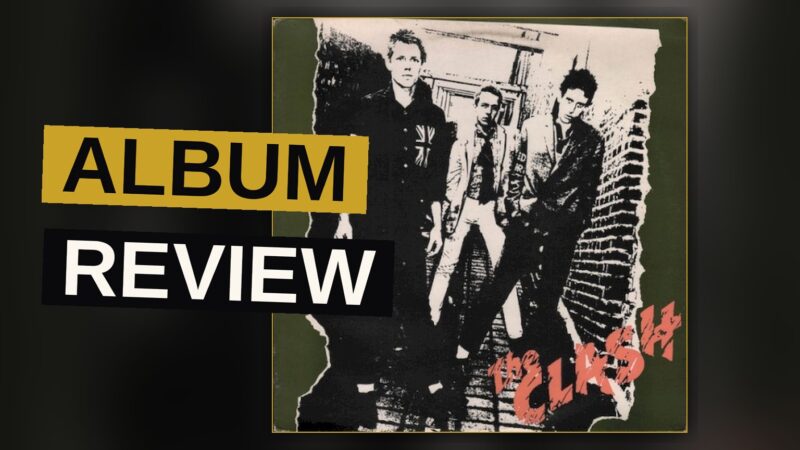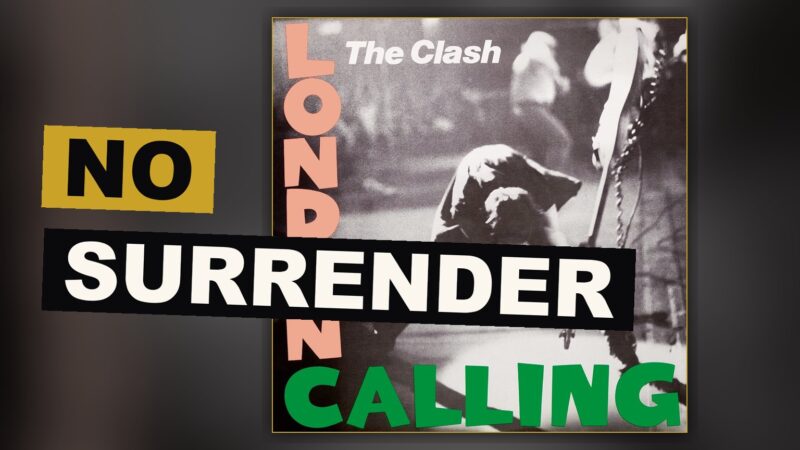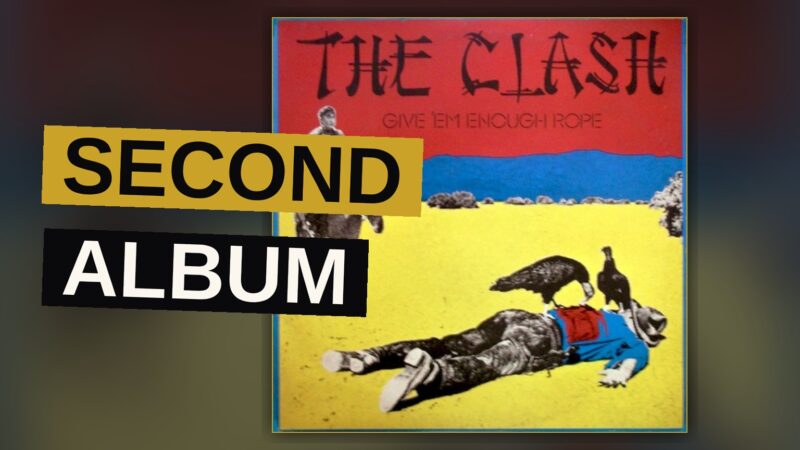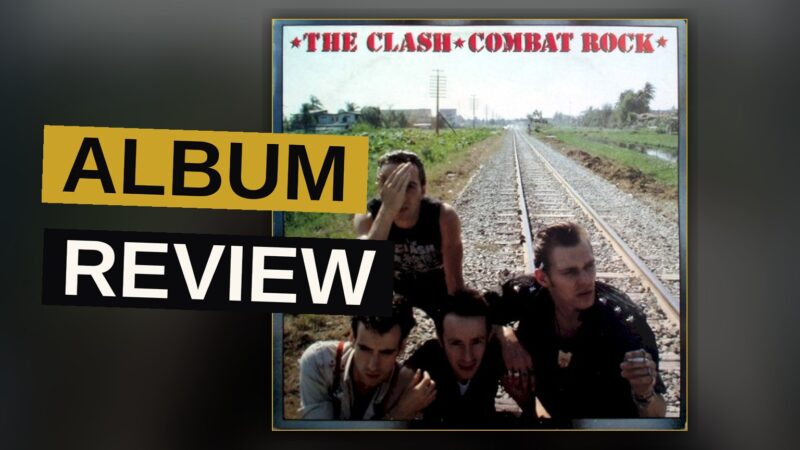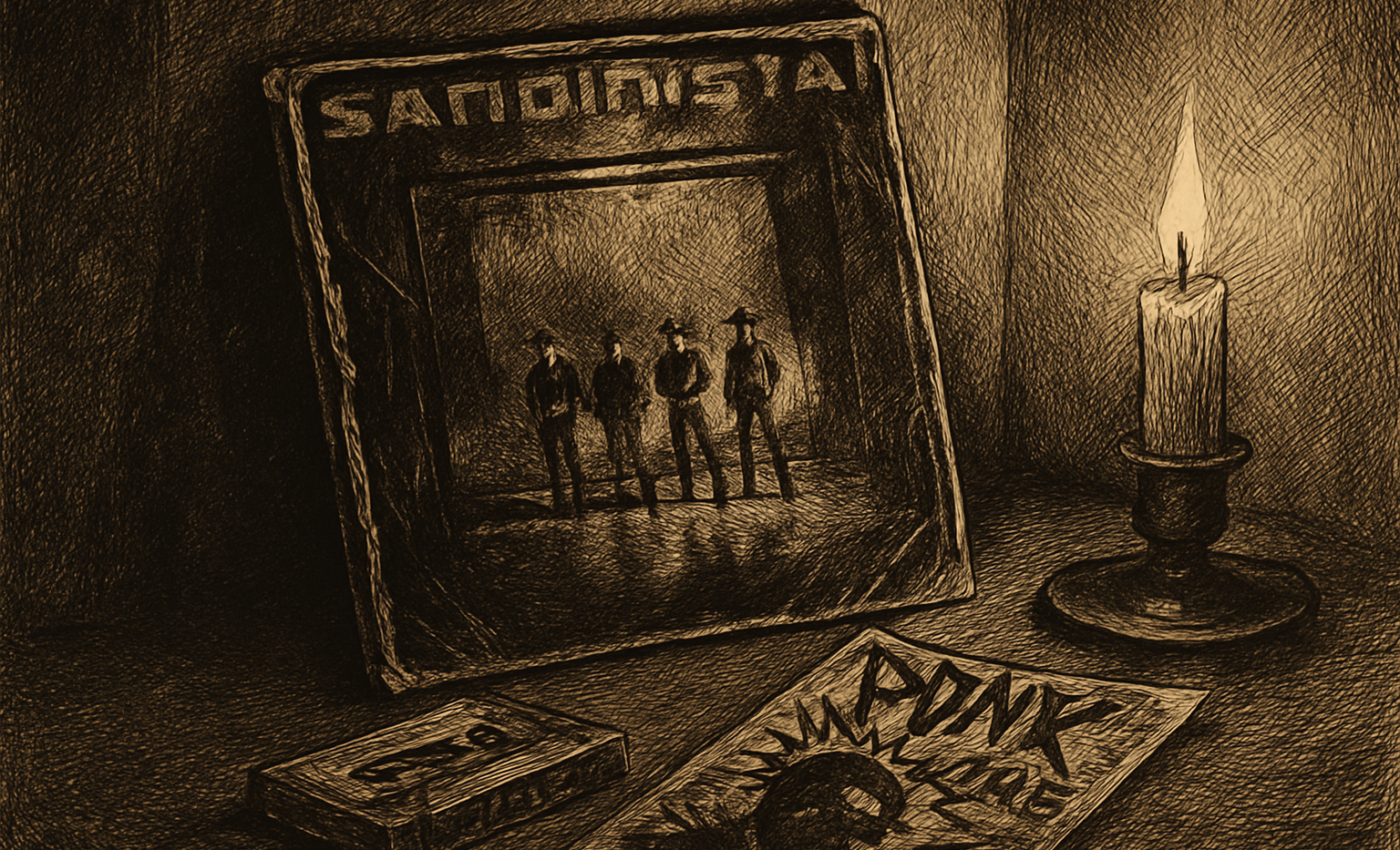
Sandinista! is a triple album that behaves like a band trying to escape its own reputation. The Clash spent the late 1970s as punk’s sharpest weapon, three-minute bursts of rage and melody. For its fourth album, the band did not write a follow-up. It built a monument.
36 tracks. Reggae, dub, funk, jazz, calypso, gospel and rockabilly, often within the space of a single side. It is named for a revolution, and it carries that political freight openly. It is also, by design, a mess. The band knew it. The record label hated it. Fans were baffled.
Decades later, the mess looks less like indulgence and more like a map of where popular music was heading.
Opening With a Cover
The record starts with “Police on My Back,” a taut, wired reading that sounds like the band’s old self for the last time in a while. It is a sprint, a hook, a statement of intent that the rest of the album immediately ignores.
“Somebody Got Murdered” follows with a grim, slow-burn narrative about violence and its aftermath. Then comes “The Call Up,” a dub-heavy anti-conscription anthem that stretches past five minutes.
The pattern is set. Nothing here behaves like a single, and the band is not interested in making anything easy.
Washington Bullets and the Political Core
“Washington Bullets” is the record’s clearest political statement, a furious survey of foreign policy delivered over a reggae groove that gives the anger a strange, almost celebratory swing. It is one of the best songs the band ever wrote, and it sits at track four, buried in the middle of the first disc.
“Ivan Meets G.I. Joe” is a cartoonish, synth-driven sketch of Cold War confrontation. It is slight, a mood piece more than a song, but it has a charm that the record’s longer experiments lack.
“Hitsville U.K.” is a love letter to a record label’s assembly-line brilliance. It is loose, playful and one of the few tracks here that sounds like it was fun to make.
Up in Heaven and the Middle Stretch
“Up in Heaven (Not Only Here)” drifts into a dreamy, keyboard-led haze. It is pleasant, and it is also the point where the album’s sprawl starts to feel like padding.
“The Magnificent Seven” arrives at track eight and snaps the record back into focus. Built on a funk bassline and a spoken-word vocal, it is a dense, witty survey of work, money and modern life. It is the song that predicted rap’s mainstream arrival, and it remains the album’s most influential track.
“The Leader” is a one-minute, 42-second punk burst, a sharp jab at authoritarianism that feels like a throwback to the band’s earliest days.
Junco Partner to the Close
“Junco Partner” is a New Orleans shuffle, a cover that the band turns into a loose, drunken celebration. “One More Time” is a reggae groove that does not quite justify its three and a half minutes.
“The Sound of Sinners” closes the album with a gospel-inflected plea, a strange, earnest ending to a record that spent its whole length avoiding any single mood.
The track list above is the 12-track version, a single-disc edit. The original release was a triple album, and that is where the problems start.
The middle stretches of that original running order are where the record loses its nerve. There are instrumentals that sound like studio jams, dub versions of songs that were already loose, and experiments that go nowhere. “If Music Could Talk,” “Something About England” and “The Street Parade” are the gems buried in the excess. They are good songs. They are not good enough to justify the hours of surrounding material.
The Prog Rock Charge
Back in 1980, the record was a headache, an indulgence to rank alongside the worst excesses of prog rock. That was the charge at the time, and it stuck. The Clash had spent years mocking the pomposity of arena rock, and here they were, delivering a triple album of studio experiments.
The label refused to promote it. The band had to pay for the release themselves. Fans who had bought the previous album expecting a follow-up got something that sounded like a radio dial being turned by a drunk.
Time has been kind to Sandinista!, but not in the way its defenders often claim. It is not a misunderstood masterpiece. It is a flawed, overstuffed record with about a dozen great songs hiding inside a 36-song frame.
The reassessment is fair because the great songs are genuinely great, and because the album’s genre-hopping now looks prescient rather than chaotic. In 1980, a punk band making a reggae album was a curiosity. In a later era, the idea that a band should stick to one sound is the curiosity.
The Songs That Earn Their Place
- “The Magnificent Seven” — the album’s peak, a funk-rap hybrid that still sounds fresh
- “Police on My Back” — the last pure punk moment, and a great one
- “Washington Bullets” — the political core, delivered with real fury
- “The Leader” — a minute and a half of sharp, funny rage
- “Hitsville U.K.” — a love letter that actually lands
- “The Sound of Sinners” — a strange, earnest closer that earns its place
The lesser tracks are easy to group. The dub experiments blur into each other. The instrumentals feel like studio leftovers. The longer reggae jams outstay their welcome.
There is a version of this album, cut down to a single disc, that would rank with the band’s best work. That version does not exist. What exists is the triple album, and the triple album is what we judge.
The Honest Verdict
Sandinista! is a record that demands you take it on its own terms. It is too long. It is self-indulgent. It is sometimes baffling. It is also the sound of a band at the height of its powers, refusing to repeat itself, pushing into new genres with more confidence than almost anyone else at the time.
The excess is real, and so is the achievement. The album’s reputation has grown because the music that works is so good that it drags the rest of the record along with it.
The Clash never made another album this ambitious. They also never made another album this messy. The two facts are connected. Sandinista! is the sound of a band spending its credibility on curiosity, and the bill came due.
It is not a perfect record. It is not even a great record, taken as a whole. It is a great record with a lot of not-great record attached to it.
That is the honest assessment.
Eight out of 10.
Get the Notebook.
The day's best stories and every fresh verdict, in plain English, in your inbox by seven. One email a day, no more.
- Police on My Back3:16
- Somebody Got Murdered3:34
- The Call Up5:28
- Washington Bullets5:51
- Ivan Meets G.I. Joe3:05
- Hitsville U.K.4:22
- Up in Heaven (Not Only Here)4:32
- The Magnificent Seven5:31
- The Leader1:42
- Junco Partner4:52
- One More Time3:32
- The Sound of Sinners4:01