
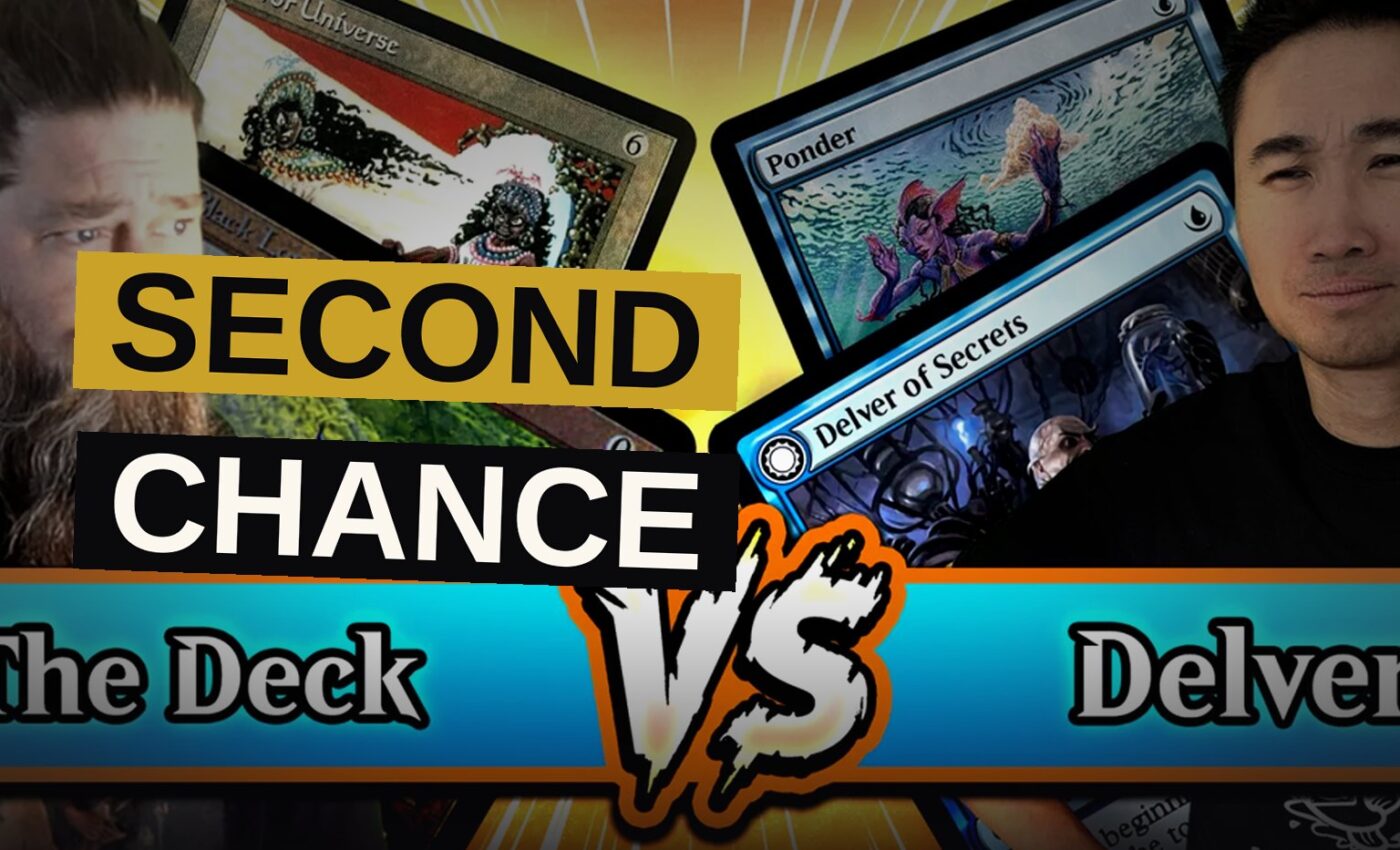
Two of Magic: The Gathering’s most storied Standard decks are fighting for survival. The Deck from 1995 and Delver from 2012 face off in the Best Standard Deck Ever Tournament’s Second Chance Losers Bracket semifinals. The winner gets a shot at 2019’s Simic Oko next week, with a spot in the top 32 on the line.
The Deck’s Second Chance
One more shot at glory came after the Deck fell in a close first match to 2024’s Dimir Midrange. Now it’s back. This deck holds a place among the most significant in Magic’s history, having helped shape ideas like sequencing and card advantage.
Among its contents are several of the game’s most powerful cards, with a complete set of Power 9 standing out. The list of highlights also includes one of the competition’s strangest ways to claim victory: Mirror Universe.
How Mirror Universe Works
The design of Mirror Universe relies on two older rules from 1995 that no longer apply. One of these is mana burn, which caused players to take damage equal to any mana they wasted at the end of a step or phase.
Rule number two stated that a player doesn’t actually die when their life total reaches zero — not until the end of the next phase instead. That allowed The Deck to push its own life total down through mana burn, reach zero life during its upkeep by using City of Brass, and then trade life totals with the opponent via Mirror Universe.
The moment the game moves into its next phase, it is then that the opponent is defeated.
Delver’s Tempo Game
One of the strongest decks in the field, Academy, defeated Delver in round 1, a rough matchup for the latter. Now Delver gets another opportunity to advance, using its last remaining chance.
Delver centers on its signature creature, Delver of Secrets, paired with Snapcaster Mage and Geist of Saint Traft. The deck runs a tempo strategy, putting threats on the board early while using cards like Mana Leak and Vapor Snag to disrupt the opponent’s plans. The goal is to end the game before the other player can come back from behind.
The deck dominated Standard in 2011 and 2012.
A Legacy Staple
Four players reached the top eight at Pro Tour Dark Ascension through Delver. That strategy then rotated out and became a fixture of Legacy play, a position it has held for 15 years now.
Two very distinct approaches come together here: one built around sheer force and a strange rules twist, and the other built around quick play, obstruction, and economical threats.
The Stakes
Next week’s match will decide who gets into the top 32, with the winner facing Simic Oko for that position while the loser is eliminated from Best Standard Deck Ever entirely.
The full bracket and all decklists are available online.
“Which deck is moving on and which is heading home?”
Mirror Universe’s Unique Role
Mirror Universe is the deck’s unique win condition, and it’s one of the most unusual in this tournament. The combination of mana burn, the delayed death rule, and City of Brass creates a strategy that could not exist in modern Magic.
Among the cards in The Deck, the Power 9 grants access to some of the most formidable cards ever put into print.
The Power 9 Factor
The Power 9 cards are among the strongest ever made. The Deck gets to play all nine of them.
The cards grant The Deck strong opening moves and a steady supply of resources that few other decks can rival.
What’s Next
Simic Oko will face the victor of this contest in the Losers Bracket Play-In Finals next week, with the winner advancing to the second round.
The loser is done.
Magic’s history has produced a wide variety of Standard decks, and this event keeps reducing that number. The next round will decide which of those decks earns a spot among the best ever played.
The two decks have already established themselves as important parts of the game’s past. The Deck shaped how players viewed card advantage and sequencing. Delver built a tempo approach that made it a Standard powerhouse.
Now one of them gets to keep playing.
The other heads home.
Source: mtggoldfish.com
Get the Notebook.
The day's best stories and every fresh verdict, in plain English, in your inbox by seven. One email a day, no more.