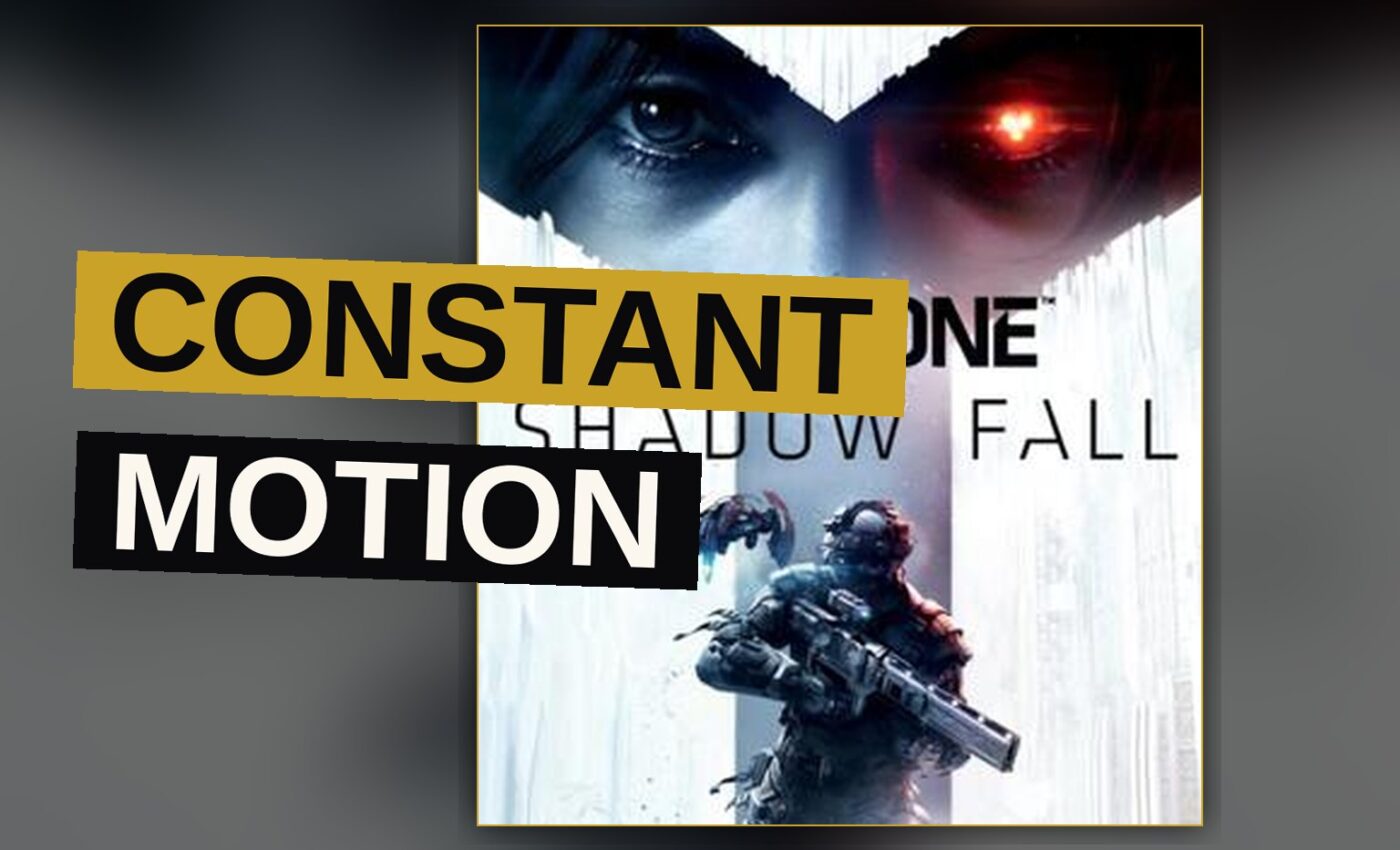
Killzone: Shadow Fall launched alongside the PlayStation 4 on 15 November 2013 in North America, with a European release following on 29 November. It was the first game in the series built for Sony’s new console, and the first to run on Guerrilla Games’ proprietary in-house engine, Decima. It is also, more than a decade on, still the sixth and most recent installment of the Killzone series.
That last fact hangs over the whole thing.
Trailer, via PlayStation.
A Launch Title With a Lot to Prove
Sony needed a shooter to sell a console. Guerrilla Games needed to show what the new hardware could do. Killzone: Shadow Fall was asked to do both jobs at once, and that tension runs through every part of it.
The game is a first-person shooter in a science fiction setting, developed by Guerrilla Games and published by Sony Computer Entertainment. It is single player and multiplayer. It is action, warfare, and a war that will not end.
What it is not is a clean break from what came before. Shadow Fall is the sixth game in the Killzone series. Its campaign opens 30 years after the events of Killzone 3, and the war is still going.
The Wall, New Helghan, and Lucas Kellan
The setup is the best thing here. After the Petrusite detonation that left the planet Helghan uninhabitable in Killzone 3 — an event now called “The Terracide” — the Interplanetary Strategic Alliance grants refuge to Helghast survivors on the planet Vekta. They colonize half of it. That half is dubbed New Helghan.
A massive security fortification called The Wall separates the two civilizations. The Vektans and the Helghast routinely run covert operations against each other, each hoping to finish a war each claims the other started. It is a Cold War in a divided city, and it is the most interesting idea the series has had.
You play Lucas Kellan, an agent of the elite ISA special forces branch known as the Shadow Marshals. The game begins in the year 2370, several years after The Wall goes up, during the forced relocation of Vektans out of New Helghan. Michael Kellan and his 5-year-old son Lucas try to sneak through New Helghan to The Wall. They meet Sinclair, a Shadow Marshal, who helps them through. Helghast forces spot them at the Wall and kill Michael. Sinclair promises Lucas he will look after him.
A cutscene shows Lucas rising through the Shadow Marshal Academy. Twenty years later, he works under Sinclair’s command.
That is a strong opening. The game does not always know what to do with it.
The OWL Changes the Fight
Shadow Fall plays like its predecessors, with real changes underneath. Staple weapons return in new forms: the M82 Assault Rifle, the stA-52 Assault Rifle, the stA-18 pistol. New gear includes the LSR44, a recoil-free hybrid assault and charge sniper rifle that works like a miniaturized rail-gun.
The best addition is the OWL, a hovering attack drone used by the Shadow Marshals. It can attack or stun an enemy when adjacent, deploy an instant zip line, shield you from fire with an energy shield, and hack or scan terminals and enemy alarms to stop reinforcements. For the first half of the campaign, the OWL is your only companion in firefights. Later, Echo joins occasionally and can snipe enemies you mark.
Where earlier Killzone games were linear and threw allies at you, Shadow Fall opens up. Levels allow multiple routes to objectives, and stealth is a real option alongside direct confrontation.
Ten Maps and a Warzone You Build Yourself
Multiplayer shipped with 10 maps and supports up to 24 players. Classes, abilities and weapons are unlocked from the start, and the class system is simplified to three, beginning with Assault. Rank now comes from completing challenges rather than accumulated points.
Warzone returns as an online mode, alongside Team Deathmatch and Beacon Retrieval, which is capture the flag. The new feature is user-created Warzones — custom rule sets you share with the community to download and play.
The multiplayer is the part that holds up. Critics at the time praised it, and the reasoning is easy to see: it is generous, fast, and it trusts players with its own rules.
Where the Campaign Falls Short
The single-player mode is where Killzone: Shadow Fall loses its footing, and the criticism directed at it was fair. The open levels suggest choice, but the story pushes you down a corridor of its own making. Kellan is a thin character in a rich setting, and the game rarely lets the divided city do the work the premise promises.
The reception was mixed overall. Praise went to the visuals and the multiplayer modes. Criticism went to the campaign and several gameplay features. Several critics did appreciate the attempt to change direction from its predecessors, and the more open-ended level design earned genuine credit. Others knocked the title for a lack of innovation as one of the first eighth generation games.
As of January 2014, the game had sold over 2.1 million copies.
Here is the ranking of what actually matters in Killzone: Shadow Fall, from strongest to weakest:
- The multiplayer — 10 maps, 24 players, Warzones you build and share, everything unlocked from the start.
- The OWL — a genuine mechanical idea that changes how you approach a fight.
- The setting — The Wall, New Helghan, the Terracide, a Cold War with real stakes.
- The visuals and the Decima engine — the clearest argument for the new hardware.
- The campaign structure — open levels that the story refuses to use.
- Lucas Kellan — a protagonist the game never bothers to make interesting.
That order is the review.
6.5 of 10
Killzone: Shadow Fall is a launch title that behaves like one. It shows off a console, it builds a genuinely good multiplayer suite, and it introduces the OWL, which is the kind of idea that should have carried forward. It also wastes the best premise in its own series on a campaign that cannot decide whether it wants to be open or on rails.
The 6.5 of 10 is the right score, and it is not a knock on the multiplayer. It is a measure of the gap between what Shadow Fall sets up and what it delivers. The Wall, New Helghan, the Terracide — that is a world worth returning to. More than a decade later, no one has.
Get the Notebook.
The day's best stories and every fresh verdict, in plain English, in your inbox by seven. One email a day, no more.