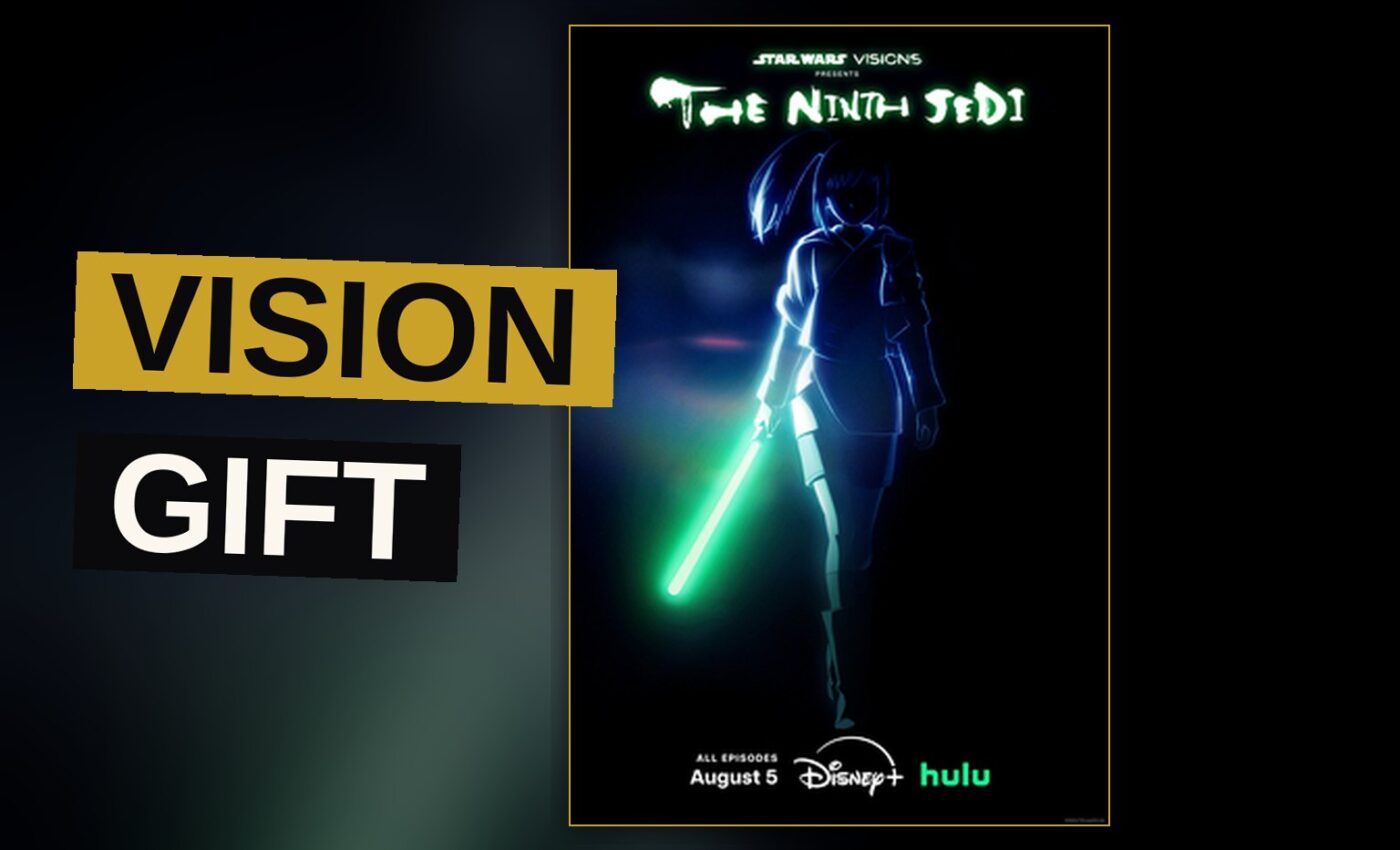
Star Wars: Visions Presents – The Ninth Jedi lands with a mission statement carved in stone: bring a Jedi tale to life through a single visual style. That goal is met within the first few minutes. This is a dense, singular experience, and it knows exactly what it wants to be.
Trailer, via Star Wars.
A New Kind of Jedi Story
The premise is simple. A young man seeks to become a Jedi, and he finds a path through a vision that is both a gift and a trap. The film leans into the idea of inherited knowledge, of seeing through someone else’s eyes, and it does so without ever explaining itself too plainly. It trusts the viewer to sit with the mystery.
The Visual Style
This is where the film earns its reputation. The animation is bold, flat, and highly stylized. It draws on a specific artistic tradition, and it does not apologize for it. The result is a world that feels both ancient and modern at once. Characters move through landscapes that are half-painting, half-drawing, and the effect is consistently striking.
Character Over Plot
There is little room for exposition here. The story moves fast, and it relies on the strength of its characters to carry the weight. The protagonist’s journey is the heart of the film, and the supporting cast around him give the narrative shape without ever taking over. The film trusts the audience to follow along, and that trust is mostly rewarded.
Where It Falls Short
The pacing is uneven. Some scenes feel stretched, while others rush past key moments. The middle section loses some of the energy the opening builds, and it takes a while to regain it. The film also struggles with clarity in its later plot twists, leaving some viewers unsure about what exactly happened in the final act.
Sound and Music
The score is sparse but effective. It does not overpower the visuals, which is the right choice. The dialogue is minimal, which keeps the focus on the images themselves. The sound design supports the action without calling attention to itself.
Comparing the Episodes
The film is divided into distinct episodes, each with its own tone and focus:
- Episode 1 sets up the central mystery and introduces the main character’s driving question.
- Episode 2 delves deeper into the vision and the rules that govern it.
- Episode 3 slows down to explore the consequences of the protagonist’s actions.
- Episode 4 pushes toward the climax, raising the stakes and tightening the tension.
- Episode 5 resolves the conflict and answers the questions raised at the start.
Final Thoughts
This is a film that rewards patience and repeat viewings. Its ambition shows in every frame, even when the execution stumbles. The final episode ties everything together with a quiet, deliberate conclusion that respects the earlier material.
The strengths are real, and the weaknesses are noticeable. The visual style is a genuine achievement, and the emotional core of the story holds up. But the uneven pacing and unclear plotting keep it from greatness. It is a worthy addition to the Star Wars canon, and it stands apart from everything else in the franchise.
Get the Notebook.
The day's best stories and every fresh verdict, in plain English, in your inbox by seven. One email a day, no more.