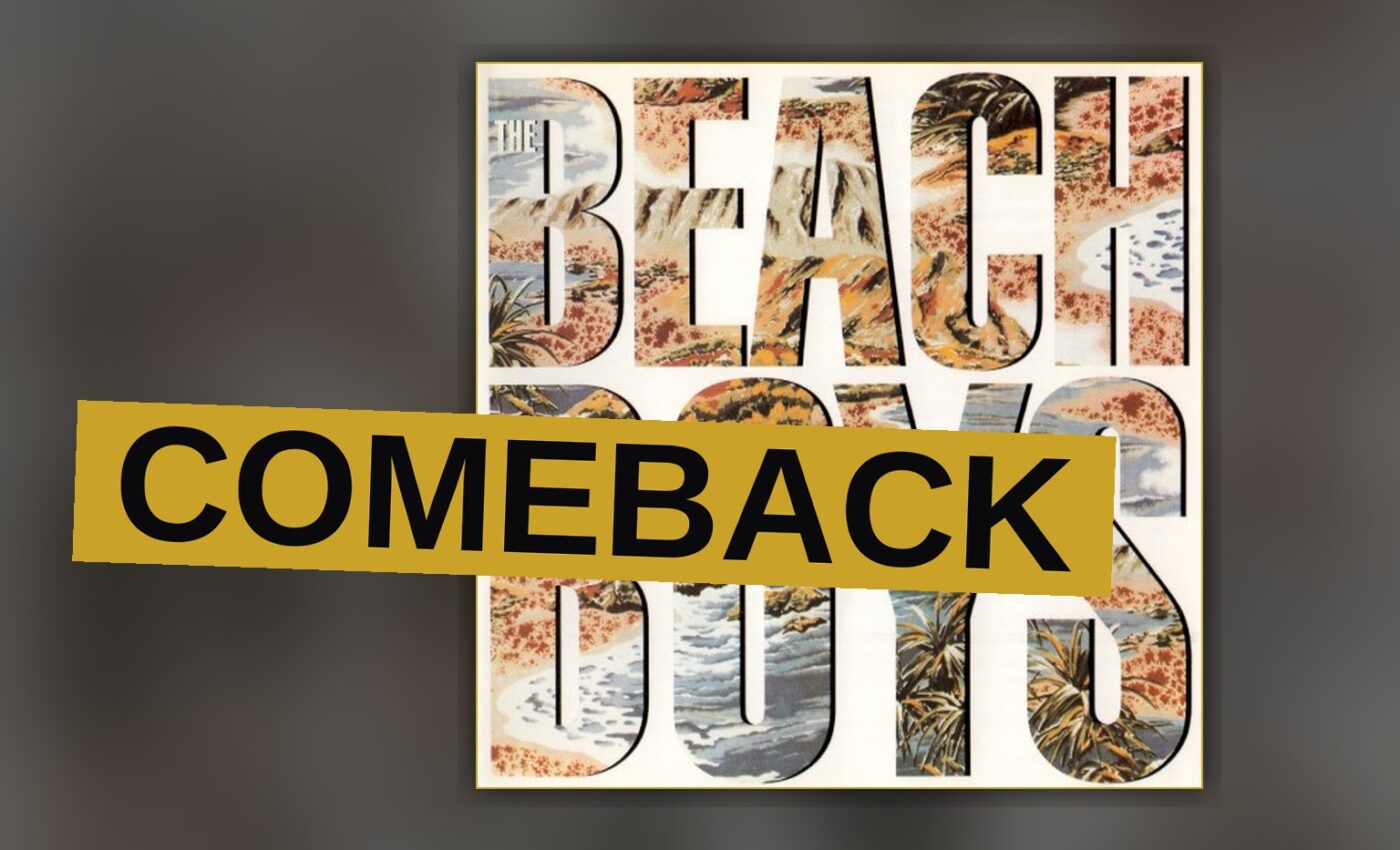
In 1985, the Beach Boys were not a band with something to prove. They were a band with something to cash in. After a decade of drifting through the margins, they returned with a self-titled album that was less a statement and more a signal — a slick, polished, mid-80s pop record designed to remind the world that those voices were still there. The album is pleasant, professional, and almost entirely without risk. It is the sound of a group testing the waters, and for a band that had once defined the California dream, that timidity is the most interesting thing about it.
The record leans hard on nostalgia and lush harmonies rather than innovation. It was a commercial reentry strategy, and it worked well enough to matter. But listening to it now, the album plays less like a comeback and more like a careful negotiation with the present — a handshake between the Beach Boys of 1966 and the production values of 1985. The result is an album that is easy to enjoy and just as easy to forget.
Getcha Back and the Opening Gambit
The album opens with “Getcha Back,” the closest thing to a mission statement here. It is a warm, mid-tempo pop song built on a simple premise: the narrator wants a former lover back. The harmonies are immaculate, stacked high and sweet, and the production wraps them in a soft, radio-friendly gloss. It is not a great song, but it is a good one, and it does exactly what an opener should do — it reassures the listener that the band still knows how to sing.
“It’s Gettin’ Late” follows with a slightly more urgent pulse. The track has a gentle rock drive, and the vocal arrangement carries it further than the melody alone would. It is the sound of a band comfortable in its own skin, even if that skin is now tailored to fit the mid-80s. “Crack at Your Love” is less successful. It tries for a funkier, more contemporary groove, but the result feels stiff. The band sounds like it is trying on a style that does not quite fit, and the song never quite locks into place.
“Maybe I Don’t Know” is a quiet highlight. It is a ballad, slow and reflective, and it lets the harmonies do the heavy lifting. The song does not reach for drama; it settles for sincerity, and that restraint pays off. It is one of the few moments on the record where the band sounds genuinely present rather than merely competent.
California Calling and the Middle Stretch
“She Believes in Love Again” is pleasant enough, but it drifts by without leaving much of an impression. The melody is serviceable, the harmonies are lovely, and the song is over before it has really begun. It is the kind of track that fills space without adding much to the whole.
“California Calling” is the album’s most overt nod to the band’s legacy. It is a direct appeal to the state that made them, a song about homesickness and the pull of the coast. The track has a bright, bouncing rhythm, and the chorus is genuinely catchy. It does not try to match the band’s earlier state anthems, and it does not need to. But it earns its place as one of the stronger tracks here, a reminder that the band could still write a hook when they wanted to.
“Passing Friend” is the longest track on the album at five minutes, and it is also the strangest. It has a more atmospheric, almost moody quality, with a slower build and a sense of space that the rest of the record lacks. It is the one moment where the band seems to reach for something beyond the formula. It does not fully land, but the attempt is welcome.
I’m So Lonely and the Back Half
“I’m So Lonely” is a short, simple ballad. It is exactly what its title suggests — a song about isolation, sung with a vulnerability that feels genuine. The production is clean and uncluttered, and the performance is sincere. It is not a standout, but it is honest.
“Where I Belong” picks up the pace slightly. It is a mid-tempo pop song with a bright chorus and a sense of optimism that cuts against the melancholy of the track before it. The harmonies are as strong as ever, and the song has a lightness that suits the band well. It is not a major moment, but it is a pleasant one.
“I Do Love You” is the album’s most straightforward love song. It is slow, earnest, and a little saccharine, but the vocal performance carries it. The track does not offer any surprises, but it does offer warmth, and that is enough.
It’s Just a Matter of Time and the Short Tracks
“It’s Just a Matter of Time” is the shortest track on the album at just over two minutes. It is a quick, upbeat number that does not overstay its welcome. It is the kind of song that could have been a single in another era, though here it feels like a palate cleanser before the finale.
The shorter tracks in the back half — “I’m So Lonely,” “Where I Belong,” and this one — all share a common trait: they are efficient. None of them overstays its welcome, and none of them reaches for more than it can hold.
Male Ego and the Closing Statement
The album closes with “Male Ego,” a track that is more interesting in concept than in execution. It is a song about pride and stubbornness, and it has a slightly theatrical feel that sets it apart from the rest of the record. The title suggests a level of self-awareness that the album otherwise lacks, and the song itself is a decent closer — not a grand statement, but a modest one.
The Verdict
The album does not break new ground, and it does not try to. It is a record made by a band that knew exactly what its audience wanted and delivered it with professional ease. The harmonies are still there, the California sunshine is still there, and the songs are good enough to justify the listen.
Rolling Stone called the album “actually a pretty entertaining album,” one that “does serve to showcase those amazing voices,” even if it is not “a world-beating act of artistic reassertion.” Another review in the same magazine described it as “pleasantly innocuous, undemanding and mildly enjoyable, and a heartening notice that the surf hasn’t gone out of them for good.” A third summed up the band’s approach plainly: “For their commercial reentry, the Beach Boys are playing it safe, testing the waters.”
That assessment holds up. The band was playing it safe, and for a comeback album, that is a reasonable strategy. It is not a world-beating act of artistic reassertion, but it is a heartening notice that the surf had not gone out of them for good.
The album is best approached as what it is: a careful, competent, and occasionally lovely piece of mid-80s pop. For listeners, the key takeaways are simple:
- The harmonies remain the band’s greatest asset.
- “Getcha Back” and “California Calling” are the strongest tracks.
- “Passing Friend” shows ambition the rest of the record lacks.
- The lesser tracks — “Crack at Your Love,” “She Believes in Love Again” — are forgettable but not offensive.
- The production dates the album, but it does not ruin it.
The Beach Boys is a pleasant record from a band that had nothing left to prove and no interest in trying to prove it anyway. It is a comfortable listen, a familiar sound, and a mild success. It is not a reinvention, and it was never meant to be.
The Beach Boys knew what they were doing here. They were not trying to change the world; they were trying to re-enter it. And on that count, the album succeeds. It is a pleasant, undemanding record that shows off what made the band special in the first place — those voices, those harmonies, that sense of endless summer.
It is not a masterpiece. It is not even a minor classic.
But it is a good album, and for a band that had spent the better part of a decade wandering, good was enough.
Get the Notebook.
The day's best stories and every fresh verdict, in plain English, in your inbox by seven. One email a day, no more.
- Getcha Back3:02
- It’s Gettin’ Late3:27
- Crack at Your Love3:39
- Maybe I Don’t Know3:54
- She Believes in Love Again3:34
- California Calling2:52
- Passing Friend5:00
- I’m So Lonely2:53
- Where I Belong2:58
- I Do Love You4:20
- It’s Just a Matter of Time2:23
- Male Ego2:35