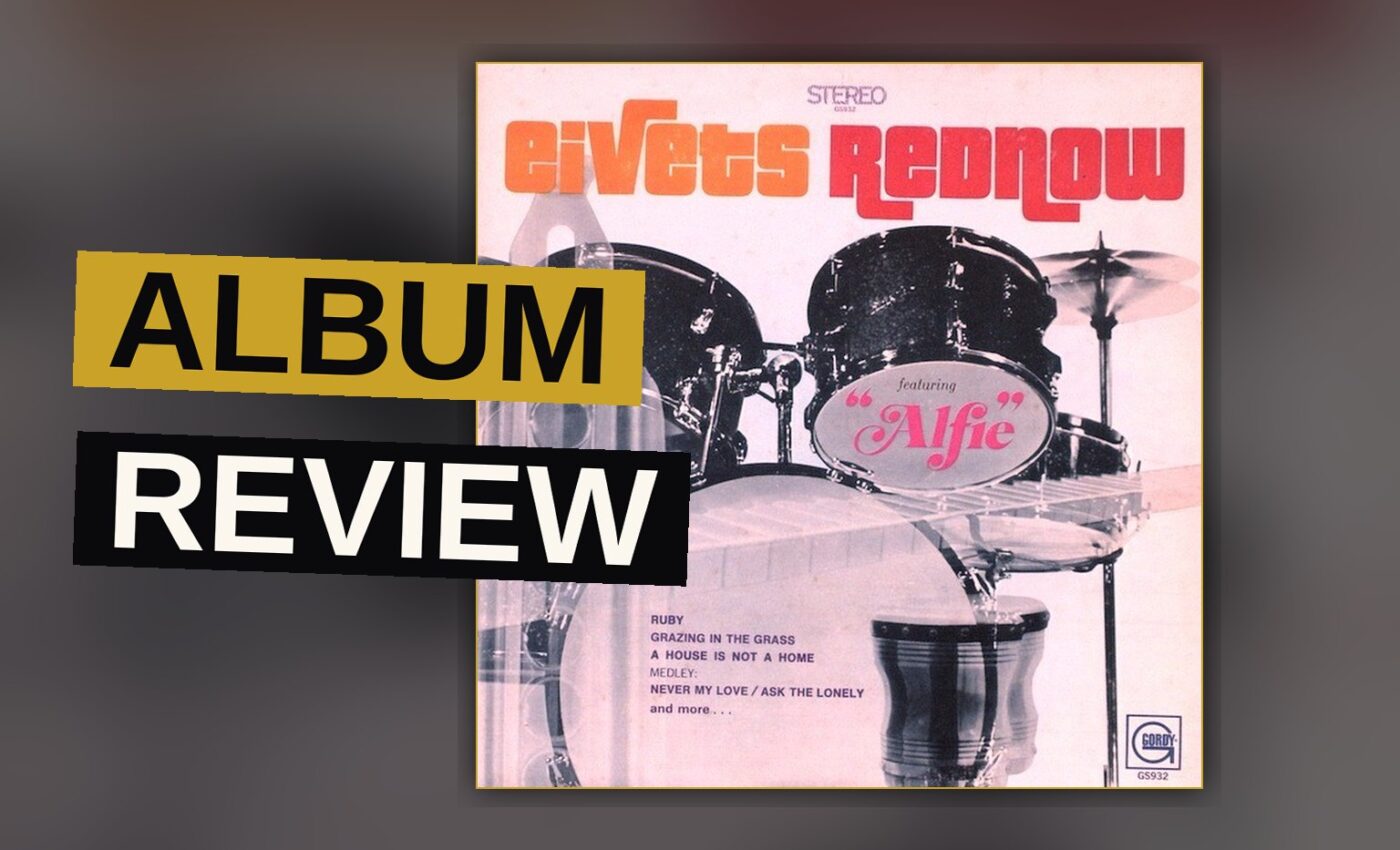
Eivets Rednow is a strange entry in Stevie Wonder’s catalog. Released in 1968, it is an instrumental album, and the name is simply “Stevie Wonder” spelled backward. This is Wonder stepping away from his pop hits to play pure melody, mostly on harmonica and keyboards, with orchestral arrangements doing the heavy lifting. The record is not trying to be a statement or a genre revolution. It is trying to be a mood — a soft, late-night collection of covers and originals that leans on elegance rather than energy.
The album runs 32 minutes across nine tracks. It opens with “Alfie,” and Wonder treats it with respect, letting the harmonica carry the melody. It is pretty, but it is also cautious.
“More Than a Dream” is an original, and it moves a little more. The piano takes the lead here, and there is a lightness to it that the opener lacks.
Then comes “A House Is Not a Home.” This is where the formula starts to show its limits. The orchestration is lush, the playing is clean, but the absence of Wonder’s voice — one of the most expressive instruments in pop — leaves a hole. These songs were written for singers. Without lyrics, they become sketches.
How Can You Believe and the Middle Stretch
“How Can You Believe” is the fourth track, and it is an original that finally gives the record some spine. The melody is more angular, and Wonder’s harmonica work is sharper here. It is the first track that feels like it could not be done by just anyone.
“Never My Love / Ask the Lonely” is a medley, and it is the shortest track at 2:29. It is also the most rushed. The two songs are stitched together without much breathing room, and the transition feels more like a radio edit than a deliberate choice. It is pleasant, but it is the weakest stretch of the album.
Ruby and the Long Closer
“Ruby” is the centerpiece, and at 6:49 it is the longest track by a wide margin. This is where the album earns its keep. The song is a slow, smoky waltz, and Wonder leans into the space. The harmonica is mournful, the piano is sparse, and the arrangement lets the silence do work. It is the only track that feels like a performance rather than a background texture. It is also the only track where the instrumental format feels like an advantage — the melody is strong enough to stand without words, and the length gives it room to develop.
“Which Way the Wind” follows, and it is a return to the lighter side. It is a pleasant original, but it does not leave a mark. “Bye Bye World” is similar — competent, clean, forgettable.
Then the album closes with “Grazing in the Grass.” This is the most energetic track on the record, and it is a smart closer. The melody translates well to harmonica, and Wonder finally sounds like he is having fun. It is not a reinvention, but it is a release after all the restraint.
The Instrumental Problem
The core issue with Eivets Rednow is simple: Stevie Wonder is a singer. His voice is the reason his records matter. On this album, he removes that voice and does not replace it with anything that demands attention. The harmonica is lovely, and the piano work is solid, but the arrangements are so polite that they never challenge the listener. This is easy listening in the most literal sense. It does not ask for anything, and it does not give much back.
The record is also a commercial footnote. It was released under the pseudonym, and it did not perform like a Stevie Wonder album. The cover art and the backward name suggest a novelty, and the music mostly matches that. It is not a failure — it is a detour. Wonder was still young, still figuring out what he wanted to be, and this record shows him exploring a quieter corner of his sound. It is the work of a musician who can play anything, but it is not the work of a musician who has found his voice yet.
- Released 1968 as a 9-track album
- Total running time: 32 minutes
- All tracks instrumental
- Released under the name “Eivets Rednow”
The Verdict
Eivets Rednow is a curiosity, not a classic. It is well played and well produced, but it lacks the fire that makes Wonder’s best work essential. The highlights — “Ruby,” “How Can You Believe,” and the closing “Grazing in the Grass” — show what the record could have been if it had trusted its melodies more and its arrangements less. The rest is background music. For fans of Wonder, it is worth a listen as a footnote. For everyone else, it is skippable.
It is a 5 out of 10.
Get the Notebook.
The day's best stories and every fresh verdict, in plain English, in your inbox by seven. One email a day, no more.
- Alfie3:13
- More Than a Dream3:49
- A House Is Not a Home3:33
- How Can You Believe3:07
- Never My Love / Ask the Lonely2:29
- Ruby6:49
- Which Way the Wind2:46
- Bye Bye World3:22
- Grazing in the Grass2:54