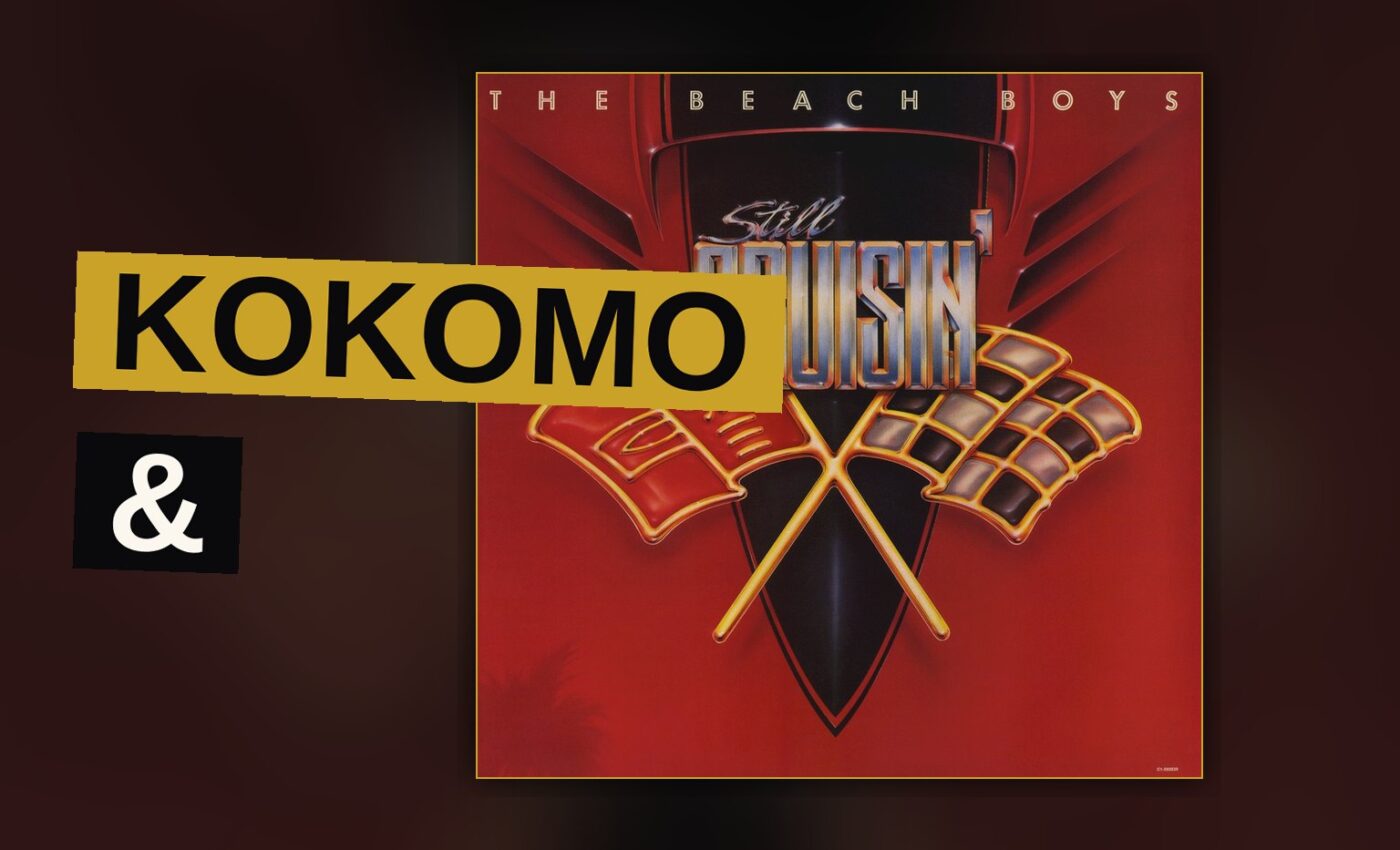
Still Cruisin’ is the sound of a band trying to be everywhere at once. Released in 1989, it is a ten-track grab bag of new material, original hits, and soundtrack leftovers, all built to cash in on the late-’80s nostalgia wave that had put “Kokomo” at the top of the charts a year earlier.
The album is not a statement. It is a product, assembled to keep the Beach Boys on the radio, in the movies, and in the public eye without asking too much of anyone involved. The band leans hard on its own legacy, recycling the harmonies and surf-pop bounce that made them famous, but the engine is running on fumes.
What you get is a record that sounds less like a new chapter and more like a tribute act covering its own greatest hits. The problem is not that the band is old. It is that the music is tired. The production is slick, the vocals are layered, and the hooks are familiar, but the spark that made the originals feel alive is mostly gone. There are moments that work, and there is one genuine classic here, but the album around them is padded with filler that even the band’s own history cannot save.
The Title Track Sets the Tone
The title track opens the record, and it sets the tone immediately. “Still Cruisin’” is a mid-tempo pop-rocker about the enduring thrill of the road, complete with a driving beat and the band’s signature harmonies. It is fine. It is competent. It is also completely forgettable.
The lyrics are generic, the melody is safe, and the production smooths out every rough edge until there is nothing left to grab onto. It is not bad, but it is the kind of song that evaporates from memory the second it ends.
Somewhere Near Japan and Island Girl
“Somewhere Near Japan” follows, and it is a slight step up. The track has a breezy, exotic feel, with a chorus that leans into the band’s knack for melodic pop. The verses are pleasant, the harmonies are warm, and the song has a decent sense of place, even if that place is a postcard rather than a destination. It is not a lost classic, but it is the first moment on the record where the band sounds like they are actually trying to write a song rather than fill a slot.
“Island Girl” is where the wheels start to wobble. The track is a straightforward pop tune with a reggae-lite rhythm, and it does not do much with it. The chorus is catchy enough, but the song never builds to anything, and the production keeps everything at a polite, radio-friendly distance. It is the kind of track that exists to pad out the runtime.
In My Car Is a Real Highlight
“In My Car” is the first real highlight. The song is a simple, upbeat ode to driving with your sweetheart, and it has a genuine energy that the earlier tracks lack. The melody is bright, the vocals are lively, and the chorus has a hook that actually sticks. It is not a reinvention, but it is a reminder that the band could still deliver a solid pop song when the material was there.
Kokomo Carries the Middle
Then comes “Kokomo,” and this is the reason anyone bought the album in 1989. The song was a massive hit, and it is easy to hear why. The track is pure escapism, a steel-drum-laced fantasy about a tropical island where the drinks are cold and the worries are none.
The melody is effortless, the harmonies are lush, and the whole thing glides along with a lazy, sun-soaked confidence. It is not deep, and it is not trying to be. It is a vacation in song form, and it works exactly as intended. This is the track that holds the record together, and it is the one song here that still sounds alive decades later.
It is a vacation in song form, and it works exactly as intended.
Wipe Out and Make It Big
The next track, “Wipe Out,” is a cover of a 1963 instrumental, and it is a strange choice. The band adds vocals over the familiar riff, with a shouted, party-style delivery that tries to inject some fun into the proceedings. It is not a disaster, but it is also not a good idea.
The original is a drum-and-guitar showcase, and adding a vocal layer does not improve it. It just makes it feel like a novelty act, a band playing dress-up in its own history. The song is harmless, but it is the first clear sign that the album is running out of new material.
“Make It Big” follows, and it is the weakest track on the record. The song is a generic, synthy pop tune about ambition and success, and it has none of the charm or craft of the band’s better work. The melody is flat, the lyrics are clichéd, and the production dates the track badly, burying it in late-’80s gloss. There is nothing to recommend here.
The Original Classics Hold Up
The final three tracks are the original 1960s master recordings of “I Get Around,” “Wouldn’t It Be Nice,” and “California Girls,” and they are the most puzzling part of the album. These are stone-cold hits from the band’s heyday, and placing them here alongside new material makes the record feel less like a coherent album and more like a compilation with a few fresh songs tacked on.
The tracks themselves are perfect. They do not need updating, and they have not been updated. The problem is context. Hearing “I Get Around” — a burst of youthful energy that captures the thrill of cruising and the freedom of the open road — next to the slick, synth-heavy new material is jarring.
The contrast is stark. The originals sound alive in a way the new songs do not, and they expose how far the band had drifted from its own sound. “Wouldn’t It Be Nice” still carries its warmth and urgency, and “California Girls” still feels like sunshine and salt air, with its iconic opening riff intact and the harmonies still hitting.
But their presence raises a question the album never answers: why are they here? As a nostalgia play, they work. As a musical statement, they are a reminder of what the band used to be, and that reminder cuts against the new material rather than supporting it.
A Record That Should Have Been an EP
Still Cruisin’ is a mess, but it is a mess with one great song in the middle of it. “Kokomo” is a genuine pop classic, a track that earns its place in the Beach Boys catalog and on any summer playlist. The rest of the album, though, is a mix of forgettable new material and original classics that do nothing but remind you of better days.
That criticism is harsh, but it is not wrong. The band is too skilled to make a truly bad record, and the harmonies are still there, but the material does not give them anything to work with. “In My Car” is a solid track, and “Somewhere Near Japan” has its charms, but they are surrounded by filler and nostalgia plays that add nothing.
The album would have been better as a five-track EP built around “Kokomo,” “In My Car,” and the two new songs that show any sign of life. As it stands, it is a record that feels longer than it is, padded out with songs that exist only to fill space.
The band was trying to stay relevant in a decade that had moved past them, and they did it by leaning into their own history. It is a strategy that worked commercially, thanks to “Kokomo,” but it did not work artistically. The record has no identity of its own. It is a collection of odds and ends, a commercial product designed to sell nostalgia back to the people who lived it and introduce it to a new generation.
There is one moment of genuine joy here, and it is the one that everyone remembers. The rest is a reminder that even the greatest bands can lose their way when they stop trusting their instincts and start chasing the charts. Still Cruisin’ is not a disaster, but it is a disappointment, a record that exists because it could, not because it needed to.
The album is best approached as a single. Put on “Kokomo,” skip the rest, and you have a perfect summer anthem.
- “Kokomo” — a genuine classic, the reason to own the record
- “In My Car” — a solid, energetic pop song that earns its place
- “Somewhere Near Japan” — pleasant and melodic, if forgettable
- “California Girls” — an original classic that still shines
- “Wouldn’t It Be Nice” — the melody survives, and so does the magic
- “Still Cruisin’” — competent and completely unmemorable
- “Island Girl” — catchy but empty
- “Wipe Out” — a novelty that does not work
- “I Get Around” — a classic that belongs on a better record
- “Make It Big” — the worst track on the record, dated and dull
Still Cruisin’ is a record that does not justify its own existence. It is a cash-in, a nostalgia play, and a grab bag of leftovers. But it contains one of the best singles of the decade, and that is worth something. The band deserved better, and so did the fans. But the album is what it is, and what it is, is a mixed bag with one bright, shining jewel buried in the middle. If you want the Beach Boys at their late-’80s best, you only need one track. The rest is just filler.
Get the Notebook.
The day's best stories and every fresh verdict, in plain English, in your inbox by seven. One email a day, no more.
- Still Cruisin’3:36
- Somewhere Near Japan4:50
- Island Girl3:50
- In My Car3:22
- Kokomo3:38
- Wipe Out4:02
- Make It Big3:11
- I Get Around2:13
- Wouldn’t It Be Nice2:25
- California Girls2:37