
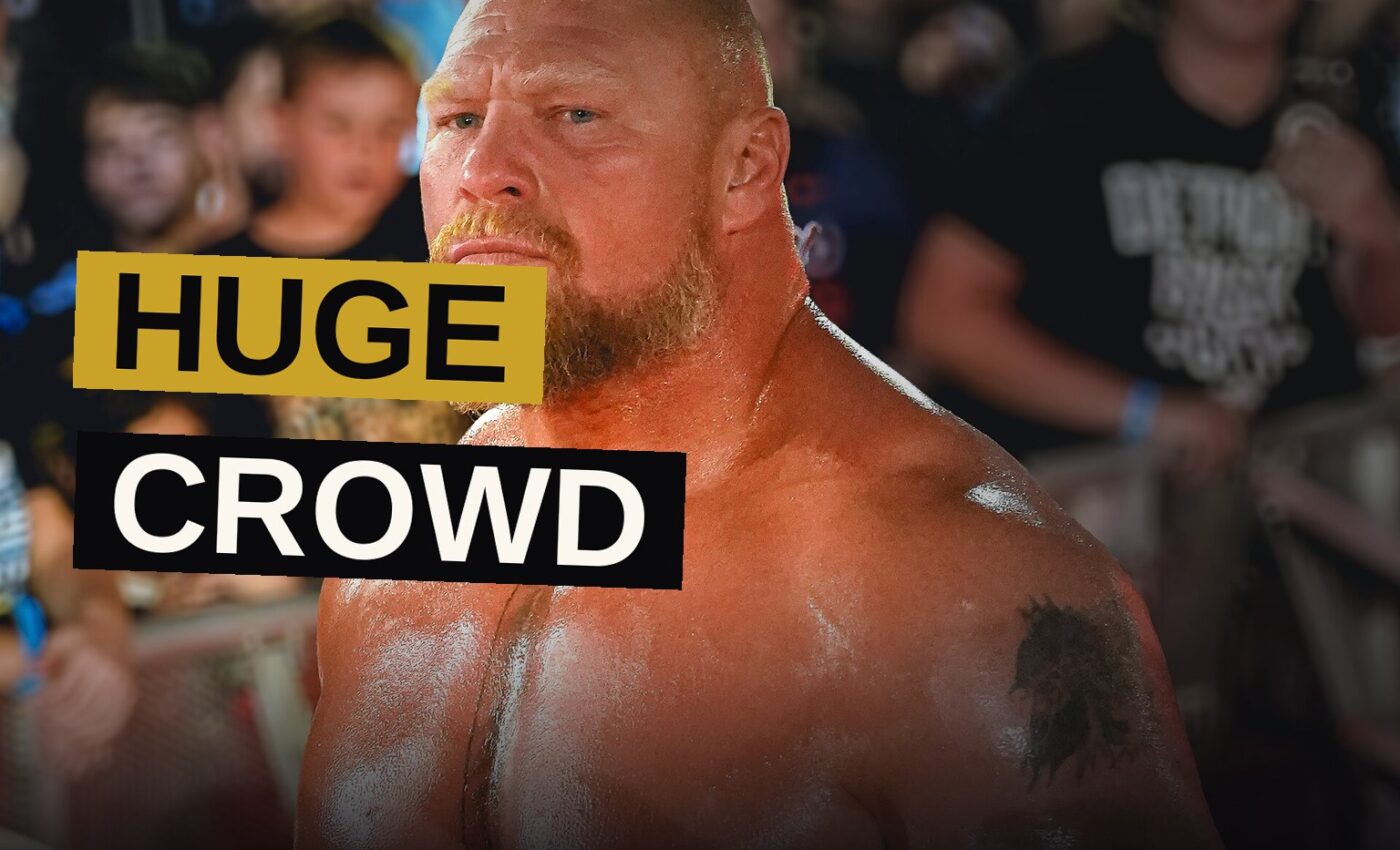
WWE is selling its summer pay-per-view as a film. “WWE SummerSlam 2026: Saturday” comes with a listed runtime of 173 minutes, genre tags of Action and Drama, and a tagline that reads “THE RULER. THE BEAST. HELL IN A CELL.”
SummerSlam 2026 is the 39th annual edition of the event, and it ran as a two-night show on August 1 and 2 at U.S. Bank Stadium in Minneapolis, Minnesota. The event is a pay-per-view and livestreaming production from WWE, promoted as SummerSlam: Minnesota. The billing is blunt about what it wants to be: a produced film, not a card.
U.S. Bank Stadium Gets Two Nights
U.S. Bank Stadium is the setting for both nights. The listing gives one 173-minute runtime for the event and does not break it down by night.
A 173-minute runtime is the first real fact worth holding onto. It is the single most concrete piece of information in the listing.
| Night | Date | Venue | Format |
|---|---|---|---|
| Saturday | August 1, 2026 | U.S. Bank Stadium, Minneapolis | PPV and livestream |
| Sunday | August 2, 2026 | U.S. Bank Stadium, Minneapolis | PPV and livestream |
CM Punk and Cody Rhodes Lead the Cast
Phil Brooks appears as CM Punk. Cody Rhodes appears as Cody Rhodes. Those two names at the top of a SummerSlam cast list carry a specific weight: this is a card built on performers the audience already has a relationship with, not on discovery.
The tagline names three things: the ruler, the beast, and hell in a cell. Brock Lesnar is in the cast, listed as Brock Lesnar. Gunther, played by Walter Hahn, is also listed. Neither label is assigned in the listing.
That is the frustration at the center of this release. The tagline promises a hierarchy and a structure. The cast list gives you the names and stops.
Oba Femi, Jacob Fatu and the Rest of the Cast
Isaac Odugbesan appears as Oba Femi. Jacob Fatu appears as Jacob Fatu. Joshua Fatu appears as Jey Uso, and Jonathan Solofa Fatu appears as Jimmy Uso.
Gionna Daddio appears as Liv Morgan. Masami Odate appears as IYO SKY. Nicholas Aldis appears as Nick Aldis, and William Hobson appears as Royce Keys. That is eleven performers named in the cast, and the spread tells you the show is not a two-match card stretched thin. It is a full slate.
The Uso pairing is the detail that matters most here. Jey Uso and Jimmy Uso on the same show, with Jacob Fatu also listed, puts three members of the same family on one card.
Hell in a Cell Is in the Tagline
The tagline’s third element is hell in a cell, and it is the only structural promise the listing makes. A cell match is a specific kind of thing. It is a cage, and it is a finish.
Who is in the cell is not stated. The listing names the cast and the tagline and nothing else. That gap is doing a lot of work, and it is the kind of gap that either pays off on the night or reads as a bait and switch.
A 173-Minute Runtime Is the Real Story
173 minutes is a long time for one night of anything. Split across eleven named performers, it suggests matches that get room to breathe rather than a sprint through a checklist.
The genre tag says Action and Drama. Action is the easy half. Drama is the half that has to be earned, and it is earned in the spaces between the big spots: the staredown, the entrance, the moment a performer holds a crowd before the first lock-up. A 173-minute runtime is what you buy when you want those spaces.
It is also what you buy when you cannot cut. A live show runs long because it has to. The runtime here is a fact about the product, not a compliment to it.
What the Cast List Does Not Tell You
There is no match order in the source material. There is no result, no finish, no winner. The listing gives a date, a venue, a runtime, a tagline, a synopsis and eleven names.
The listing cannot tell you who won, because the material does not say. It cannot tell you which match closed the night, or whether the cell match happened on Saturday or Sunday, or what the ruler and the beast actually did to each other.
What it can tell you is that WWE is selling this as a film. The runtime, the genre tags, the tagline in capital letters — that is the language of a theatrical release. That is a real shift, and it is the most interesting thing in the file.
The Case for the Movie Framing
Wrestling has always been closer to theater than to sport, and the industry has spent decades being defensive about it. Selling SummerSlam 2026 as a 173-minute Action and Drama film is the opposite of defensive. It is a claim that the thing is constructed, and that the construction is the point.
The cast supports it. CM Punk, Cody Rhodes, Gunther and Lesnar are characters with long arcs, and much of the audience arrives knowing the arcs. That is the same contract a sequel has with its viewers. You do not need the first act explained. You need the payoff.
Where the framing strains is the runtime. A film earns 173 minutes through structure. A live show earns it through crowd response, and crowd response is not something a runtime can guarantee.
Where This Sits Against the Rest of the Year
SummerSlam is the 39th annual edition, which is a number that means something. Very few entertainment properties reach thirty-nine consecutive years.
Running it as a two-night event at a stadium is the shape WWE has chosen for it. The cast list suggests WWE thinks it has a card deep enough to fill two nights.
The honest read is that this is a company betting its summer property on depth rather than on a single main event. The cast is the reason the two nights can carry the show. That bet is the story of SummerSlam 2026, more than any single match on it.
What this paper makes of it: the movie framing is smart marketing and a real risk. It raises the bar from whether the show delivered to whether the story delivered, and those are not the same question.
The detail worth watching is not the cell. It is the runtime. If the show fills 173 minutes without a dead stretch, WWE has proved the framing works and can sell future stadium shows this way.
Get the Notebook.
The day's best stories and every fresh verdict, in plain English, in your inbox by seven. One email a day, no more.


