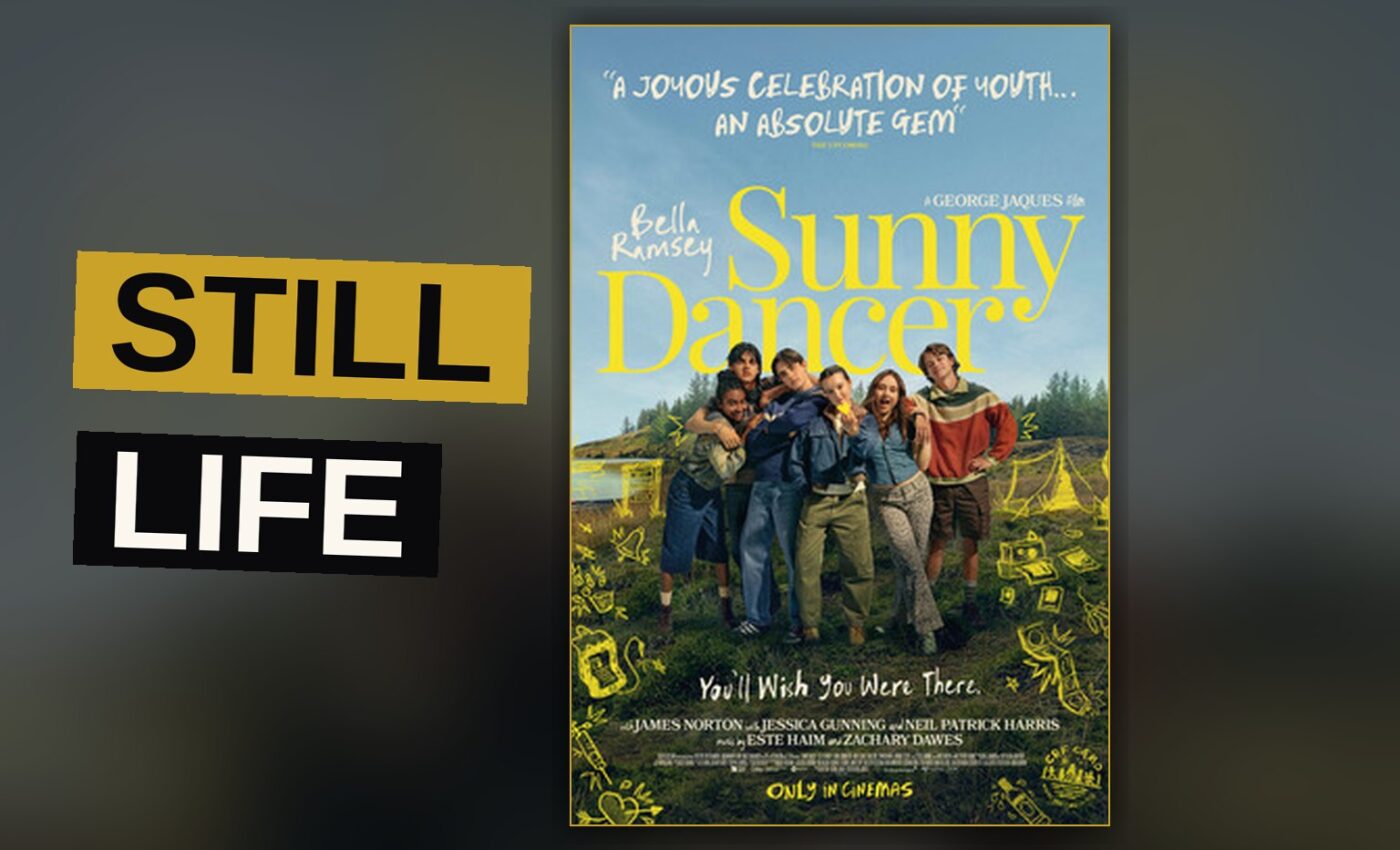
Sunny Dancer opens with a man named Sunny, played by Keanu Reeves, walking down a city street. He is not dancing. He is simply walking, and the camera follows him with a patience that sets the tone for the whole film: this is a story about stillness, about the small moments that make up a life, told with restraint and a quiet sense of purpose.
The film centers on Sunny’s daily routine in New York City. He wakes up, walks to work, eats lunch, walks back home, and repeats. There is no plot in the traditional sense. Instead, the movie builds its case through small gestures, chance encounters, and the texture of urban life. The director trusts the audience to find meaning in these fragments, and mostly succeeds.
Trailer, via True Brit Entertainment.
Walking Through the Day
Sunny’s day is the engine of the film. He walks to work along the same route each morning, passing the same buildings, the same pedestrians, the same pigeons. The camera lingers on these details, and the repetition becomes meditative rather than dull. This is a film about the rhythm of existence, and it finds that rhythm in the mundane.
Reeves plays Sunny with a minimalism that suits the material. His face is often unreadable, which works in the film’s favor. The performance is not about expressing emotion so much as being present. This is a character who is fully alive within his own skin, and Reeves makes that presence feel real.
New York as Character
The New York setting is rendered with care. The film captures the city’s light, its architecture, its crowds, and its silence. There are scenes of Sunny walking past a construction site, a street performer, a busy intersection, and a quiet park. Each location feels lived-in, and the cinematography treats the city as a character in its own right.
The film also pays attention to sound. The ambient noise of the city—the hum of traffic, the chatter of passersby, the wind—is mixed into the soundtrack with care. This creates a sense of immersion that few films achieve.
Meeting the Other People
Sunny encounters several other characters over the course of the film, and these brief meetings are where the narrative tension resides. There is a woman he sees regularly, a coworker, a stranger who asks for directions. None of these interactions resolve into conventional plot points. They simply happen, and the film trusts that the audience will find significance in the connection.
These moments are the film’s emotional core. They are tender without being sentimental, and they land because the film has spent its runtime establishing the weight of Sunny’s ordinary life. When he speaks to someone, the conversation carries the weight of a lifetime of experience.
The Director’s Craft
The director’s approach is deliberate. The shots are composed with a precision that borders on ritualistic. There are tracking shots, long takes, and static frames. The editing is sparse, which means the pacing can slow to a crawl. Some viewers may find this frustrating. Others will find it rewarding.
What is clear is that the film is not interested in spectacle. It is interested in truth, and it achieves that truth through simplicity. The visual style is consistent throughout, and it serves the story rather than competing with it.
Strengths and Weaknesses
- The central performance by Reeves, which grounds the film in a believable human presence.
- The cinematography, which renders the city as a living, breathing character.
- The sound design, which makes the environment feel tangible.
- The editing, which respects the rhythm of everyday life.
The film’s refusal to provide resolution is its biggest gamble. By the end, the viewer has witnessed Sunny’s day but has not learned what happens to him. Some will find this satisfying. Others will find it unsatisfying. The film does not offer closure, and it does not apologize for that choice.
There are also stretches where the repetition can feel tedious. The middle portion of the film, in particular, relies heavily on Sunny’s routine, and some viewers may lose patience. The film asks for attention, and it does not always reward it immediately.
A Quiet Life Well Told
Sunny Dancer is a film about presence. It is about noticing the world around you, about finding beauty in the quotidian, and about the quiet dignity of a life lived with purpose. It is not a film for everyone, and it does not pretend to be. It is a film for those willing to sit with the moment.
The film’s strengths are substantial. Reeves delivers a career-best performance, the visuals are stunning, and the sound design is immersive. Its weaknesses—tedious stretches, lack of resolution—are real but forgivable. The film knows what it is, and it executes its vision with confidence.
Sunny Dancer is a minor masterpiece of restraint. It deserves to be seen.