
Study links rare infections during pregnancy to threefold higher autism risk in children
A Swedish study finds rare infections passed from mother to fetus triple the risk of autism and intellectual disability in offspring.

A Swedish study finds rare infections passed from mother to fetus triple the risk of autism and intellectual disability in offspring.

A vast stone, six tons in weight, once drifted from distant Scotland upon ice, before men bore it to Salisbury Plain.

DeepMind's AlphaGenome Atlas predicts every possible human genome tweak, but experts urge caution before trusting the predictions.

A thin needle-like brain implant can record signals, deliver drugs, and stimulate nerve cells all at once — a promising proof of concept.

Cats leave a chemical calling card in their urine, a durable signature of fatty acids that helps them recognize each other long after a scent mark is made.

A paper argues that modern science is open-source software, a claim that challenges how research is verified and shared.

A Japanese team has mapped the ocean's deepest point with new precision, using a ship, a sonar system and a trench eleven miles deep.

A reprieve for foreign scientists, and new data from Definium Therapeutics in the psychedelics field, weigh upon the future of American research.

A list of 34 confidently held false beliefs, from chimpanzee hybrids to demonic sporks, that people believed for far too long.
Top mathematicians warn AI solving famous problems risks destroying the slow, human-centered process of discovery.
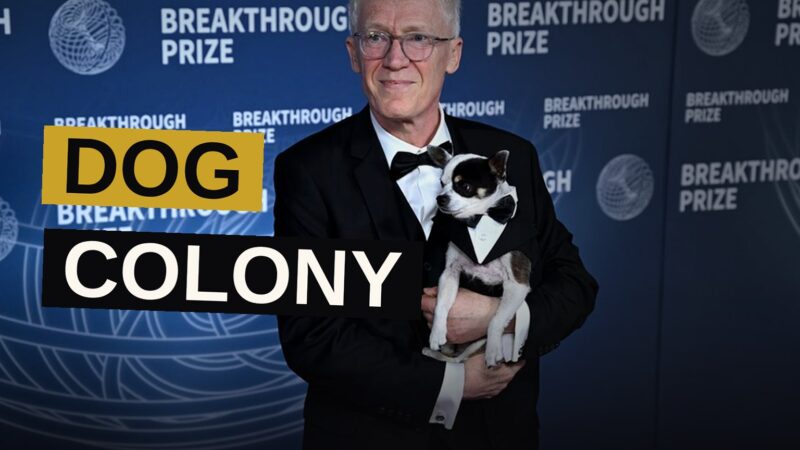
How Stanford's narcoleptic dog colony led to the discovery of orexin, winning Dr. Emmanuel Mignot a major prize.
New research suggests caffeine activates an ancient cellular energy system tied to aging, stress resistance, and DNA repair — find out what it means.
As an Amazon Associate, Clay Tribune earns from qualifying purchases.