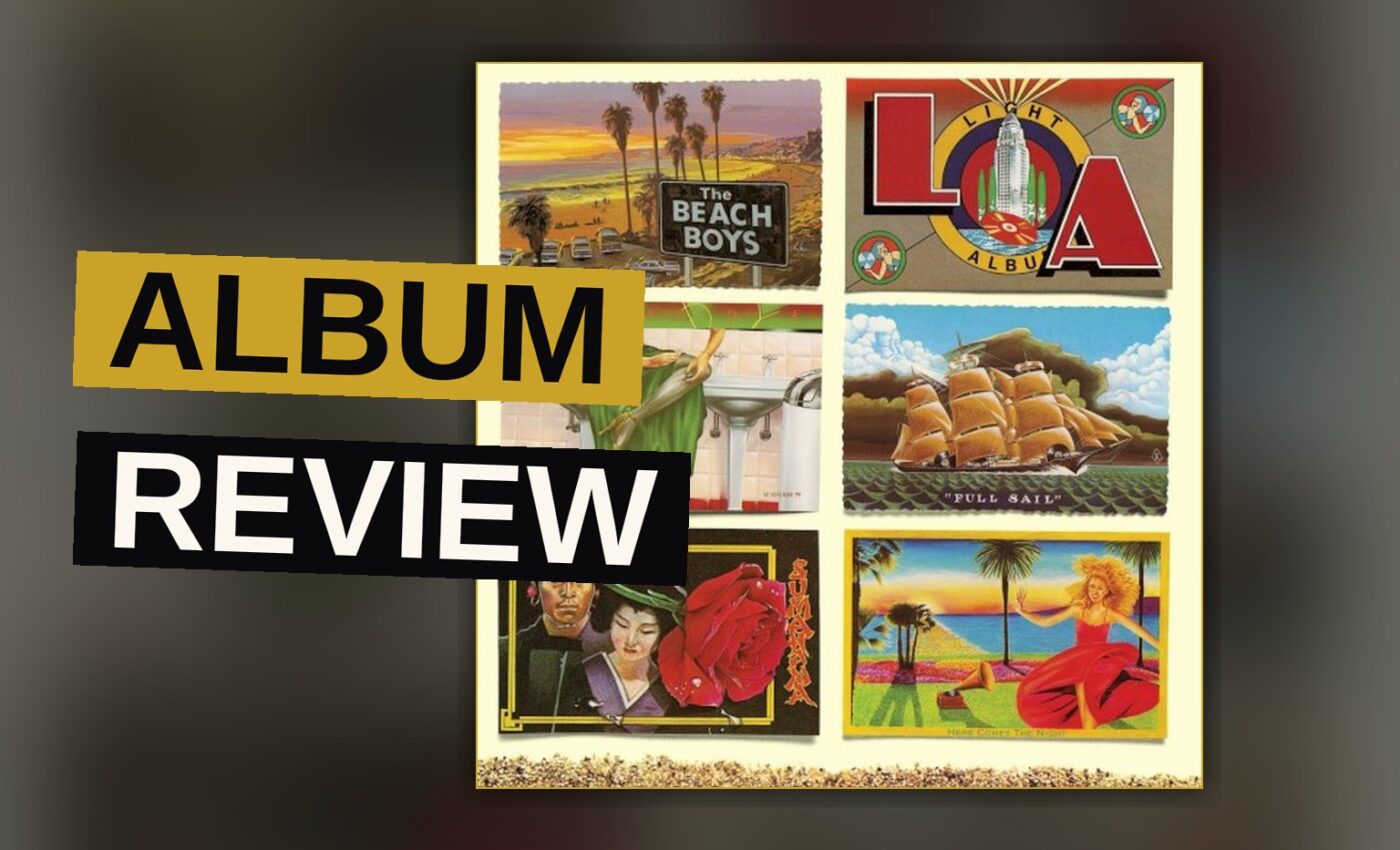
The Beach Boys released L.A. (Light Album) in 1979, a record that tries to pull the band back toward the mainstream after years of drift. It is a polished, soft-rock effort with disco touches and long instrumental passages, aimed at radio play rather than artistic risk. The band was past its peak, and the album sounds like it: a mix of slick production, occasional flashes of the old harmonies, and a lot of filler. It is an uneven record that never quite decides what it wants to be.
Good Timin’ and the Strong Openers
The album starts well. “Good Timin’” is a crisp, two-minute pop song with a bright melody and tight vocal harmonies. It is the most straightforward track here, and it works. The song feels like a genuine attempt at a hit single, with a chorus that sticks. It is the kind of tune that reminds you why this band mattered in the first place.
“Lady Lynda” follows with an organ intro that shifts into a gentle, pastoral love song. It is pleasant but slight, the kind of track that fills space without adding much. The lyrics are simple, almost naive, and the arrangement is clean. It is not bad, but it does not demand much attention.
“Full Sail” is a mid-tempo ballad about leaving troubles behind. It is competent but forgettable, with a smooth vocal delivery that never quite ignites. The song drifts along without a strong hook, and by the time it ends, you are already thinking about the next track.
Angel Come Home and the Middle Stretch
“Angel Come Home” picks up the pace slightly, with a gentle rock groove and some nice harmonies in the chorus. It is one of the more listenable tracks on the record, but it still feels like a band going through the motions. The production is polished to a shine, but the song itself lacks urgency.
“Love Surrounds Me” is a slow, moody piece that tries for atmosphere but lands on bland. The vocals are buried in the mix, and the melody is weak. It is the kind of track that plays in the background without leaving a mark.
Then comes “Sumahama,” a song about Japan that leans into a light, exotic arrangement. It is curious but not compelling, with a melody that feels more like a travel brochure than a song. The track has its defenders, but it does not hold up against the band’s earlier work.
Here Comes the Night and the Long Experiment
The centerpiece is “Here Comes the Night,” a ten-minute disco reworking of a 1967 track. This is the boldest move on the album, and it fails. The extended groove is repetitive, the vocals are stretched thin, and the whole thing feels like a desperate attempt to chase a trend that had already peaked. It is a slog, and it drags the record down.
The track takes up a quarter of the album’s running time, and that is a problem. It does not build, it does not reward patience, and it does not justify its length. What could have been a tight four-minute song becomes a ten-minute endurance test.
Baby Blue and the Final Stretch
“Baby Blue” is a highlight. It is a gentle, melancholic ballad with a strong melody and some of the best harmonies on the album. The song feels personal and sincere, a reminder that the band could still deliver when they stopped trying so hard. It is the track that earns the record its few moments of grace.
“Goin’ South” is a light, country-tinged number that is pleasant but slight. It does not add much, and it feels like filler between the stronger tracks. The arrangement is simple, the vocals are easy, and the song passes without much notice.
The album closes with “Shortenin’ Bread,” a traditional folk song given a straightforward, upbeat treatment. It is a strange way to end the record, a novelty tune that feels out of place after the more serious tracks. It is harmless, but it does not leave a lasting impression.
The Verdict
L.A. (Light Album) is a record of missed chances. The strong tracks — “Good Timin’,” “Baby Blue,” and parts of “Angel Come Home” — show that the band still had something to offer. But they are surrounded by weak material and a ten-minute disco experiment that should have been cut. The album lacks focus, and too much of it feels like padding.
The band’s harmonies are still there, but they are buried under overproduction and a lack of direction. This is not the sound of a band reinventing itself; it is the sound of a band trying to stay relevant and failing. It offers distant echoes of the good old days, but not much more.
The record is not terrible, but it is largely forgettable. It is the work of a group that had lost its edge, and no amount of polish could hide that. A few tracks are worth a listen, but the album as a whole does not hold together.
This LP is worse than awful. It is irrelevant.
That line, from Rolling Stone, is harsh but not unfair. The album is not offensively bad, but it is unnecessary. It does not add to the band’s legacy, and it does not stand on its own. It is a footnote in a long career, a record that exists but does not matter much.
L.A. (Light Album) is a disappointment. It is not the worst thing the band ever made, but it is far from their best. The good moments are too few, and the bad ones are too long. It is a record for completists only, a curious artifact from a band trying to find its way back.
Get the Notebook.
The day's best stories and every fresh verdict, in plain English, in your inbox by seven. One email a day, no more.
- Good Timin’2:13
- Lady Lynda3:59
- Full Sail2:57
- Angel Come Home3:38
- Love Surrounds Me3:39
- Sumahama4:08
- Here Comes the Night10:53
- Baby Blue3:25
- Goin’ South3:18
- Shortenin’ Bread2:47