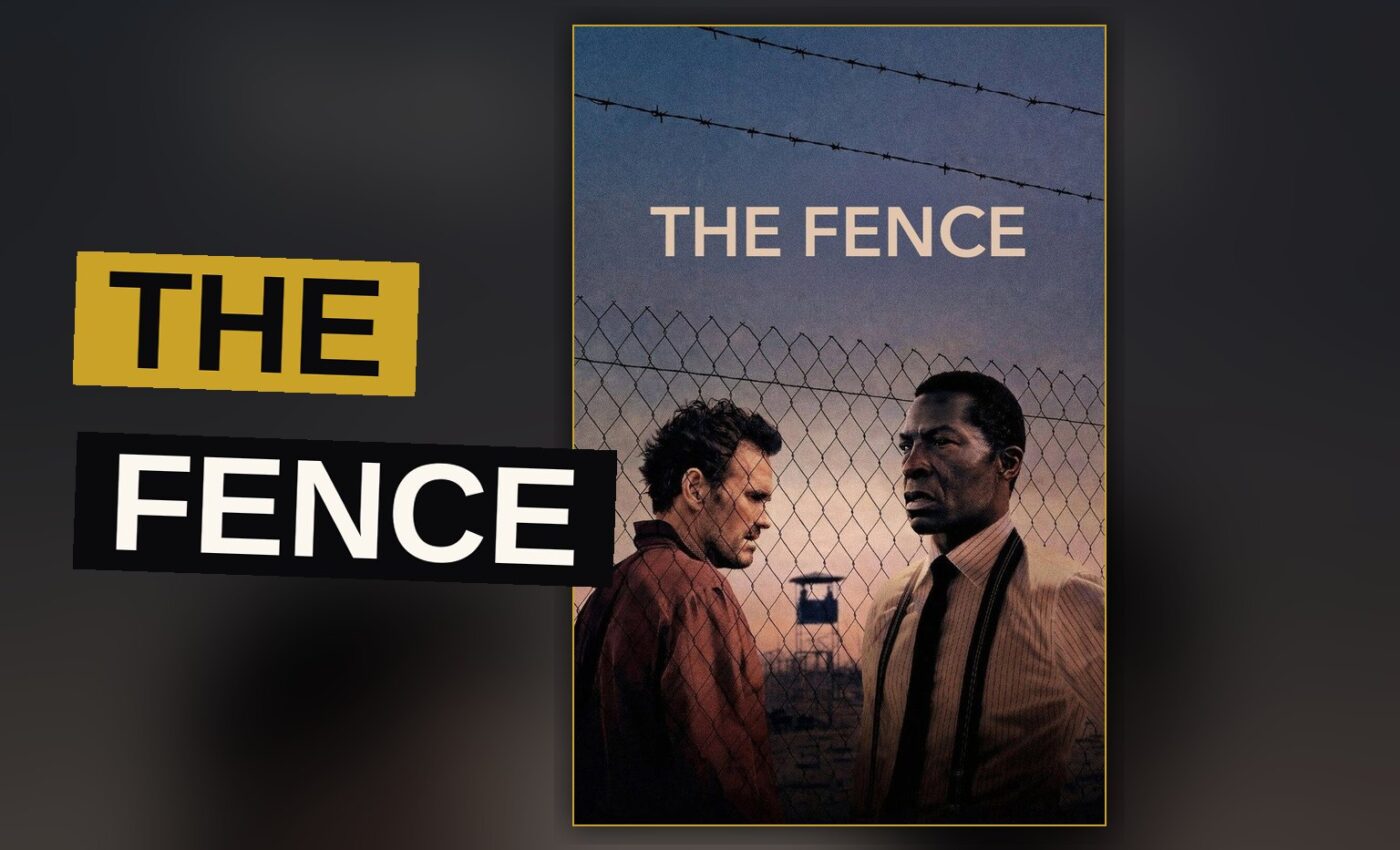
A hut. A man named Horn welcoming his partner Léone. A stranger named Alboury standing in the doorway, refusing to leave until the body of his dead brother is returned. That’s the whole engine of “The Fence,” and Claire Denis runs it lean.
Trailer, via Film at Lincoln Center.
Isaach de Bankolé Holds the Door
Isaach de Bankolé plays Alboury, and he’s the reason the film carries any real weight. The film’s critical consensus lands on his performance as the picture’s strongest element, with reviewers praising his work even when the film around him falters. De Bankolé’s control is the best thing in the picture, and it holds even when the scenes around him lose their footing.
Mia McKenna-Bruce plays Léone, arriving into a situation she didn’t build and can’t settle. Tom Blyth is Cal, sharing the hut with Horn, watching the dispute sour. Brian Begnan appears as Nouofia and Moussa Thaim as Moses, both circling the edges of the central conflict. The cast is small, and the story is built on pressure rather than motion.
The film’s premise is simple, and Denis trusts it more in some stretches than in others. A man’s brother was killed on the site, and Alboury will not leave until the body is returned. That demand drives everything else in the picture, and the actors carry it with a discipline that keeps the whole thing from collapsing into pure talk.
A Play That Won’t Let Go of the Stage
Denis wrote the script with Suzanne Lindon and Andrew Litvack, working from a stage source, and the adaptation never quite sheds where it came from. Rooms fill with talk. Characters explain themselves at length when a look would carry more. The staging throughout reads like something built for a stage rather than a camera — blocking that announces itself, exchanges that build through speech rather than image.
That’s an odd note for Denis to strike. Her strongest work leans on quiet and gesture over explanation. Here, she keeps reaching for words instead, and the words don’t always earn their space.
The Hollywood Reporter put it plainly, calling the film’s dialogue overload and stagy mise-en-scène its central flaw. The criticism tracks with what’s on screen: a script that trusts speech over silence, and a director whose best instincts run the other way. The result is a film that feels caught between two modes — the theatrical source material pulling one way, Denis’s own visual instincts pulling the other.
Strange and Withheld, in Patches
There are stretches where the old instincts surface. The film turns strange and inscrutable in patches, particularly whenever Alboury is on screen. Those moments feel like the Denis of old — withheld, alert, sure of what it isn’t saying. But the film keeps pulling back toward explanation, and the effect drains out of the piece right after it builds.
Richard Lawson, writing for Metacritic, described the film as “In some ways, the film is hallmark Denis, flinty and strange and sometimes inscrutable.” That captures the uneven texture of the piece — flashes of her signature obliqueness, surrounded by stretches of talk that flatten it.
The central picture — a man standing guard over a body that hasn’t been returned — is a strong one. It’s a clean, hard premise: grief turned into a physical barrier, refusal as the only power a man without power has left. Denis doesn’t need much plot to make that work. She has shown as much before. The trouble is she doesn’t fully trust the premise here, and the dialogue keeps filling space the situation alone could have carried on its own.
A Minor Work, Even at 107 Minutes
At 107 minutes, “The Fence” isn’t long, but it drags in places. The pacing sags in the middle, and the dispute doesn’t push its stakes forward by much as it goes. A tighter cut of the same material might have sharpened the whole picture considerably.
This is a minor Denis work.
It sits somewhere between her past films and something newer she’s trying out, and the blend doesn’t fully settle into place. Variety called it “both something old from her and something a bit new,” while noting it isn’t a major entry in her filmography. The film has one great performance, one clean premise, and a script that talks over both more often than it should.
The critical response reflects that split. Metacritic shows a score of 56 out of 100, which lands in the mixed range. Rotten Tomatoes sits at 70%, which is solidly positive but far from unanimous. IMDb users have given it a 5.8 out of 10 average. The pattern across all three is consistent: reviewers and audiences both see a real film here, but neither group sees a great one.
The Numbers
- Directed by Claire Denis, written with Suzanne Lindon and Andrew Litvack
- Released April 8, 2026
- Runs 107 minutes
- Carries no rating
- Scores 56 out of 100 on Metacritic
- Sits at 70% on Rotten Tomatoes
- Holds a 5.8 out of 10 average on IMDb
- Audience score of 6.125/10 from 8 TMDB votes
Who Plays Whom
| Name | Part |
|---|---|
| Isaach de Bankolé | Alboury |
| Matt Dillon | Horn |
| Mia McKenna-Bruce | Léone |
| Tom Blyth | Cal |
| Brian Begnan | Nouofia |
| Moussa Thaim | Moses |
“The Fence” is worth seeing for de Bankolé alone, and for the handful of scenes where Denis lets her material breathe instead of talk. It doesn’t rank among her major films, and it doesn’t pretend otherwise. What it offers is a sturdy premise, a commanding central performance, and a script that too often gets in its own way.
The film’s audience score on TMDB sits at 6.125 out of 10, based on just 8 votes — a small sample that shouldn’t be read as a firm verdict either way. The critical scores tell a more complete story: mixed-to-positive, leaning toward the positive end, with de Bankolé’s performance and Denis’s atmospheric direction carrying most of the praise. That’s a fair summary of where the film lands: a minor work from a major director, held up by one strong performance and a premise that deserved better than the script gave it.