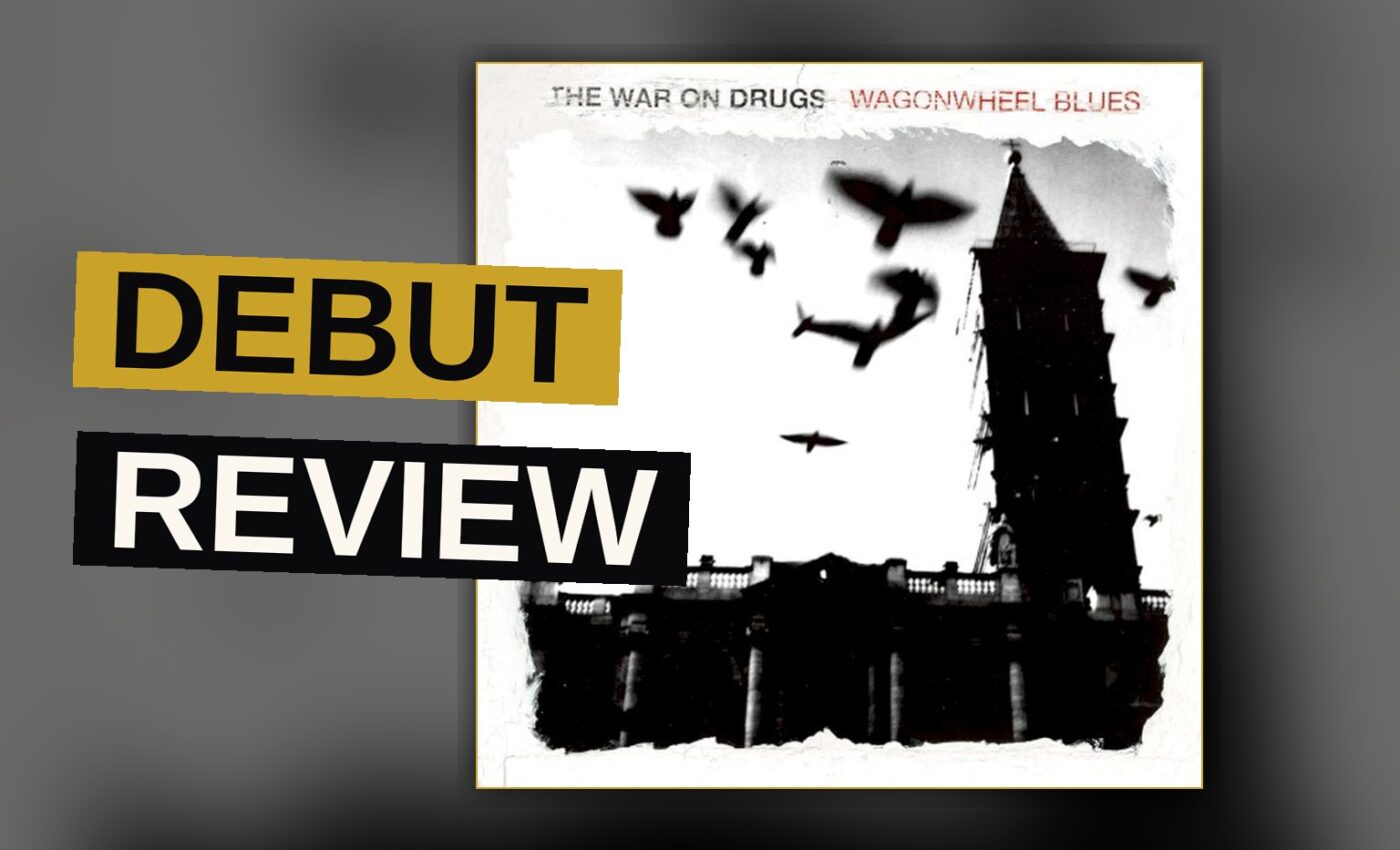
The War on Drugs spent their first album trying to make rock music feel both urgent and unhurried at once. Wagonwheel Blues runs nine tracks and 43 minutes, and it spends that time moving between slow-building guitar riffs, hushed folk passages, and the kind of open-road wander that has defined the band ever since. This is a debut that wants to sound like Neil Young and Sonic Youth at the same time, and mostly it manages to pull it off.
Opening With Arms Like Boulders
The album opens with “Arms Like Boulders,” a track built on a simple riff that refuses to rush. It sets the tone for everything that follows: patient, heavy, and unafraid to sit in one groove for five minutes. It is one of the strongest tracks here, and it earns the attention it gets.
“Taking the Farm” follows and leans into the Americana side of the mix, quieter and more reflective than the opener. It is a solid entry point for listeners who came in looking for something closer to country rock, even if the song’s quiet strength is easy to miss alongside the louder moments around it.
The Middle Stretch
“Coast Reprise” is a shorter track, a breather after the first two, and it works as a palate cleanser rather than a destination. It does not need to be singled out, but it holds the record together by giving the listener a moment of calm before the album turns back toward its louder ambitions.
“Buenos Aires Beach” is the odd one out. It is a brief, atmospheric piece that feels less like a song and more like a mood board, and it is the weakest link in the running order. It does not hurt the album, but it does not add much either.
“There Is No Urgency” is the longest track on the record at 6:19, and it lives up to its title. It is patient, repetitive, and built for late-night listening. It is not a highlight, but it shows the band’s willingness to let a song breathe.
The Back Half
“A Needle in Your Eye #16” is the standout of the back half. It is a driving, propulsive track that captures the band at their most restless and energetic, and it is the clearest example of the influence of Sonic Youth on their sound. It is the best track on the back half, and it is the one that critics singled out for good reason.
“Reverse the Charges” is a decent but slight track, a bridge that connects the album’s quieter middle to its final stretch without much fanfare. It is not bad, but it is forgettable.
“Show Me the Coast” closes the album at 10:04, and it is the longest track on the record. It is also the most ambitious, mixing spoken-word passages, guitar solos, and a sense of travel that ties the whole album together. It is not perfect, but it is the right way to end a record this sprawling.
“Barrel of Batteries” ends the album on a note of closure. It is a short, punchy closer that wraps things up without overstaying its welcome. It is the shortest track on the record, and it knows exactly what it is doing.
What Works, What Does Not
The album’s strengths are easy to name:
- The riff-driven songs like “Arms Like Boulders” and “A Needle in Your Eye #16”
- The atmospheric pieces like “Coast Reprise” and “There Is No Urgency”
- The ambition of “Show Me the Coast”
Its weaknesses are harder to pin down, but they exist:
- “Buenos Aires Beach” is too slight to justify its place in the running order.
- “Reverse the Charges” is pleasant but unremarkable.
- The album’s middle stretch drags in spots.
What holds the record together is a consistent vision. The War on Drugs were not trying to reinvent rock music here, and that is part of what makes the album work. They were trying to make a record that sounded like it had been made by people who loved rock music, period. That restraint is the album’s greatest strength.
The band would later grow into bigger statements and more polished records, but this debut remains the clearest window into what they were trying to do from the very beginning. It is a record about patience, about letting a song find its own shape, and about the spaces between the notes being as important as the notes themselves.
Wagonwheel Blues is not a perfect album, and it does not try to be. It is a sprawling, atmospheric debut that knows exactly what it wants to do and mostly does it. The weaker tracks are minor irritants, not fatal flaws, and the highlights are strong enough to carry the whole thing.
This is a debut that deserves its reputation as a starting point for a band that would go on to define a generation of rock music. It is not the peak of their career, but it is the foundation, and foundations matter.
8.5/10.
- Arms Like Boulders5:20
- Taking the Farm4:00
- Coast Reprise3:15
- Buenos Aires Beach3:23
- There Is No Urgency6:19
- A Needle in Your Eye #164:54
- Reverse the Charges3:20
- Show Me the Coast10:04
- Barrel of Batteries2:30