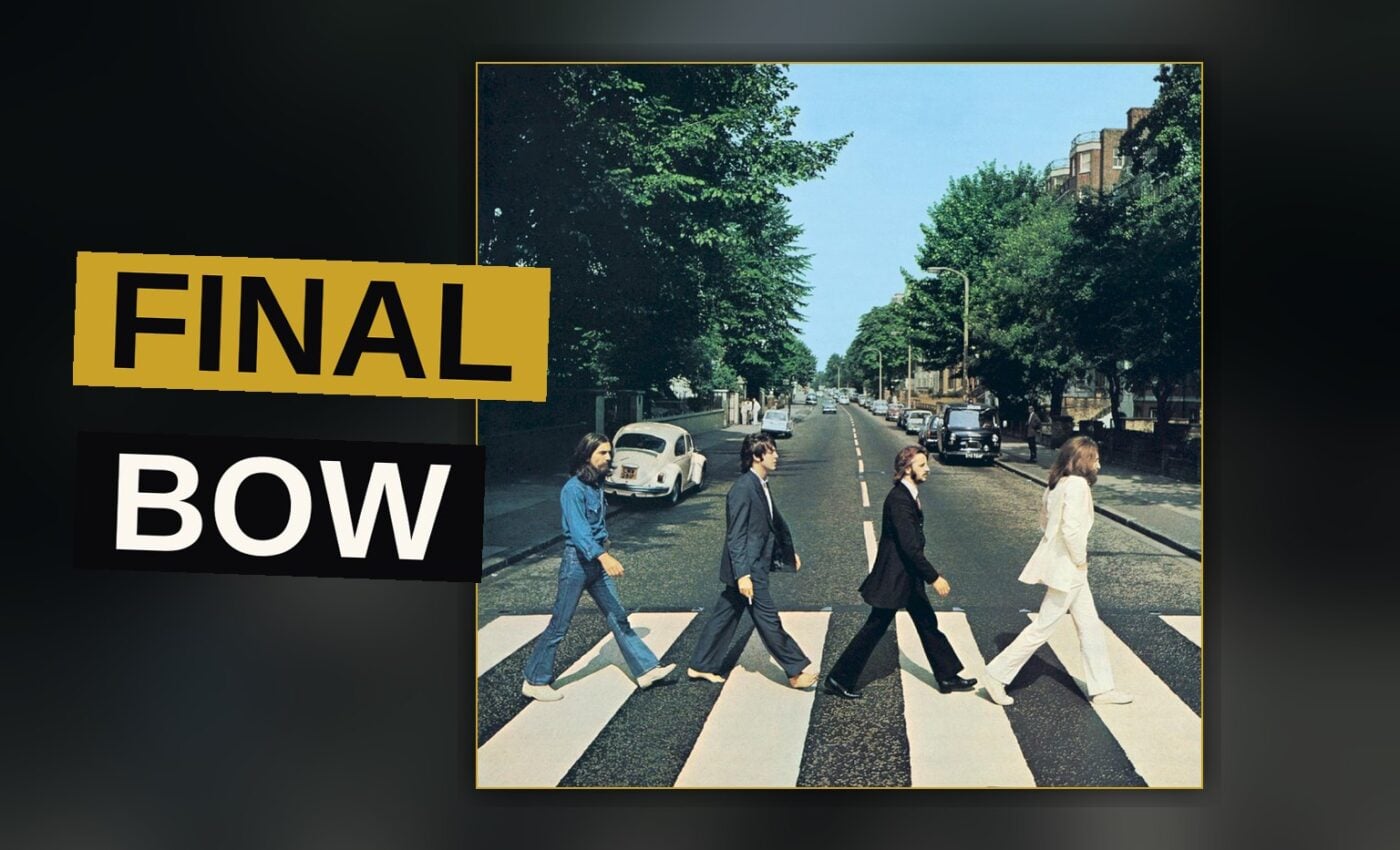
Abbey Road is the final studio album the Beatles recorded, and it plays like a deliberate farewell. The band was fracturing, but the record itself is calm, controlled, and remarkably cohesive. It is not a messy breakup album; it is a polished demonstration of craft. The Beatles knew this was likely the end, and they chose to go out showing exactly what they could do.
The structure is simple and effective. Side one is a collection of individual songs, ranging from hard rock to gentle ballads. Side two is a continuous medley, a suite of short fragments stitched into one long piece. That two-part design gives the album its shape: first, proof that the band could still write standalone classics; second, proof that they could build something larger. Both halves succeed.
Come Together and Something
The album opens with “Come Together,” a slow, hypnotic groove built on a pulsing bass line and a snarled vocal. It is not a cheerful song, and it does not try to be. The lyrics are mostly impressionistic fragments, but the delivery gives them weight. It is a statement of presence, a confident start that immediately sets a different tone from anything the band had done before.
“Something” follows, and it is the emotional center of the record. It is a love song of extraordinary restraint, with a simple, elegant melody and a warm, unhurried vocal. It is the kind of song that other bands spend entire careers trying to write once. It stands as one of the finest ballads in the Beatles’ catalog, and it proves that the band could still reach great heights.
Maxwell’s Silver Hammer and Oh! Darling
“Maxwell’s Silver Hammer” is a music-hall number about a man who murders people with a hammer, played with a cheerful, jaunty bounce. The subject matter is dark, but the delivery is bright and polished. It is catchy, but it sits oddly next to the emotional weight of “Something.” It is a curiosity, a novelty, and it is the weakest moment on the side.
“Oh! Darling” is a genuine surprise. It is a 1950s-style rock and roll ballad, sung with a hoarse, straining intensity. The vocal sounds like it is about to crack at any moment, and that fragility is what makes the song work. It is a small, focused piece of work, and it succeeds completely.
Octopus’s Garden and I Want You
“Octopus’s Garden” is a gentle, underwater fantasy. It is a children’s song, really, with a simple melody and a cheerful lyric about finding a home beneath the sea. It is pleasant and unambitious, and it does not try to be anything more. It serves as a palate cleanser before the side’s centerpiece.
That centerpiece is “I Want You (She’s So Heavy),” a nearly eight-minute epic that is unlike anything else the Beatles ever recorded. The song is built on a single, repetitive riff, and it builds steadily, adding layers of guitar and organ until it collapses into a sudden, jarring silence. It is not a pop song; it is a drone, a piece of hypnotic tension. It is the most daring track on the album, and it proves the band was still willing to take risks.
Here Comes the Sun and Because
“Here Comes the Sun” is the most purely joyful track the Beatles ever recorded. The melody is bright and intricate, the guitar work is sparkling, and the vocal is full of genuine warmth. It is a perfect pop song, and it has aged remarkably well. It is the kind of song that makes people smile, and it does not lose that power with repeated listening.
“Because” is a strange, beautiful piece of work. It is a slow, dreamlike song with a dense, choral vocal harmony. The song feels suspended in time, not about anything in particular but simply existing as a mood. It is one of the most unusual tracks the band ever recorded, and it is one of the most effective.
The Medley
The second side of the album is a continuous suite of songs, running from “You Never Give Me Your Money” through “The End.” It is not a single song, but a sequence of fragments, each lasting a minute or two, stitched together into a seamless whole. The medley is the album’s real achievement, and it is the reason the record feels so cohesive.
“You Never Give Me Your Money” opens the medley. It is a song about money and business, about the financial disputes that were tearing the band apart, but it is not a bitter song. It is a resigned one. The song shifts through several sections, moving from a slow, reflective opening to a jaunty, upbeat middle to a quiet, humming close. It is a miniature suite in itself.
“Sun King” is a dreamy, Latin-tinged fragment that follows. It is not a song with a clear meaning; it is a mood piece, built on gentle guitar and soft vocals. The lyrics are mostly nonsense. It is pleasant and forgettable, but it serves its purpose as a bridge.
“Mean Mr. Mustard” is a short, comic song about a miserly man. It is under two minutes long, and it is over almost before it begins. It is a character sketch, a piece of whimsy. It is followed by “Polythene Pam,” another short comic song, this one about a woman in a polythene bag. It is energetic and slightly silly, and it, too, is gone quickly.
“She Came In Through the Bathroom Window” is the most substantial of the short fragments. It is a catchy, uptempo song with a memorable chorus, and it feels like it could have been a standalone single. It is about a fan who broke into the band’s house, and it is played with a lightness and a swing that make it feel effortless. It is a highlight of the medley.
“Golden Slumbers” is the emotional peak of the suite. It is a slow, tender ballad with a simple, beautiful melody and a vocal full of longing. It is followed directly by “Carry That Weight,” which reprises the melody of “You Never Give Me Your Money” and turns the medley into a circle. The two songs are inseparable, and together they form the heart of the side.
“The End” is the album’s true conclusion. It is a short song, under two and a half minutes, but it contains the only drum solo on the record, and it features a brief guitar duel between the three guitarists. The song ends with a line about love that serves as a fitting summary of the band’s philosophy. It is a fitting ending to the record, and it is a fitting ending to their career.
Her Majesty
The album ends with “Her Majesty,” a 23-second fragment that was originally part of the medley and was cut out and tacked onto the end by accident. It is a short, silly song about the Queen, and it is played as if it were a live performance, with the band counting in and a false start. It is a joke, a throwaway, and it is the perfect way to end the record. After the emotional weight of “The End,” it deflates everything, and it does so deliberately. It is a wink, a final bit of mischief.
The Running Order
| Track | Length |
|---|---|
| Come Together | 4:21 |
| Something | 3:03 |
| Maxwell’s Silver Hammer | 3:27 |
| Oh! Darling | 3:27 |
| Octopus’s Garden | 2:51 |
| I Want You (She’s So Heavy) | 7:47 |
| Here Comes the Sun | 3:06 |
| Because | 2:46 |
| You Never Give Me Your Money | 4:02 |
| Sun King | 2:26 |
| Mean Mr. Mustard | 1:06 |
| Polythene Pam | 1:13 |
| She Came In Through the Bathroom Window | 1:58 |
| Golden Slumbers | 1:32 |
| Carry That Weight | 1:37 |
| The End | 2:20 |
| Her Majesty | 0:23 |
The Verdict
Abbey Road is not a perfect album. “Maxwell’s Silver Hammer” is a misstep, and some of the medley fragments are forgettable. But the album’s strengths are so considerable that they overwhelm its weaknesses. It contains two of the best songs the Beatles ever wrote, in “Something” and “Here Comes the Sun.” It contains their most daring experiment, in “I Want You (She’s So Heavy).” And it contains the medley, which is a sustained piece of composition that few other bands could have attempted, let alone pulled off.
The album also sounds remarkable. The production is clean and precise, and the performances are confident throughout. The band was falling apart, but you would not know it from the music. They sound like a group at the top of their game, and they were.
Here is how the album’s strongest moments rank:
- “Something” — the emotional peak of the record
- “Here Comes the Sun” — pure, effortless joy
- “I Want You (She’s So Heavy)” — the boldest experiment
- “Golden Slumbers”/”Carry That Weight” — the heart of the medley
- “Come Together” — the confident opener
Abbey Road is the last album the Beatles recorded, and it is the sound of a band saying goodbye on its own terms. It is a triumphant, cohesive finale, and it remains one of the greatest records ever made.
The record runs 47 minutes total, and every minute earns its place.
Get the Notebook.
The day's best stories and every fresh verdict, in plain English, in your inbox by seven. One email a day, no more.
- Come Together4:21
- Something3:03
- Maxwell’s Silver Hammer3:27
- Oh! Darling3:27
- Octopus’s Garden2:51
- I Want You (She's So Heavy)7:47
- Here Comes the Sun3:06
- Because2:46
- You Never Give Me Your Money4:02
- Sun King2:26
- Mean Mr. Mustard1:06
- Polythene Pam1:13
- She Came In Through the Bathroom Window1:58
- Golden Slumbers1:32
- Carry That Weight1:37
- The End2:20
- Her Majesty0:23