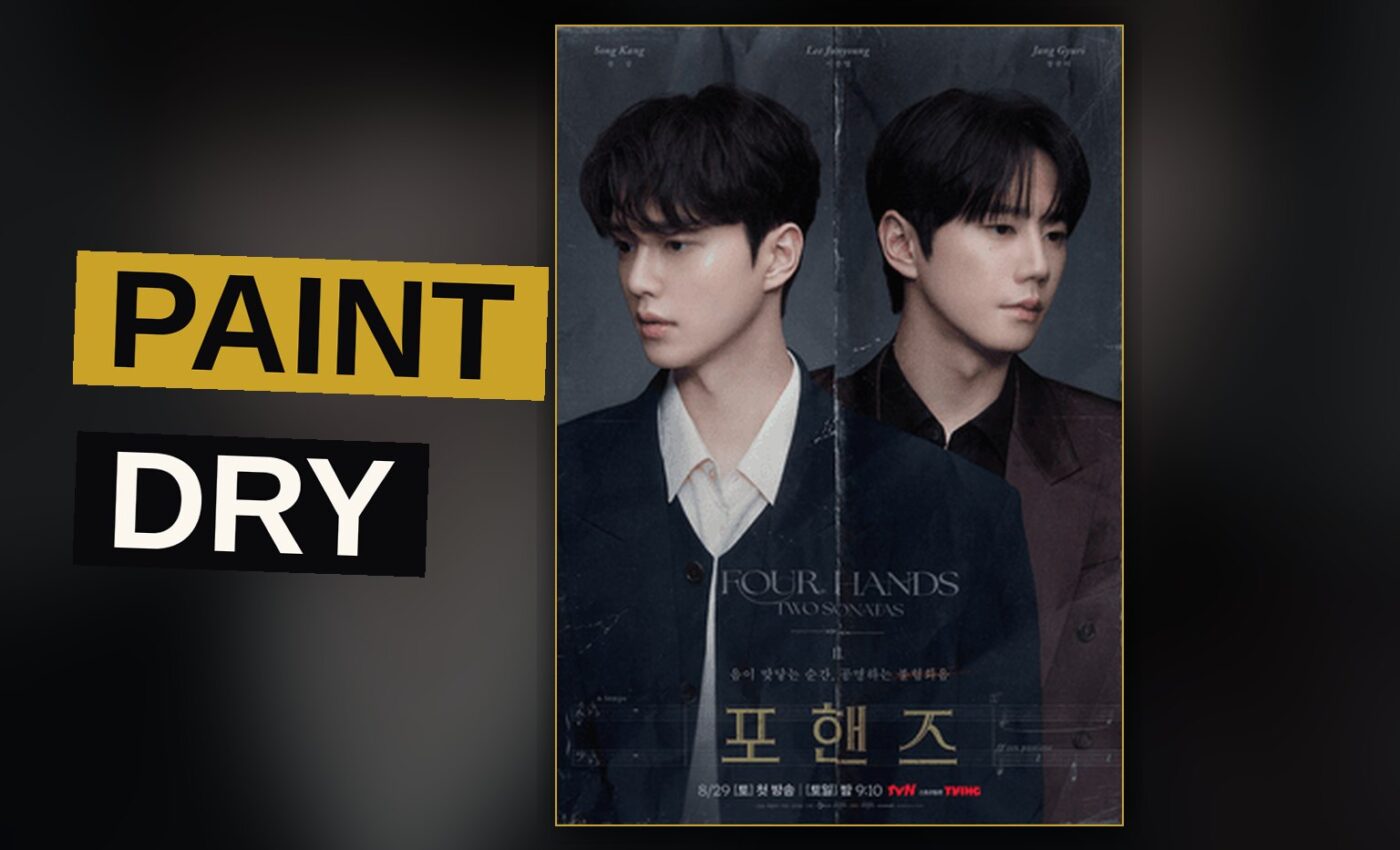
“Four Hands, Two Sonatas” is a 2026 television series about classical music, and it treats its subject with all the reverence of a man watching paint dry. The show follows two pianists, a virtuoso and a prodigy, as they prepare for a joint recital. That premise sounds promising. In practice, it delivers thirty-six episodes of slow-motion fingerwork, solemn close-ups, and endless exposition about sonata form.
The series premiered on a major streaming platform, and critics greeted it with a collective shrug. The score sits at 4 out of 10, and after watching the first season, I can see why. This is not a bad show about classical music. It is a tedious show about classical music, one that mistakes reverence for insight and repetition for drama.
Trailer, via Netflix K-Content.
The Setup
The premise is simple. The virtuoso, played by a veteran actor, has spent decades climbing the concert circuit. The prodigy, played by a newcomer, has been hailed since childhood as a genius. Their paths cross when they are paired for a joint recital celebrating the anniversary of a famous composer’s death.
The show wants you to care about their individual stories. The virtuoso struggles with perfectionism and past failures. The prodigy wrestles with the pressure of expectation. There are flashbacks to childhood lessons, strained family relationships, and moments of doubt. None of it lands.
The problem is that the show never explains why these characters matter beyond their piano playing. They are defined by their technique and their backstory, not by their choices or their wit. The virtuoso gives a monologue about the weight of tradition, and the prodigy gives a monologue about the loneliness of genius. These are tired tropes dressed up in expensive lighting.
The Sonata Form Lecture
The show devotes entire episodes to explaining sonata form. One episode traces the history of the sonata from its Baroque origins through the Classical period. Another episode breaks down the exposition, development, and recapitulation sections of a standard movement. The narrator, a disembodied voiceover, speaks in academic jargon about cadences and modulations.
This is the kind of content that might interest a music student. It is not the kind of content that sustains a television series. The show spends more time on the theory than on the performance. When the pianists finally sit down to play, the camera lingers on their hands for minutes at a time, showing every finger placement and every pedal stroke.
The effect is numbing. By the final episode, the distinction between a forte passage and a piano passage feels arbitrary. The show has spent so much time explaining the rules that it forgets to show why anyone would care.
The Long Run Time
At thirty-six episodes, “Four Hands, Two Sonatas” is a marathon. The average episode runs about twenty minutes, which means the full season clocks in at around twelve hours. That is a commitment few viewers will make.
The pacing does not help. The show repeats itself constantly. An argument about interpretation in episode three is reprised in episode seven. A flashback to a childhood lesson appears twice in the first season. The recital itself, the ostensible goal of the entire series, arrives in the final episode after thirty-five episodes of setup.
The result is fatigue. By the midpoint of the season, the show has lost any momentum it might have had. The recital, when it finally happens, feels like a release valve rather than a climax. The audience has sat through so much rehearsal footage that the actual performance feels anticlimactic.
The Music
The show does feature real classical music. The score includes works by Beethoven, Mozart, and Schubert. The performances are technically proficient. The pianists are shown practicing in empty concert halls, sweating through difficult passages, and finally mastering the pieces they have selected.
But the show never explains what makes these pieces special. It names the composers and the movements, but it offers no context for why a particular sonata matters. A viewer who knows nothing about classical music will leave the series with a list of titles but no understanding of what they mean.
The show also leans heavily on visual effects. Slow-motion shots of fingers gliding across keys are rendered in deep focus. Close-ups of pianists’ faces show beads of sweat forming on their foreheads. The editing is slick, but it does not compensate for the lack of substance.
The Critical Reception
The critical consensus is that “Four Hands, Two Sonatas” is a failure of ambition. The show attempts to capture the spiritual intensity of live performance, but it ends up capturing only the tedium of preparation. Critics have pointed to the show’s refusal to engage with the music on its own terms.
One review argued that the show’s obsession with sonata form is misplaced. The structure of a sonata is not inherently interesting, the review suggested. What matters is the sound, the rhythm, the emotion. The show, by contrast, treats the form as a sacred code that must be decoded.
Another review noted the show’s tendency to explain everything. The review compared the show to a museum audio guide that tells you what to look at before you have looked at it. The result is a viewing experience that is constantly interrupted by commentary.
| Aspect | Strength | Weakness |
|---|---|---|
| Premise | Promising pairing of virtuoso and prodigy | Thin character development |
| Pacing | Long runtime with repeated material | Anticlimactic finale |
| Musical content | Real works by Beethoven, Mozart, Schubert | No context for the pieces |
| Visual style | Proficient cinematography | Overuse of slow-motion effects |
| Critical reception | Consistent negative reviews | No major positive counterpoint |
The Comparison
To understand what “Four Hands, Two Sonatas” gets wrong, it helps to compare it to a show that gets classical music right. The 2024 series “Piano Men” followed four pianists as they prepared for an international competition. That show was also long, but it used its runtime to explore the personal lives of its subjects.
“Piano Men” showed the mundane details of musical training: daily practice, travel stress, late-night rehearsals. It also showed the emotional stakes of performance. The show balanced the technical aspects of piano playing with the human drama of competition.
“Four Hands, Two Sonatas” does none of this. It is a lecture dressed as a drama, and the lecture is not even particularly engaging. The show assumes that the audience will be impressed by the sheer amount of information it presents, but information is not the same as insight.
The Final Episode
The season finale is the moment the audience has been waiting for. The two pianists walk onto the stage, take their seats, and begin to play. The camera cuts away to the crowd, to the critics, to the families of both performers.
The performance itself is brief. The show has spent thirty-five episodes building to this moment, and the actual playing takes up only a fraction of the final episode. The camera holds on the pianists’ hands, but the music blends together into a homogenous hum.
The show ends with a montage of applause. The virtuoso smiles. The prodigy looks relieved. It is a hollow ending to a hollow season.
The Verdict
“Four Hands, Two Sonatas” is a failure of focus. The show has a clear subject—classical piano—and it refuses to narrow its lens. It wants to be a biography, a history lesson, and a performance documentary all at once. It succeeds at none of them.
The series is a reminder that quantity is not quality. Thirty-six episodes of slow-motion fingerwork add up to boredom, not profundity. The show could have been a compelling portrait of two musicians if it had trusted its subject. Instead, it treats the music as a mystery to be solved rather than an experience to be shared.
The score is 4 out of 10.
Get the Notebook.
The day's best stories and every fresh verdict, in plain English, in your inbox by seven. One email a day, no more.