
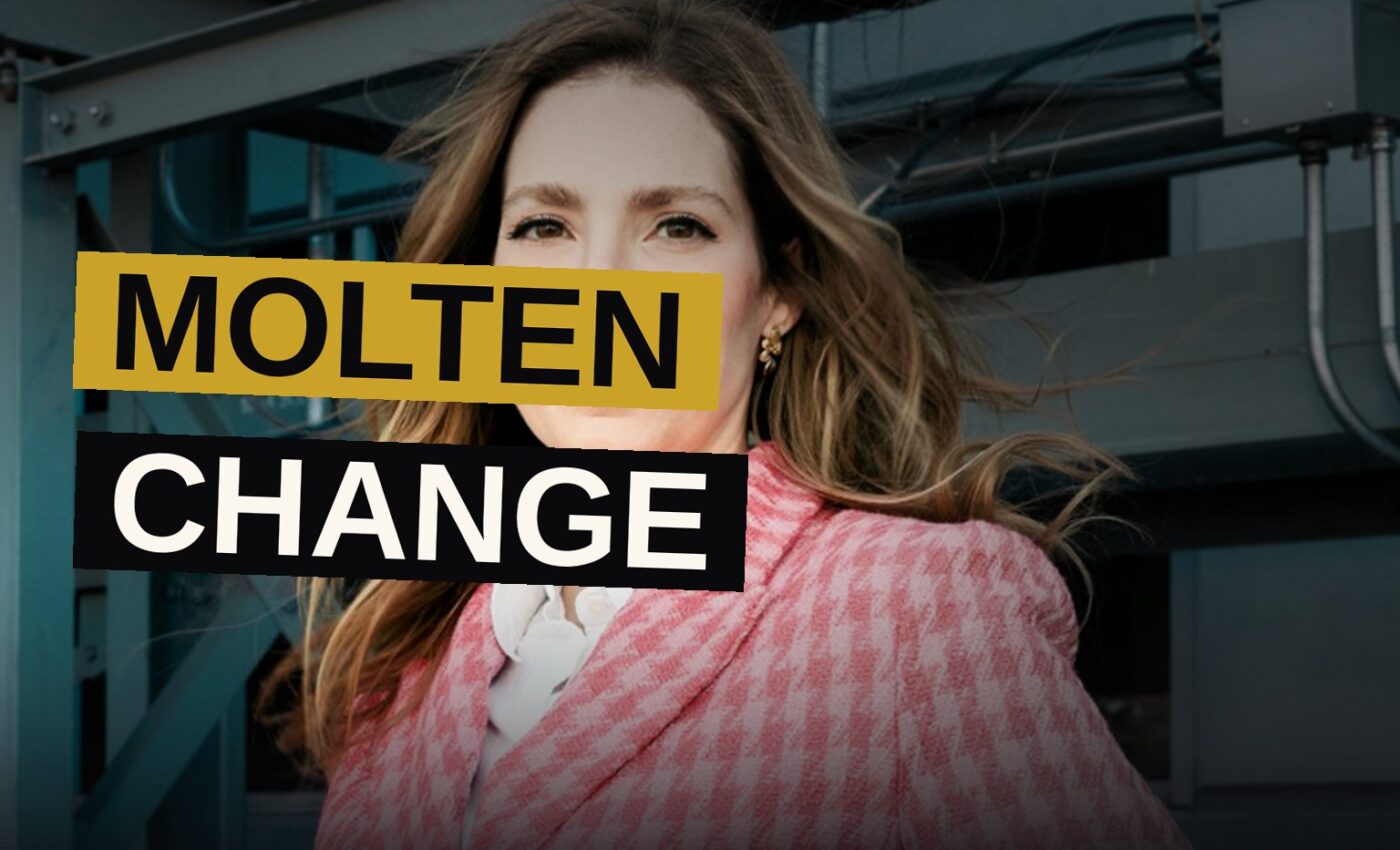
Hertha Metals is Laureen Meroueh’s company, and she believes it can remake steel production. She says her firm can produce the metal at a lower cost while cutting its emissions by altering the way steel is made. The change involves a furnace that shifts a process that has scarcely evolved since the 1850s.
Steel producers typically heat solid iron ore to extreme temperatures within blast furnaces, where it reacts with gases to strip away oxygen. Further processing follows, eventually yielding goods such as rebar and car frames. This method depends on coal and produces about 7% of global carbon emissions linked to climate change—roughly the same share as the fashion sector.
Meroueh’s method turns iron ore into refined liquid steel in a single step. It swaps coal for natural gas. She says those changes slash emissions by at least half and cut costs by 25% compared with steelmaking business as usual.
The Furnace That Cuts the Chemistry
The change at Hertha alters how steel is made, shifting the chemistry so that refined liquid steel comes out directly rather than going through several stages. That reduction in scale is significant for those who study the industry.
“There’s huge value in reducing the size of this production system,” says Iryna Zenyuk, director of the National Fuel Cell Research Center at the University of California, Irvine. “They’re massive. They’re inefficient and require a lot of energy input, so even if they just save energy efficiency, that’s already a big step.”
Hertha concentrates on what it can fix about the steel industry right away rather than waiting for a system with no carbon. Other approaches use hydrogen to free oxygen from iron ore, a path that could one day cut or end emissions. Meroueh says the company is content for now with a continued reliance on fossil fuels, mainly to keep costs down.
From Tree-Climbing Kid to Founder
Meroueh is no stranger to pushing limits. When she was 12, she became part of a pilot program that allowed her to take college-level courses through Florida Atlantic University instead of following a standard secondary education path. Her interest lay with engineering, and she dove into subjects such as calculus and ocean wave energy.
She devoted many hours to sitting in trees and surfing, even with the challenging coursework, which helped build a deep love for nature and a wish to protect it. “I don’t know how you can’t be drawn toward trying to help protect that,” she says.
Now 34, Meroueh has let that passion inform her professional goals. After finishing her PhD in mechanical engineering at MIT, she led a green hydrogen startup before founding Hertha in 2022. She is a first-generation Lebanese-American from an entrepreneurial family, and she saw starting her own company as a typical path.
“Seeing how common it is to take that jump to start your own business is what made me feel like ‘This is normal,’” she explains on a video call from her office at Hertha’s pilot plant in Conroe, Texas, just north of Houston.
One Ton a Day Is a Big Number
That pilot plant can produce one metric ton of steel per day. “One ton per day is a big metric for steel,” says Rajesh Swaminathan, a partner at Khosla Ventures, one of the company’s investors. Hertha had raised about $20 million in funding as of July 2026.
Swaminathan says the company’s scale-up is “impressive,” especially given how little the team has spent. Competitors, he notes, have created far less steel with $50 million or $100 million in funding.
She says the existing Hertha plant could eventually switch to a fully decarbonized system without drastically changing the hardware, provided hydrogen becomes more affordable. Plans are already underway to expand into a new plant.
The Expansion Plan
A second plant will be built beside the current one, and it has been planned to make 10,000 metric tons of high-purity steel each year. Full production is expected by the end of 2027. Meroueh expects that by 2030, with a third site added, Hertha can increase its yearly output to 500,000 metric tons.
The figure represents a small share of the roughly 80 million metric tons of steel produced each year in the United States. Zenyuk insists, however, that producing even a single metric ton remains something worth celebrating.
Hertha’s timeline:
| Milestone | Target |
|---|---|
| Pilot plant in Conroe, Texas | One metric ton per day |
| Second plant reaches full capacity | End of 2027 |
| Third site added, output target | 500,000 metric tons per year by 2030 |
The Hard Part of Cleaning Up Steel
Across the industry, reducing carbon output has proven hard to achieve. Thin profit margins and furnaces with lengthy service lives make investing in new equipment hard to justify. Because of this, a method that trims expenses carries as much weight as one that reduces emissions.
The company says its method of swapping natural gas for coal while altering the production process delivers a 25% cut in costs. That figure offers steelmakers a financial motive to switch, alongside the environmental case for doing so.
Why Scale Matters
Swaminathan points to the low cost of the scale-up so far, which shows how little it has taken to get from nothing to a working pilot. Zenyuk calls the small pilot a real step forward, and she adds that making even one metric ton is an achievement in itself. The company’s investors agree with both assessments.
- The pilot plant makes one metric ton per day.
- The second plant targets 10,000 metric tons per year.
- The third site would push output to 500,000 metric tons per year.
Meroueh does not believe the world will stop needing steel. Instead of arguing that point, she poses a different question: “How can we be smarter about how we make things … so that it’s also not going to harm us in the long term?”
Innovation has not been a strong point of the steel industry. Meroueh is attempting to shift that perception.
Source: technologyreview.com
Get the Notebook.
The day's best stories and every fresh verdict, in plain English, in your inbox by seven. One email a day, no more.