
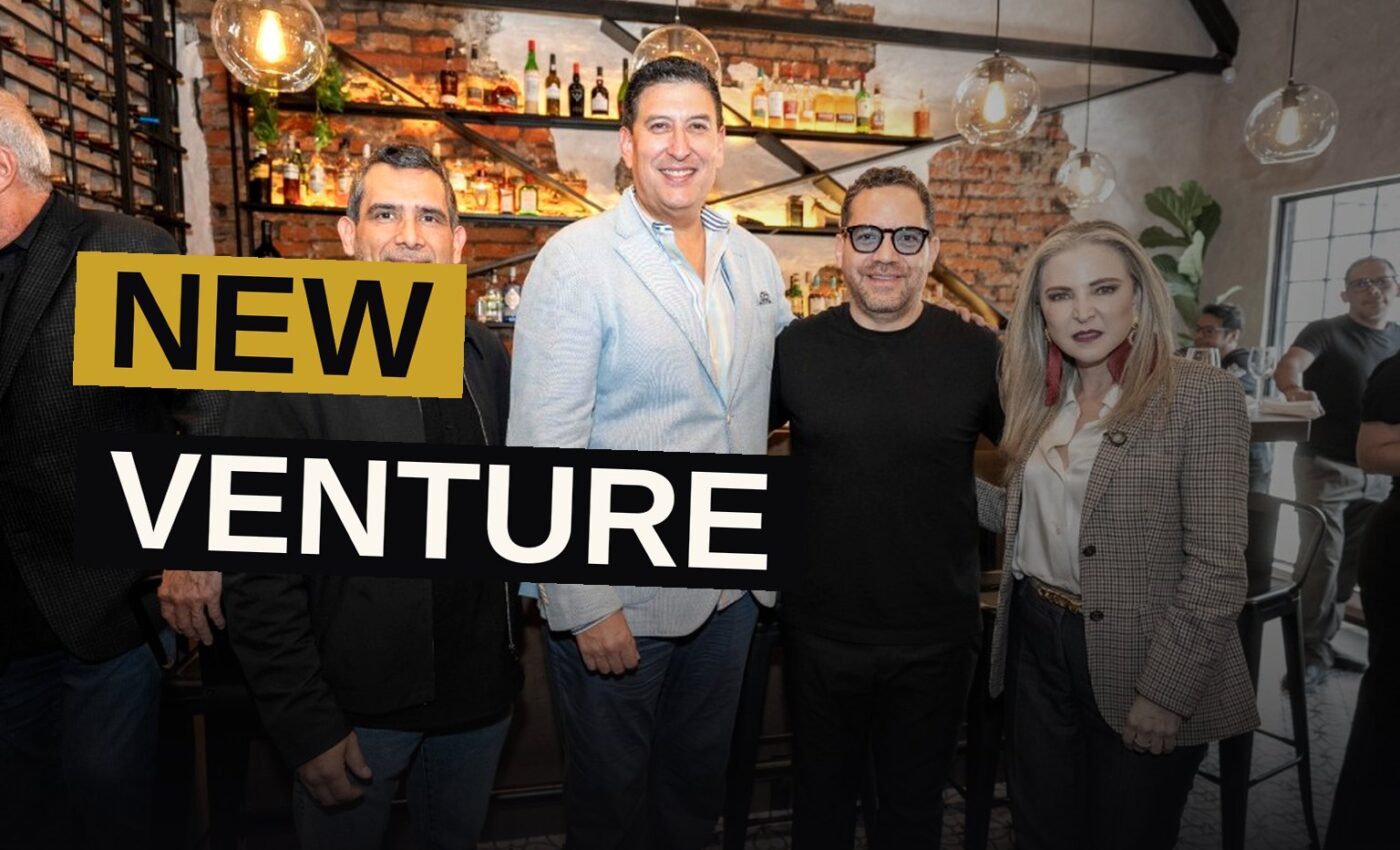
Universal Music Group and Warner Chappell Music have teamed up to launch Sonido Distrito Sur, a new Ecuadorian music company built to push the country’s artists onto the global stage.
The venture, first reported by Billboard, combines UMG’s record label infrastructure with Warner Chappell’s publishing arm. Sonido Distrito Sur — often shortened to SDS — will handle investment, production, distribution, marketing, promotion, A&R, international collaborations and new growth opportunities for Ecuadorian artists. A press release also notes the company will strike “a future international partnership to develop its booking operations” on the touring side.
The company is led by Juan Fernando Velasco, an Ecuadorian singer-songwriter, and Ricardo Ordóñez, a music executive.
Velasco and Ordóñez Take the Lead
Velasco is an Ecuadorian singer-songwriter. Ordóñez brings the business side.
Together, they are betting that Ecuador’s talent pool has been under-served by the global music business. The company’s core pitch is simple: the artists have always been there, but the infrastructure has not.
“Ecuador has never lacked talent,” Velasco said in a statement. “What has been missing is a structure capable of connecting that talent with opportunities in the international music industry. Sonido Distrito Sur was created to build that bridge and help our artists gain the recognition they truly deserve.”
What SDS Actually Does
SDS is not just a label and not just a publisher. It is a hybrid. The company pulls together the full chain of what an artist needs to break beyond their home market.
The company calls this approach “Artist Elevation,” a proprietary model described in the launch materials.
“At the heart of SDS is Artist Elevation, a proprietary model that seeks to comprehensively strengthen each artist’s career through the development of their repertoire, image, positioning, collaborations, platform presence, and the artistic, technical, visual, and commercial evolution of their live performances,” the release reads.
The booking operation is a separate piece. The company says it will form an international partnership to develop touring and live event infrastructure, though no partner has been named yet.
Launching at Sayce Music Week
SDS officially launched at an intimate gathering during Sayce Music Week, which took place earlier this month in Ecuador.
Filling Ecuador’s Structural Gap
Velasco’s statement points directly at a gap. He does not blame the artists. He blames the lack of structure.
The company’s goal is to become a major player in the Andean region and to move Ecuadorian artists into markets such as Peru, Colombia and Central America.
That is a specific regional strategy. The source names those markets as the targets for expansion.
UMG vs. Warner Chappell: Who Brings What
The partnership pairs a major label with a major publisher under one roof. Here is how the two parents divide their responsibilities:
| Company | Role in SDS | What They Bring |
|---|---|---|
| Universal Music Group (UMG) | Record label infrastructure | Recording, distribution, marketing, promotion, A&R |
| Warner Chappell Music (WCM) | Publishing infrastructure | Publishing administration |
The division is clean. UMG handles the recorded music side. Warner Chappell handles the publishing side. SDS sits on top of both, coordinating the artist’s career across the two traditional halves of the music business.
That structure is designed to give an artist a single home for both their recordings and their songs. In a fragmented industry, that is a selling point.
Why the Andean Region Is the Target
The Andean region has its own musical identity. SDS is explicitly positioning itself within that regional frame.
Peru and Colombia are named as target markets. Central America is also on the list. The company’s ambition is to change Ecuadorian music’s standing there.
By building infrastructure at home and then pushing outward, SDS hopes to create a pipeline that did not exist before.
Inside the Artist Elevation Model
The centerpiece of SDS’s pitch is the Artist Elevation model. It is a comprehensive approach that touches every part of an artist’s career.
The model covers repertoire development, image building, positioning, collaborations and platform presence. It also includes live performance evolution, covering the artistic, technical, visual and commercial sides of a show.
That last piece is notable. Many label deals focus on recorded music and leave touring to separate agents. SDS is bundling live performance development into its core offering.
The booking partnership is a separate future step, but the Artist Elevation model already treats live performance as part of the artist’s overall growth plan.
The Backing Behind SDS
The backing is real. UMG and Warner Chappell are two of the largest companies in the music industry. Their combined resources give SDS a running start that a standalone Ecuadorian label would not have.
The leadership is also credible. Velasco is a known quantity in Ecuadorian music, and Ordóñez brings executive experience.
The question now is execution. Building infrastructure is one thing. Finding the right artists and breaking them internationally is another.
What Comes Next for SDS
Sonido Distrito Sur has launched with a clear thesis: Ecuador has the talent, and what it lacked was the machine.
The company now has that machine, at least on paper. UMG provides the label muscle. Warner Chappell provides the publishing backbone. Velasco and Ordóñez provide the leadership and the local knowledge.
The first test will come when SDS announces its artist roster. That will show whether the model can attract the kind of talent it wants to develop.
The second test will come when those artists try to break into Peru, Colombia and Central America. That will show whether the infrastructure actually works.
For now, the company is positioned to try. Ecuadorian music has a new vehicle, and it is backed by two of the biggest names in the business. Whether that vehicle reaches its destination is still an open question.
Source: billboard.com
Get the Notebook.
The day's best stories and every fresh verdict, in plain English, in your inbox by seven. One email a day, no more.