
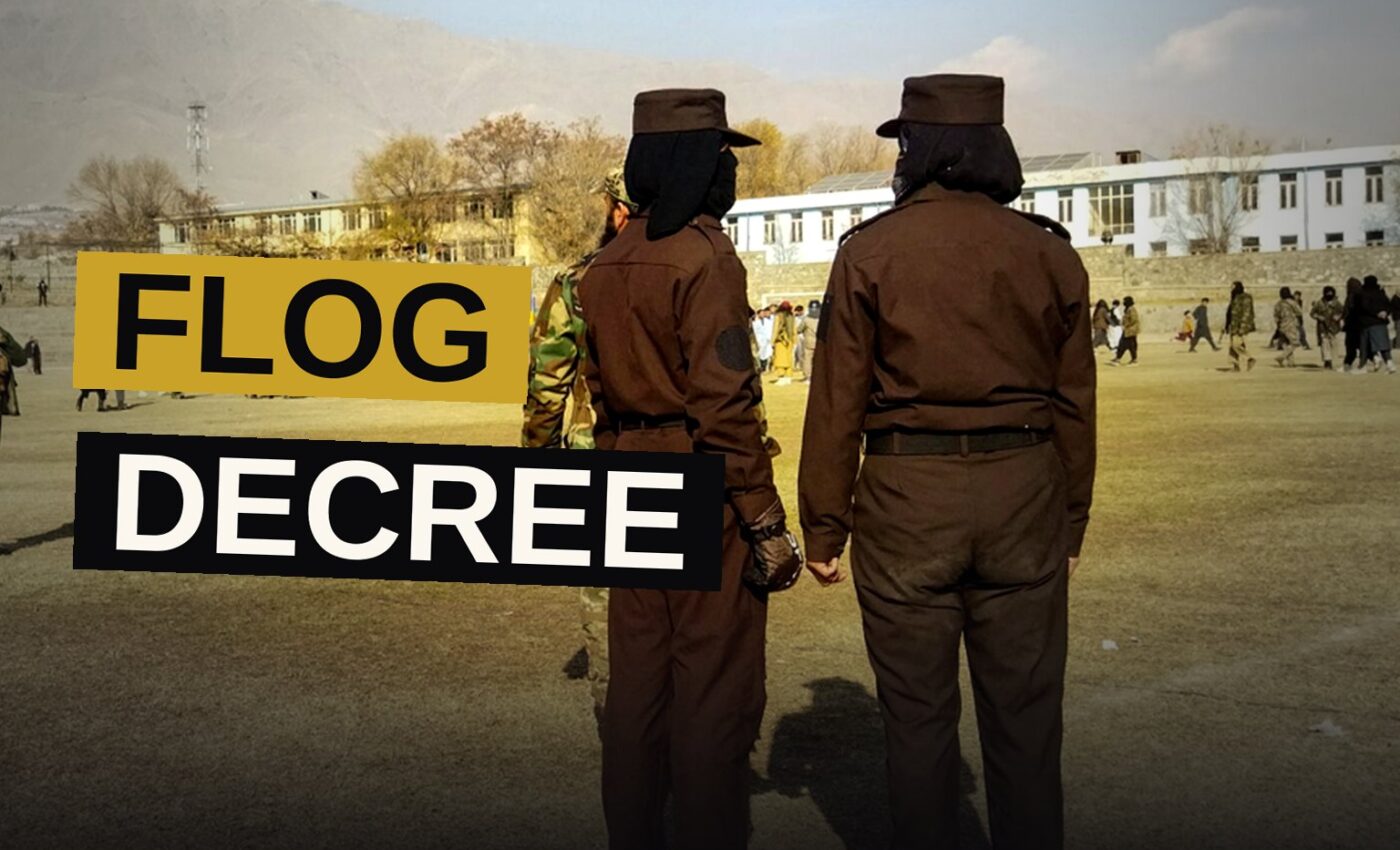
Whatever happened to the Taliban threat: ‘We will flog the women’?
In March 2024, NPR reported on an audio message from Taliban supreme leader Hibatullah Akhundzada. He announced a return to public punishment in Afghanistan’s justice system. “We will flog the women … we will stone them to death in public [for crimes],” he said.
The numbers behind the threat
Since that point, the Taliban have acted on their threats, and public, violent punishments have grown gradually, according to a report by the Afghanistan Human Rights and Democracy Organization (AHRDO), which investigates human rights violations. The group cites 2,745 individuals subjected to corporal punishment between February and April. Those figures come directly from the Taliban’s own public records.
A U.N. report from March 2026 gives similar numbers, saying there were at least 1,110 cases of flogging recorded last year. The U.N. states: “in 2025 alone, more men and women were subjected to public flogging than in all previous years combined.”
These numbers come from cases posted by the Taliban’s Supreme Court on its website, its social media accounts, and in more than 500 press releases. Some cases may exist outside the court records, according to advocates.
Videos activists are sharing
A person who works to bring about change in Afghanistan, known only as MA, gave NPR a video that shows a woman being beaten in public. The video is said to have been recorded in Kandahar province. MA requested that she be named only by her initials, because she fears the Taliban will punish her for drawing attention to the practice of beating people publicly.
MA noted a number of comparable videos found across social media. The Taliban prohibits recording in public places where flogging and stoning occur. According to MA, people who disagree with the practice have been secretly capturing these events on film and subsequently sharing the footage online.
The network could not confirm on its own what the footage contained. When NPR reached out to the Taliban for a response, there was no answer given.
Why the Taliban have embraced flogging
“The floggings are an important aspect of administration of justice in the Taliban’s eyes,” says Shaharzad Akbar, executive director of the Afghan human rights group Rawadari.
“It’s a very important element of how they see justice, the rule of law and how they use it to control and repress the population,” identifies Akbar, whose base is in Europe.
Samira Hamidi, South Asia regional campaigner at Amnesty International, agrees. “The increased use of public floggings and other corporal punishments serves not only as a form of punishment but also as a tool of intimidation and social control.”
Legal experts argue that the harsh punishments cross the line into violations of Afghanistan’s obligations under international law. According to Haydee Dijkstal, a U.K.-based lawyer who supplied legal analysis for the AHRDO report, the punishments go beyond what is acceptable.
“Afghanistan is a party to several human rights instruments, and even after the Taliban took over, it has remained a member of these international human rights treaties, which therefore carry obligations on the government to protect these rights for all individuals in Afghanistan,” she says.
These treaties include:
- The Convention against Torture
- The Convention on Civil and Political Rights
- The Convention on the Elimination of All Forms of Discrimination
Dijkstal says that “These obligations prohibit treatment that amounts to cruel, inhuman, or degrading treatment or torture,”.
She says “When something is called a punishment but itself constitutes a human rights violation, it cannot be considered a lawful punishment or justice,”.
Who gets flogged
According to the AHRDO report, women and groups on the fringes of Afghan society, including the LGBT community, continue to bear the brunt of increased punishments.
The report cites one reason for the concern: Taliban officials are lashing people for offenses that are themselves discriminatory and illegal. Those acts include women showing up in public without a mahram (a male guardian), same-sex relations, relations outside marriage, or women “running away” from homes. Under international law, all of these rights are protected human rights.
“Women face a heightened risk because they are subject to a range of discriminatory restrictions that regulate their movement, dress, behaviour, and participation in public life,” Hamidi says.
Since the Taliban took power, they have issued many orders that keep women from going to school beyond a certain level, from working at most jobs, and from taking part in politics or public life.
“In this context, corporal punishment becomes another mechanism for enforcing gender-based discrimination and maintaining the Taliban’s systematic repression of women and girls,” she adds.
The broken legal system
Since the Taliban took power, it has been systematically dismantling the Afghan legal system, with these punishments serving as a central means of doing so.
“The rise of corporal punishment aligns with that lack of an independent and impartial judiciary in Afghanistan and is a way of imposing fear and control over the population,” Dijkstal says.
“The cases lacked due process and violated the right to a fair trial,” she says. In cases documented by AHRDO, not one person was allowed proper legal representation or allowed to present a defense or even speak in court.
“It was a gross violation of what is considered under international law to be a minimum standard to be considered a fair trial,” she says.
For years, the Taliban have said that floggings and stonings are proper punishment when someone breaks the rules. They consider these acts fitting if a person helps a girl learn even though women are barred from secondary education, or enters a bond with another person without being married.
The numbers have increased. According to the U.N. report, more men and women were forced to endure public flogging in 2025 than in all the preceding years put together.
The human cost
The person known as MA shares videos with NPR while putting her own safety at risk, working to document these events.
The Taliban’s fear of punishment is what drives her terror, born of calling attention to the flogging she witnessed. She pointed to several similar videos on social media, proof of a shared impulse among those who oppose the practice. Public filming is banned in the places where flogging and stoning take place, according to the Taliban’s own rules. Yet, MA says, those who oppose the practice have been filming these events in secret and then posting the video, defying the ban with their cameras.
NPR’s sources, including activists and legal observers, paint a system built for control and suppression. They do not see the floggings merely as punishment, according to their accounts. Instead, they view them as a message.
“It’s a very important element of how they see justice, the rule of law and how they use it to control and repress the population,” Akbar says.
Since the Taliban took power, they have dismantled the Afghan legal system. NPR’s reporting draws on accounts from people affected by the changes, who describe a system that lacks an independent court and fair trials, and which instead punishes publicly to instill fear.
Source: npr.org
Get the Notebook.
The day's best stories and every fresh verdict, in plain English, in your inbox by seven. One email a day, no more.