
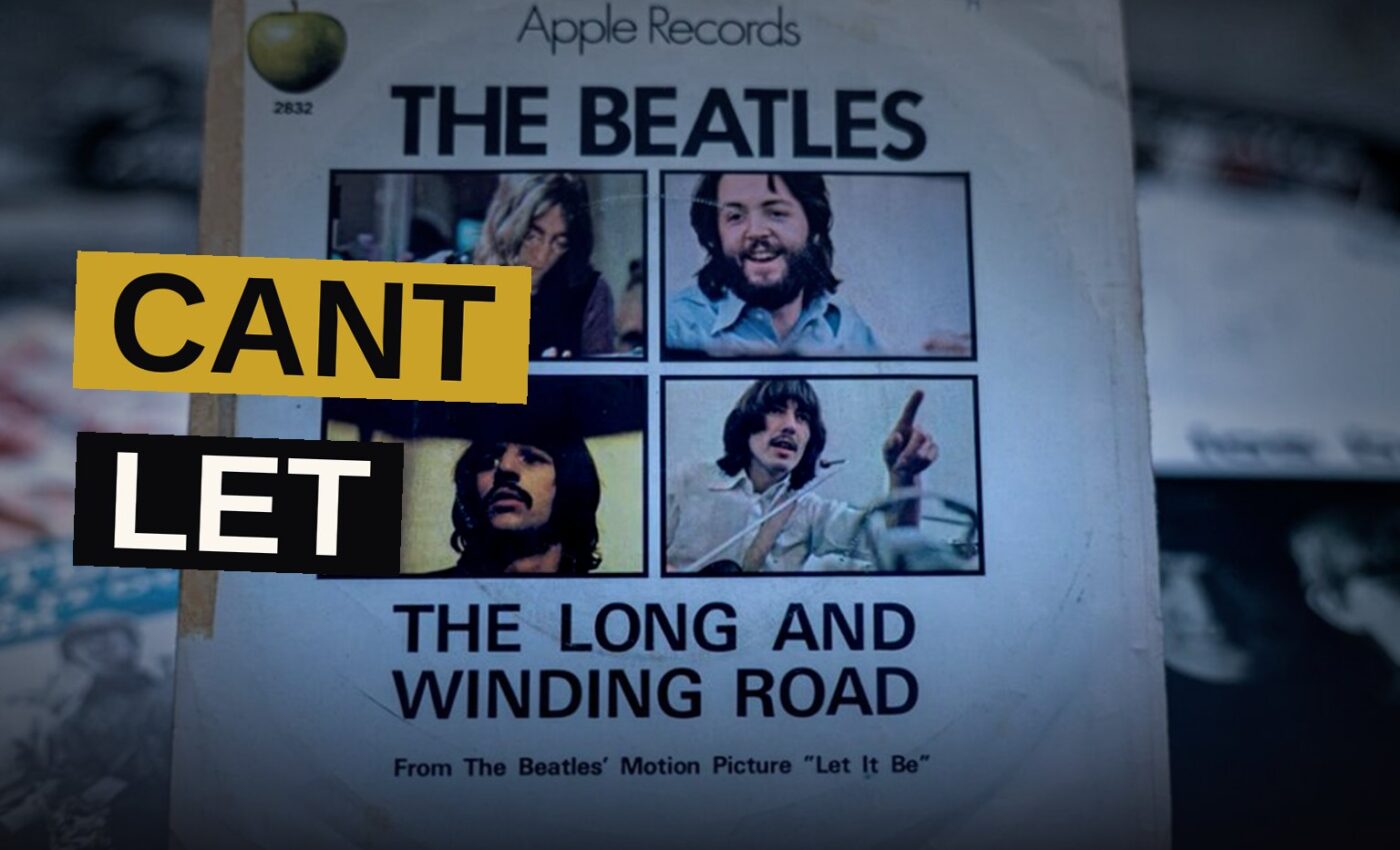
The journal PLoS ONE has published a study showing that scientists enjoy a bit of fun, and they let it show in their work. The research finds that The Beatles are the musical group most often cited in scientific papers, with over 3,000 references to their songs and lyrics.
The researchers sifted through scientific literature and discovered that Beatles references run the gamut from clever puns to structural homages. Co-author Gabriel Budel of Delft University of Technology in the Netherlands pointed out several favorites. “‘The lung and winding road’ is a paper on Long COVID that changes one vowel of the more than 3,000 references they found to The Beatles,” he noted. “‘Here comes the SU(N)’ turns ‘Here Comes the Sun’ into a quantum computing paper about mathematical groups. Someone was having a very good day at their desk.”
Researchers aren’t the first to slip references to popular music into their papers, and the Beatles are far from the only band to have done so. A new study traces this habit back to Bob Dylan and The Clash, among others. However, the Liverpool quartet seem to have come out on top over time, with citation counts showing they dominate across multiple fields.
Dylan started it
The Beatles’ dominance didn’t happen in a vacuum. Back in 2014, scientists at the Karolinska Institute in Sweden revealed they had been deliberately inserting Bob Dylan lyrics into their papers as part of a long-running bet. It started with a 1997 Nature review entitled “Nitric Oxide and inflammation: The answer is blowing in the wind.”
That admission sparked a 2015 study on whether Dylan lyrics appeared elsewhere in the biomedical literature. The most frequently referenced songs were “The Times They Are A’Changin’” and “Blowing in the Wind.” Meteorologists and climate scientists were especially keen on quoting Dylan.
The trend continued with a 2017 study comparing the frequency of Dylan and Beatles lyrics in biomedical literature. The Beatles came out ahead. Then came a 2023 analysis of The Clash’s “Should I Stay or Should I Go” in scientific papers, which found that song dominated with 408 references.
Counting the Beatles
Budel and his colleagues chose to expand their project. Instead of following a single band or a single song, they aimed to gauge the complete extent of Beatles references throughout every scientific field. Their search turned up more than 3,000 instances.
Many papers use altered titles to make their point. One study on Long COVID, titled “The lung and winding road”, changes one letter in a Beatles song. Another paper, “Here comes the SU(N)”, turns “Here Comes the Sun” into a study about mathematical groups. Budel calls both examples of this practice “genuinely brilliant.”.
The Nature site’s search turned up a total of 116 articles mentioning The Beatles, according to a check carried out in July 2025.
A hard problem in drug discovery
The Fab Four have left their mark on scientific language too. Within drug discovery, the struggle to introduce new medications that offer substantially greater benefits than the best current treatments carries the name of the “better than The Beatles” problem. That label reflects an almost impossible standard, much like attempting to surpass the band’s catalog.
What the term expresses is a form of scientific modesty. The vast majority of new medications bring only small gains. Few manage to beat the current standard outright, and the Beatles reference shows just how hard that feat is.
It’s a fitting metaphor for a band that set its own impossibly high bar. Scientists, it seems, can’t help but measure their hardest problems against the group’s legacy.
NASA’s acronym nod
Beyond biomedical papers and quantum computing, the Beatles’ influence has even reached NASA. That space agency has named a research project on ice-cored hills after the band, calling it “pingos” Pingo STARR, short for SubTerranean Aquifer Reconnaissance and Reconstruction.
A reference to the band sits inside the name of the project, a small joke placed within a large mission. The work is serious science, but the title tips its hat to the group. Scientists seem to enjoy leaving these details behind, and The Beatles keep appearing across fields of study.
What the numbers show
The study’s findings are striking in their breadth. A 2023 analysis of The Clash’s “Should I Stay or Should I Go” in scientific papers found that song dominated with 408 references, compared to 236 for the Beatles’ “The Long and Winding Road” and 128 for Dylan’s “The Times They Are A’Changin’.”
Here’s how those numbers break down:
- The Clash’s “Should I Stay or Should I Go”: 408 references
- The Beatles’ “The Long and Winding Road”: 236 references
- Dylan’s “The Times They Are A’Changin’”: 128 references
The Beatles’ overall total of more than 3,000 references is the largest of any group in the scientific literature. But the per-song comparison tells a different story: The Clash’s single track outperformed any individual Beatles song in that 2023 analysis.
Across many fields, the same pattern appears again and again. Medicine, physics, and planetary science all turn up instances of it, in places where it would not be expected. These references tend to be playful, though they are rarely left to chance.
Why the band keeps winning
Scientific writing has made the Beatles its own subject more than any other band, and readers may wonder why that is so. The source does not offer an answer, but the references themselves point toward some possible explanations. Songs about roads, suns, love and change lend themselves to being shaped to suit a surprising variety of research topics.
The group holds a distinct place within culture, one that spans generations and crosses borders, with recognition that feels universal. A mention of The Beatles carries weight with nearly any reader, needing no translation. The scale of fields where the band appears makes this plain.
Budel and his colleagues don’t provide a final explanation for why The Beatles triumph. The numbers speak for themselves, though: the band has come to stand in for scientific wit.
A tradition that persists
A new study joins a larger tradition of pop culture appearing in scientific publishing. Researchers have for years turned to song titles and lyrics to make their work stand out, feel more human, or simply be more entertaining.
This custom endures, with no hint of abating, and among its most celebrated practitioners, the Beatles appear unlikely to surrender their preeminence.
The study’s authors are already part of that tradition, and they’re happy to keep it going. “Someone was having a very good day at their desk,” Budel said of the quantum computing paper. The same could be said of anyone who finds a way to work a Beatles reference into their research.
The paper is a reminder that science isn’t always serious. Behind the data and the rigor, there’s room for a little play. And when it comes to Beatles references, scientists can’t let it be.
Source: arstechnica.com